
Reviewed · THE SAHARA
3-Day Private Excursion to the Sahara departing from Hammamet
The most memorable part of this three-day trip is the change in scenery: Roman stonework, palm oases, salt flats, Berber villages, and open Sahara sand all fit into one private route from Hammamet. You also spend the night in a tent 25 kilometers into the desert, with dinner cooked over a campfire.
I like the private format, which gives you more control than a large coach trip, and I like the mix of famous sights with everyday experiences such as a family meal, local crafts, horse-drawn carriage rides, and underground homes. The main drawback is the amount of driving. This is a full Tunisia circuit, not a slow resort break, and some stops are brief.
Key points to know before booking
- A true north-to-south route: See Kairouan, Tozeur, the mountain oases, the salt lake, Douz, Matmata, and El Jem in three days.
- A private desert night: Sleep in your own tent among the dunes, with bedding, a bed, and dinner prepared at the campfire.
- Guides and drivers named in advance: Ali handles the guiding, with Walid noted as the driver on one especially positive booking.
- Strong variety in a short trip: Ancient mosques, Roman ruins, date palms, waterfalls, troglodyte homes, souks, and Star Wars sets all appear.
- Several meals and admissions included: Breakfast, two dinners, three lunches, entrance fees, local guides, horse-drawn carriage transport, and a dromedary are covered.
- A demanding pace: The trip suits you if you want to see a lot of southern Tunisia and can handle long road sections.
Why this private Hammamet excursion works
At $697.39 per person, this is not a low-cost day trip. It is a three-day private service with pickup offered, transport, accommodation in the Sahara, meals, site admissions, local guides, a horse-drawn carriage, and a dromedary included. The value improves if you are sharing the vehicle with family or friends and prefer one organized package instead of arranging hotels, desert transport, meals, and tickets yourself.
The route also solves a common problem. Southern Tunisia is spread out, and trying to cover the same ground in one very long day would leave you tired and short on time. Here, the road is still a major part of the experience, but the three-day plan gives you room to stop in Kairouan, visit the oases, cross Chott El Jerid, camp in the desert, and return by way of Matmata and El Jem.
This is a private activity, so only your group participates. That matters most at places such as a family home, a market, or a desert camp, where your timing may feel less rigid than it would on a large group outing. Guide Ali is named in the booking information, and one detailed account also identifies Walid as the driver. Communication before departure was praised, so you have named contacts rather than an anonymous transfer service.
The tradeoff is simple: you gain range, but not much idle time. The first day in particular covers a great deal of ground. I would choose this trip for a first look at Tunisia beyond Hammamet, not for a restful three days with long café stops.
More Private Tours in Hammamet
- Private tour: Medina,Carthage ,Sidi Bou Said, Bardo Museum+lunch
★ 5.0 · 194 reviews - A Private Night at Desert Douz Tozeur
★ 5.0 · 29 reviews - Private and Guided Tour to Kairouan and El Jem and Monastir
★ 4.5 · 22 reviews
Day one: Kairouan, three mountain oases, and Tozeur
The Great Mosque and Aghlebites pools in Kairouan
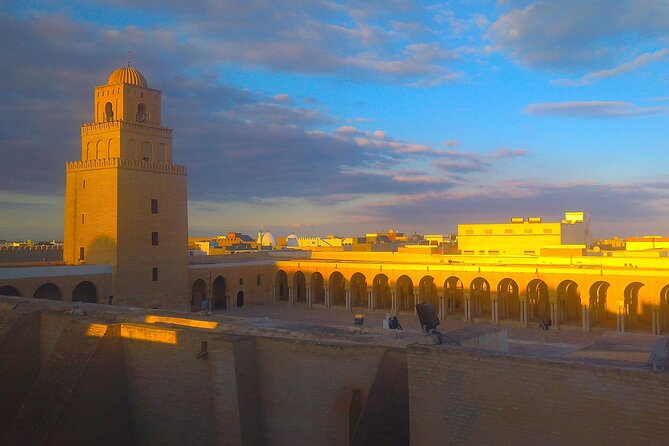
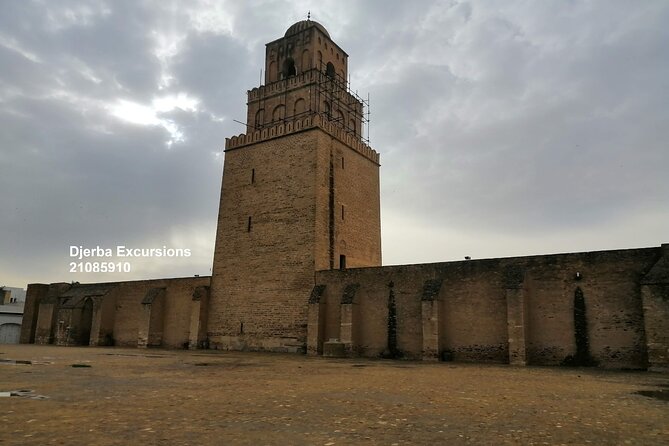
Your first major stop is the Great Mosque of Kairouan, with about an hour for the visit. The courtyard, massive pillars, and underground water reserve give the site a strong sense of engineering as well as religious importance. The nearby Aghlebites pools add another piece of the city’s water story.
Admission is included, and the visit is guided. An hour is enough for a focused look, though you should not expect a long, unhurried exploration of every corner. This is an early reminder that the excursion favors broad coverage over exhaustive visits.
Mides canyon and the old village
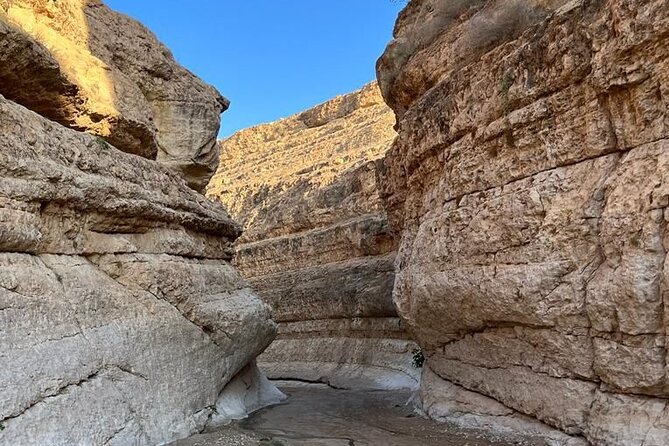
Mides brings a sharp change in setting. A local guide leads you through the canyon and the abandoned village, then toward the old oasis. The oasis uses three levels of cultivation, with old palm trees, orange trees, and olive trees growing close together.
The contrast is the point. You see a dry canyon beside a cultivated pocket sustained by water. The hour-long stop includes the local guide and admission, and a walk is involved, so sensible shoes are useful. The abandoned village and the oasis are more interesting together than either would be alone: one shows a settlement left behind, the other shows how people made use of the land.
More Sahara trips out of Hammamet:
- 2-Day Tunisian Sahara Tour with Food & Stay from Hammamet
★ 4.5 · 80 reviews - Circuit the south of Tunisia in 2 days Sahara Explorer
★ 4.5 · 14 reviews - 2 Days Tour of the Sahara from Hammamet
★ 3.5 · 11 reviews - Sahara 2 Days Tour VIP In Tunisia | Guided FUN | PICKUP ALL City
★ 4.5 · 63 reviews
Tamaghza waterfall and Chebika oasis
At Tamaghza, you have about 30 minutes at the famous waterfall. Water from the small river and springs drops through an otherwise arid setting, and the place is known as a cooling stop in summer. The time here is short, so treat it as a scenic pause rather than a full hike.
Chebika gives you more walking time. The old village was abandoned after floods in the 1960s, and the oasis sits in the valley below. A trek of about 25 minutes helps you see the area rather than simply photograph it from the vehicle. I would keep water close and expect uneven ground, since the visit is on foot and the setting is rugged.
These two stops pair well. Tamaghza is quick and watery, while Chebika gives you a longer look at an abandoned settlement and its oasis. Together with Mides, they form the most distinctive part of the first day.
Tozeur after the road
The Tozeur stop is listed as about 15 hours, which functions as the long evening and overnight base in the schedule. You explore the medina on foot, see the old oasis by horse-drawn carriage, and have time for souks and bazaars. Typical local restaurants offer regional dishes, and the carriage ride is included.
Tozeur is a useful place to slow down after the oases. The medina and markets give you a more urban view of southern Tunisia, while the date oasis shows how closely the city depends on palm cultivation. If shopping is not your priority, you can still use the souks to look at local goods and get a feel for the city’s daily rhythm.
The schedule here needs a little flexibility. A 15-hour stop is not a standard sightseeing duration, so it should be understood as the overnight portion rather than 15 straight hours of touring. Ask for the exact hotel and meal timing when you confirm the trip.
Day two: Nefta, salt flats, Douz, and a night in the Sahara
Nefta and the Corbeille
Day two opens around Nefta, known here for the Corbeille and its marabouts. The excursion allows about three hours, giving you more time than at the short waterfall stop on day one.
The route then heads farther into the desert toward Mos Espa, the Star Wars setting. You may also see herds of camels along the road. The appeal is partly cinematic, but the bigger value is seeing how film locations sit within a real desert setting rather than on a studio tour.
The Star Wars stop will suit fans most, while the Corbeille and the road through the desert offer more to people who are less interested in film history. The three-hour block gives the guide room to adjust the balance.
An oasis hotel and Nefta on foot
Another three-hour stop includes settling into a typical hotel with a swimming pool in the middle of a date palm oasis. You can walk through the city streets and visit the souks.
That pause matters because the trip is physically demanding. A pool and a hotel base give you a chance to reset before the salt lake and desert camp. The exact property is not specified, so do not book this trip expecting a named luxury hotel. Think of it as a practical oasis stop with time to walk and rest.
Crossing Chott El Jerid
Chott El Jerid is one of the route’s most unusual sections. You cross the Great Salt Lake for about 60 kilometers, with roughly 90 minutes set aside for the stop. The salt desert stretches far into the distance, and its appearance changes with conditions. In summer, mirages can be clearly visible.
This is a place where the road itself is the attraction. You will not find a list of monuments to tick off. Instead, you watch the colors and surface change across a broad, empty expanse. The stop is free, but the crossing is a key part of the southern route.
Douz crafts and market day
Douz offers about two hours for local crafts. The town is noted for shoes made from camel skin and Berber carpets sold locally. Thursday morning is the major market time, so your experience may be especially lively if the schedule lines up with that day.
I like this stop because it gives the desert region a human focus. You are not only looking at dunes and salt. You are seeing goods made and sold in the area. If you are buying, check prices and quality carefully, then remember that shopping is optional. The tour includes time for the crafts, not a required purchase.
Your private tent among the dunes
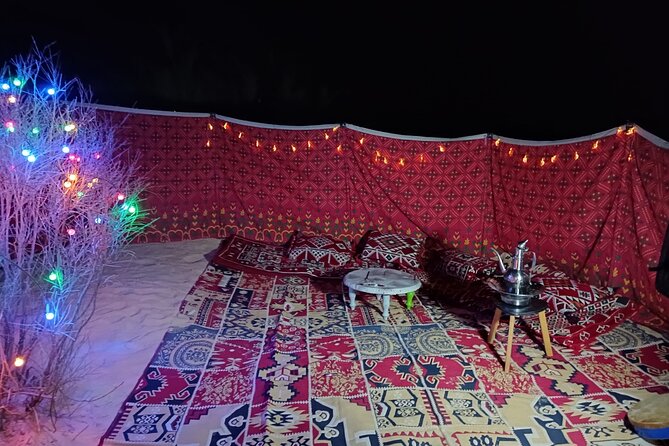
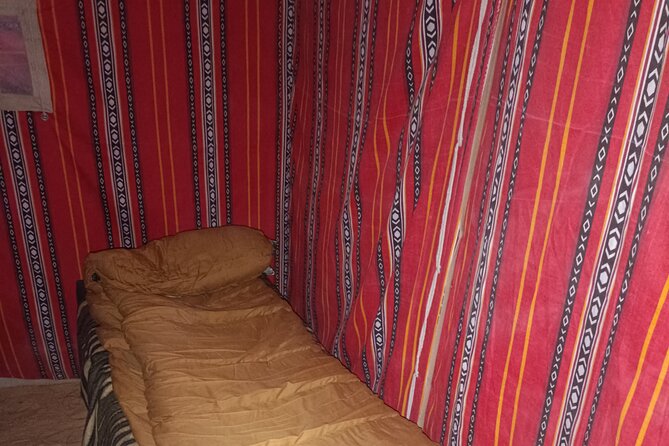
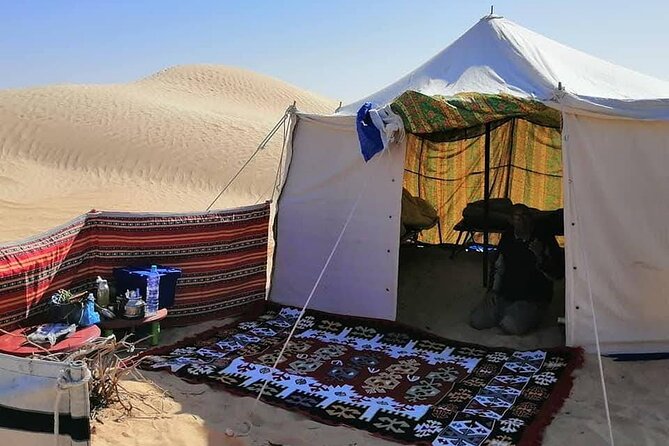
The desert camp is the heart of the trip. The vehicle goes about 25 kilometers into the Sahara, where you spend the night with sand dunes around you and no city setting nearby. Your private tent has a bed and bedding, and dinner is prepared at the campfire.
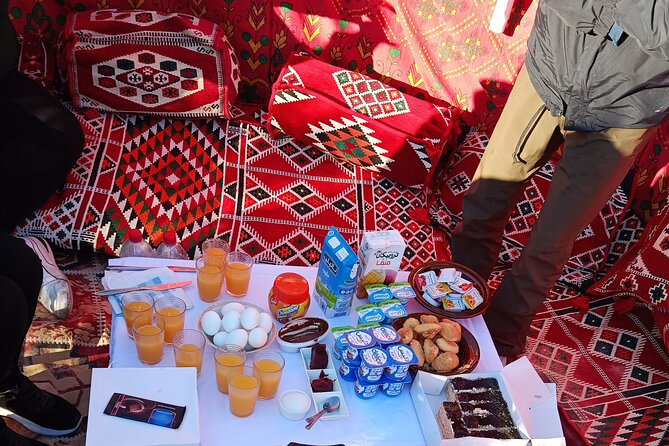
Two dinners are included in the package, along with breakfast and three lunches. The desert night is not described as a luxury camp, so set your expectations at a furnished private tent in a remote setting. You should choose this part for atmosphere, quiet, and the chance to sleep in the desert, not for hotel-style facilities.
A dromedary is also included. The supplied details do not state the exact length or timing of the ride, so ask about that before departure if camel riding is important to your decision. The overview also refers to spending the night with nomads, while the practical details focus on the tent and campfire, so clarify how that meeting is arranged.
Day three: Tamezret, underground Matmata, and El Jem
Tea and the Berber village of Tamezret
The return route begins at Tamezret, where you stop at a café for about 40 minutes. You can admire the old Berber village, drink aromatic herbal tea, and look toward the Daher Mountains.
This is a small stop, but it gives the final day a gentle start. After a night in the desert, tea and a view are welcome. The visit is free, and the point is the setting and local atmosphere rather than a long formal tour.
Matmata and life below ground
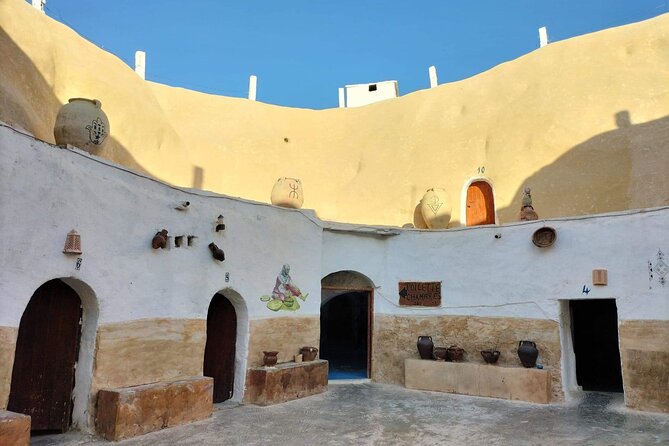
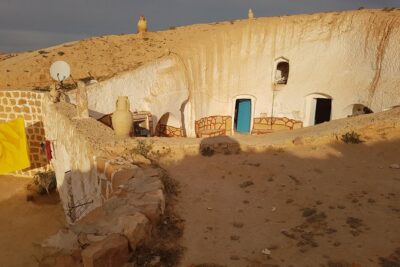
Matmata is one of the most valuable cultural stops on the route. You visit a family living in a troglodyte home and see how Berber life was arranged underground. The visit includes women weaving, bread preparation, and tastes of olive oil and honey.
This is much more personal than simply looking at an old building. You see a living household and practical skills tied to the home. Approach the visit with respect, since it involves entering a family space. The three-hour allocation gives you time for the home, food, crafts, and the nearby film location.
Matmata also includes the Sidi Driss Hotel, an underground hotel with its ghorfas, known for Star Wars scenes. The family home and hotel should not be confused. One presents daily life, while the other is a famous film setting and a distinctive example of underground construction.
El Jem’s Roman amphitheater
The final major stop is the amphitheater at El Jem, founded in 238 AD. You have about an hour to see the arena, three floors, and underground galleries. With space for about 30,000 people, it is an impressive closing sight after the desert and Berber villages.
Admission is included. An hour gives you time to understand the basic layout and walk through the main areas, though history fans may want longer. The stop works well at the end because it brings you back from southern desert culture to monumental Roman Tunisia.
Food, transport, and the real pace of the trip
Pickup is offered, and the activity is private. Most people can participate, and service animals are allowed. The tour is also near public transportation, although the main practical benefit is having arranged road transport for a route that would be awkward to manage independently.
The included meals make the price easier to assess. You receive breakfast, two dinners, and three lunches, plus entrance fees, local guides, the horse-drawn carriage, and a dromedary. Tips are not included, so carry some extra money for that. The description also points you toward typical restaurants and local specialties in Tozeur, and toward olive oil, honey, and bread in Matmata.
The schedule is busy enough that I would pack light, bring water, wear shoes suitable for walking, and keep sun protection handy. Those are practical responses to the canyon, oasis trek, salt lake, desert sand, and village walks. The provided details do not specify vehicle type, exact hotel names, or every meal location, so ask those questions before paying if comfort is a major concern.
The experience is generally well regarded, with a 4.5 out of 5 rating from ten published ratings and a 90 percent recommendation figure. The strongest praise centers on communication with Ali, the guide and driver team, and the amount of Tunisia covered in three days. That fits the design of the trip: it is a broad introduction with many distinct stops, not a narrow specialist tour.
Who should book this Sahara trip?
I would recommend it to you if you want to see southern Tunisia but have limited time, prefer a private vehicle, and enjoy changing scenes more than long periods at one hotel. It is also a good fit for families or friends who can share the per-person cost and want a schedule shaped around their own group.
It is less suited to you if you dislike long drives, need a slow pace, or want detailed time at every archaeological site. The itinerary includes several one-hour visits and at least one very short stop, so the reward is variety rather than complete coverage.
The $697.39 price makes the most sense when you count the overnight desert stay, meals, admissions, local help, and special transport. It is not simply a ride to the Sahara. Still, confirm the accommodation details, the exact camel experience, pickup arrangements, and meal schedule before booking.
Free cancellation is available if you cancel at least 24 hours before the start time. Changes made within 24 hours are not accepted, and there is no refund inside that window. The experience also requires a minimum number of participants, so a cancellation for that reason brings an alternative date or experience, or a full refund.
Should you book it?
Book this excursion if your main goal is to connect Tunisia’s major southern sights in one well-organized private journey. The desert camp, Mides and Chebika, Matmata family visit, and El Jem make it far more varied than a simple dune outing.
Skip it if you want a resort-style break or dislike early starts and long road sections. For the right kind of visitor, though, this is a useful first look at Tunisia’s interior, with enough local contact and unusual stops to make the miles worthwhile.
FAQ
How long is the excursion?
The experience lasts approximately three days.
Where does the excursion depart from?
It departs from Hammamet, and pickup is offered.
Is this a private tour?
Yes. Only your group participates in the private activity.
Who are the guide and driver?
Ali is named as the guide, and Walid is identified as the driver in the supplied experience details.
Where do you spend the night?
You spend one night in a private tent about 25 kilometers into the Sahara Desert. The tent includes a bed and bedding.
Is dinner prepared at the desert camp?
Yes. Dinner is prepared on site at the campfire.
Are meals included?
Yes. The package includes breakfast, two dinners, and three lunches.
Are entrance fees included?
Yes. Entrance fees to the included sites are covered.
Is a camel or dromedary experience included?
A dromedary is included. The exact duration and timing are not specified.
What is the cancellation policy?
You can cancel at least 24 hours before the start time for a full refund. Cancellations or changes made within 24 hours are not accepted for a refund.
More 3-Day Experiences in Hammamet
- 3 Days South Tunisia Discovery Tour with luxury camp and Meals
★ 5.0 · 31 reviews - Private 3 Day Tour in Southern Tunisia or More
★ 5.0 · 17 reviews - The Tunisian South between Oasis and Mountain: 3 Days / 2 Nights Douz and Tozeur
★ 5.0 · 17 reviews - Private 3-Day Excursion to the Tunisian Desert
★ 5.0 · 10 reviews
Just added around Hammamet
- Cap-Bon Self-Guided Excursion from Hammamet★ 4.5 · 3 reviews
- Private Excursion of Friguia Park and Medina of Hammamet★ 4.5 · 4 reviews
- Executive: Transfer Tunis Airport to Hammamet by Mercedes E Class★ 5.0 · 4 reviews
- Tunis, Carthage and Sidi Bou Said Self-Guided Excursion from Hammamet★ 4.5 · 4 reviews
- Airport Tunis Carthage Private Transfer to/from Hammamet★ 4.0 · 4 reviews
- DayTrip to KORBOUS Thalasso-Thermal Bath & Spectacular SEA Cliffs★ 4.5 · 5 reviews
- Kairouan, El Djem, Monastir Self-Guided Excursion from Hammamet★ 4.5 · 5 reviews
- Day trip to Cape Bon★ 4.0 · 5 reviews
Sahara Desert Excursions, compared.
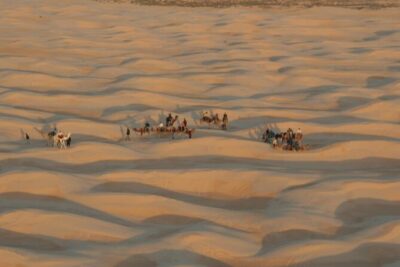
2-Day Tunisian Sahara Tour with Food & Stay from Hammamet
Read our review →
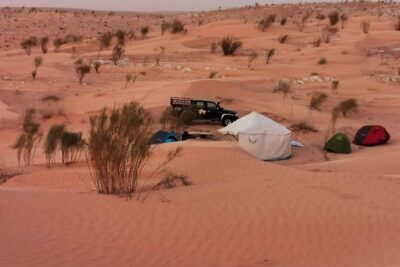
One night under the tent: Tataouine – Chenini – Ksar Ghilane – Matmata
Read our review →
Door of the tunisian desert Ksar Ghilane and Matmata: Full one Day
Read our review →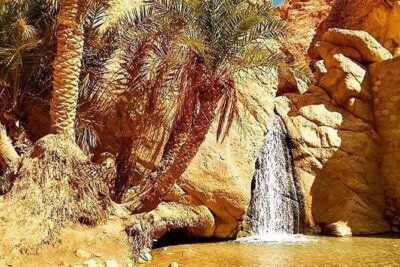
Half-day excursion the mountain oases from Tozeur
Read our review →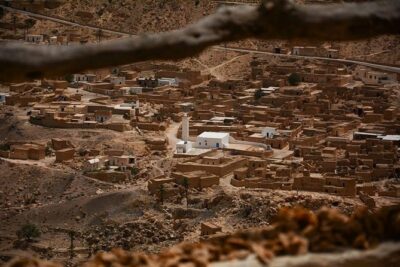
Ksar Ghilane 1 day: The hot spring and the homestay
Read our review →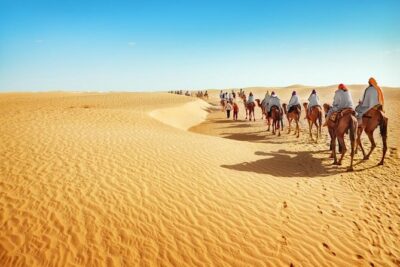
2-Day Tunisia Sahara Desert Camel Trek from Douz
Read our review →Browse the lists this tour appears in