
Reviewed · DOUGGA
Private Day Trip to Testour, Dougga and Bulla Regia from Hammamet
Dougga is the star here: a remarkably complete Roman city spread across a hill, with a theater, Capitol, baths, forum, and triumphal arch still easy to picture in use. I like that this trip also adds Testour’s counterclockwise clock and Bulla Regia’s unusual below-ground rooms, giving you three very different windows onto Tunisia’s past.
I also like the privacy. Your group travels with its own driver and guide, and guides including Faouzi, Mohamed, and Chaoukni have been praised for clear explanations, careful driving, and help with walking difficulties. The cheese tasting in Testour, along with possible roadside stops for pomegranate juice or freshly baked bread, adds a welcome local touch.
The catch is distance. The advertised outing lasts about eight hours, but one account put the day at 11.5 hours, and the long drive plus two large archaeological sites can be tiring. This is a full day for serious history fans, not a relaxed Hammamet excursion.
Key points at a glance
- Testour’s 23-meter minaret: See an octagonal tower with Andalusian details, glazed inscriptions, and a clock whose hands move counterclockwise.
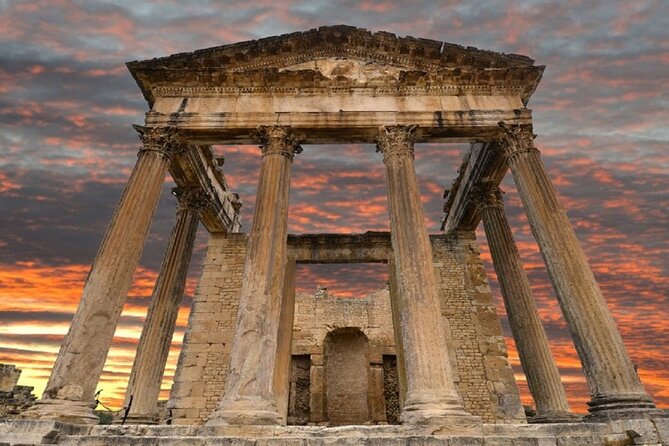
- Dougga’s exceptional Roman remains: Spend about two hours among the Capitol, theater, forum, baths, wind rose, triumphal arch, and Libyco-Punic Mausoleum.
- Bulla Regia’s underground architecture: Explore a site shaped by Numidian, Roman, and Christian periods, including its Capitol, Apollo temple, and basilicas.
- Private transport and guiding: Only your party participates, with pickup offered and admission tickets included.
- Useful local stops: The day can include Testour cheese, pomegranate juice, and a roadside bread stop, depending on the day’s arrangements.
- A demanding schedule: Plan for an early 7:30 am start and a potentially much longer day than the stated eight hours.
Why Dougga makes this trip worth the long road
Dougga, ancient Thugga, is the reason I would book this outing. It is recognized by UNESCO as the best-preserved small Roman city in North Africa, and the site earns that reputation through its scale and condition.
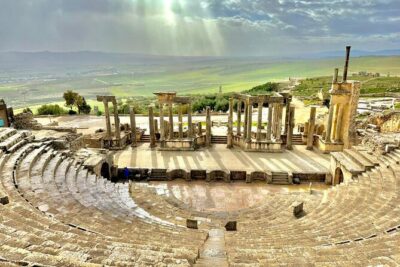
You do not see just one impressive monument. You move through a whole town: the monumental center, public buildings, religious spaces, entertainment venues, and baths. That makes Dougga easier to understand than a single isolated ruin. You can trace how people worshipped, watched performances, met in public, and moved through civic life.
The Capitol is a major highlight. The forum and market help you read the city as a working place rather than a collection of scattered stones. The theater and circus show the public side of Roman life, while the thermal baths reveal the practical systems that supported daily routine.
The Place of the Winds, also called the wind rose, adds another memorable detail. The triumphal arch gives the site a grand entrance, while the Libyco-Punic Mausoleum reminds you that Dougga was not simply a Roman settlement dropped onto an empty hill. Its story reaches back to local and earlier North African traditions.
You have roughly two hours at Dougga. That is enough to see the key structures with a guide, but not enough for a slow, every-corner archaeological study. If you want to linger over inscriptions, photograph every angle, or walk beyond the main route, you may wish the schedule allowed more time.
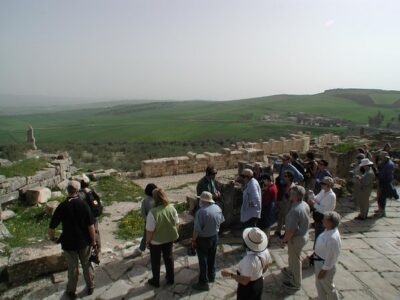
This is where a good guide matters most. Faouzi was singled out for taking his group through the main areas and explaining them thoroughly. Other guides named in the feedback, including Mohamed and Chaoukni, were also praised for making the ancient and modern parts of Tunisia easier to connect. Ask questions as you go. The stones are impressive, but the story is what turns Dougga into a memorable visit.
More Private Tours in Hammamet
- Private tour: Medina,Carthage ,Sidi Bou Said, Bardo Museum+lunch
★ 5.0 · 194 reviews - A Private Night at Desert Douz Tozeur
★ 5.0 · 29 reviews - Private and Guided Tour to Kairouan and El Jem and Monastir
★ 4.5 · 22 reviews
Testour and its Spanish-Andalusian character
Testour gives the day a change of pace before the major ruins. Founded by Moorish people in the early 17th century, this Andalusian village reflects the arrival of communities with roots in Muslim Spain.
The Great Mosque is the main stop. Its 23-meter minaret is octagonal, not the more familiar square shape, and its design recalls bell towers in southern Spain. Small double windows, Andalusian inscriptions, glazed decoration, and a mechanical clock make it unlike the ancient Roman monuments later in the day.
The unusual detail is the clock. Its hands turn counterclockwise, a feature that catches your attention even if you know little about architecture. The minaret is also useful for showing how Tunisia’s story continued long after the Roman period. Testour is not just a quick photo stop before the ruins. It gives the day a more complete sense of the country’s past.
The visit is described as a panoramic tour of the village rather than a long walking circuit. That matters because the schedule is already tight. You get a look at the mosque and its setting, then continue toward Dougga.
A cheese tasting is included in the planned stop. The local specialty gives you a small taste of present-day Testour, and some outings have also included pomegranate juice. One particularly appealing roadside moment involved watching a Berber woman bake bread in an old furnace, then tasting the bread. That stop is not promised as a fixed feature, so treat it as a possible bonus rather than a reason to book.
Bulla Regia and the logic of going underground
Bulla Regia is a very different archaeological experience. Located near Jendouba in northwest Tunisia, the site is known for its religious buildings and its below-ground houses.
The city began as a Numidian settlement by the end of the 6th century BC at the latest. It later became a royal residence, an autonomous community during the early Roman period, a municipality under the Flavian emperors, and a Roman colony under Hadrian. That sequence gives your guide plenty to explain, especially if you want to understand how local cities changed under Roman rule.
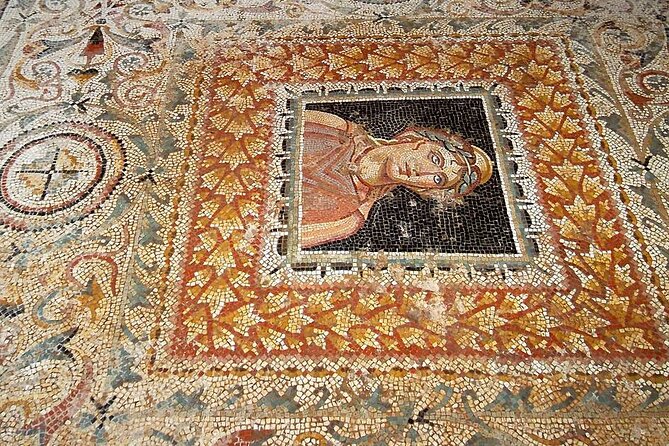
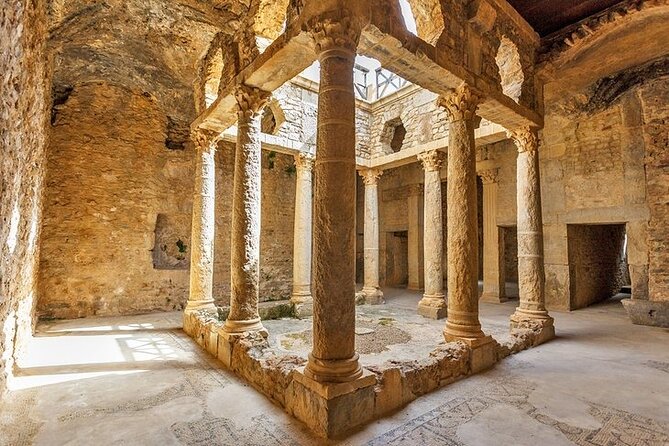
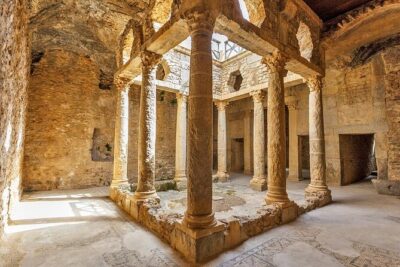
The underground architecture is the main reason Bulla Regia deserves its place on this route. The homes were built partly below ground, a design associated with the need for cooler interiors in the region’s hot climate. The visit lets you see a side of Roman domestic life that Dougga does not provide.
The site also contains major religious buildings. You are scheduled to see the Capitol, the Temple of Apollo, two Christian basilicas, and the Church of Alexander. These remains help show the shift from earlier local and Roman religious traditions to Christianity.
Bulla Regia receives about two hours, the same broad visit length as Dougga. That is enough to see the principal monuments with a guide, though the two sites together make for a physically demanding day. One account described Bulla Regia as worth a shorter visit after Dougga, which is a useful way to set your expectations. Dougga provides the grand civic sweep. Bulla Regia supplies the unusual houses and religious remains.
The site also carries a later Christian story. By the end of the 5th century, its inhabitants were judged bad Christians by Augustine. That detail gives the ruins a human edge. Ancient cities were not frozen in one period, and Bulla Regia’s identity continued to shift long after its Numidian beginnings.
How the private format changes the day
A private tour is a real advantage on a route like this. You are not waiting for a large group to gather at every monument, and the guide can adjust explanations to your interests. If you want more context at the Capitol, you can ask for it. If you have had enough detail, you can keep moving.
The private format has also helped people with walking difficulties. One guide was praised for assisting a companion who had trouble walking, and another account described the private arrangement as especially valuable for an older couple. The tour is open to most participants, but the archaeological sites still require walking over historic ground, so consider your own pace before booking.
Your start time is 7:30 am. Pickup is offered, and the service operates as a private activity for your group alone. The combination of early departure and private transport means you can get to the sites without first assembling a busload of strangers.
The driver matters on a long route. Mohamed was praised as both guide and experienced driver, while other accounts complimented the driving and punctual hotel pickup. There was also one serious negative incident: a vehicle collided with another car during the day, causing delays, though no one was seriously injured. That is not a routine feature of the trip, but it is fair to keep in mind when assessing any long road excursion.
More Roman site days around Hammamet:
- Private Excursion to Testour, Dougga and Bulla Regia from Tunis.
★ 5.0 · 100 reviews - Full Day Dougga & Bulla Regia Via Testour Private tour with Lunch
★ 5.0 · 29 reviews - Private Guided Tour of Dougga and Testour Mosque
★ 4.5 · 15 reviews - Dougga and Bulla Regia Guided Tour From Tunis
★ 4.5 · 11 reviews
Eight hours on paper, longer in practice
The published duration is approximately eight hours. In practice, timing can stretch. The route covers Testour, Dougga, and Bulla Regia from Hammamet, with several hours spent at archaeological sites and additional time on the road.
One account reported an 11.5-hour day. Traffic, road conditions, time spent at stops, weather, and the pace of your private group can all affect the return time. I would not schedule a fixed evening event in Hammamet after this outing.
The early start is useful. It gives you the best chance of fitting all three locations into one day, but it also means you should be ready for a long morning. Bring water, comfortable shoes, sun protection, and a little patience for the road. The supplied information does not specify meal arrangements, so do not assume lunch is included.
Rain can affect the plan. The experience requires good weather, and one guide reportedly reorganized the visit carefully as rain approached so the main sights could be seen first. If poor weather forces cancellation, you are offered another date or a full refund.
Is the $133.57 price good value?
At $133.57 per person, the price is easiest to judge by comparing it with what you would need to arrange separately. You are paying for a private day, transport from Hammamet, a driver, a guide, access to three important sites, and admission tickets at Dougga and Bulla Regia.
For one or two people, the amount is not small. Yet private transport to northwest Tunisia is the key value. Dougga and Bulla Regia are not simple add-ons near Hammamet, and reaching both without a car would be difficult. A private vehicle also lets you stop for local details such as cheese, juice, or bread when the schedule permits.
The value improves if you are traveling with several people who can share the private vehicle cost, since group discounts are offered. It is also stronger for anyone who wants explanations at the sites rather than simply being dropped at the gates.
The price is less attractive if you prefer a slow day, dislike long drives, or plan to spend only a short time at each ruin. This is a sightseeing-heavy trip. You are buying access and efficiency, not a leisurely village holiday.
Who should book this archaeological route?
I would choose this trip if ancient Tunisia is high on your list and you want to see more than the most famous coastal sights. Dougga alone can justify the effort, while Bulla Regia adds architecture you will not find at every Roman site. Testour keeps the day from becoming a nonstop sequence of ruins.
It suits couples, families, and small groups who value a private guide and flexible conversation. It can also work well for older participants or anyone who benefits from personal assistance, provided they are comfortable with walking and a long day.
It is less suitable for young children who tire quickly, people with strict evening plans, or anyone looking for a short excursion from Hammamet. The sites are spread out, and the tour’s success depends on your willingness to spend much of the day on the move.
The 100 percent recommendation rate and five-star score from 21 ratings suggest strong satisfaction, but the small number of ratings should not be treated as a guarantee. The comments consistently praise the guides and the sites, while the longer-than-advertised day and one road accident are important counterpoints.
My call: book it for Dougga, plan for the full day
Book this tour if you want a serious look at Tunisia’s ancient past without arranging a private car, guide, and admissions yourself. Dougga is the prize, Testour adds an unusual modern-era cultural stop, and Bulla Regia brings underground Roman homes and a strong Christian chapter.
Go in with realistic timing. Start at 7:30 am, expect the day to run beyond eight hours, wear practical shoes, and leave your evening open. If you accept the long road and demanding schedule, this is one of the most efficient ways to connect three distinctive sites from Hammamet.
FAQ
What time does the tour start?
The stated start time is 7:30 am.
How long does the tour last?
The listed duration is approximately eight hours, but one account reported an 11.5-hour day. Actual timing can vary.
Is hotel pickup available?
Yes. Pickup is offered, and the tour information includes a hotel meeting arrangement.
Is this a private tour?
Yes. Only your group participates in the private activity.
Which places does the tour visit?
The route includes the Andalusian village of Testour, the ancient city of Dougga, and the archaeological site of Bulla Regia.
Are entrance tickets included?
Admission tickets are included for the Dougga and Bulla Regia visits.
What can I see in Testour?
The visit includes a panoramic look at the village and the Great Mosque, especially its 23-meter octagonal minaret with Andalusian features and a counterclockwise clock. A cheese tasting is also included.
Can service animals join the tour?
Yes. Service animals are allowed.
What happens if bad weather cancels the tour?
The experience requires good weather. If it is canceled because of poor weather, you are offered a different date or a full refund. For a standard cancellation, you must cancel at least 24 hours before the start time for a full refund.
More 1-Day Tours in Hammamet
- Tunis, Sidi Bousaid and Carthage day trip from Hammamet
★ 4.5 · 44 reviews - Kairouan & El Djem Guided Day Trip with Lunch from Hammamet
★ 4.0 · 18 reviews - Day trip to Cape Bon
★ 4.0 · 5 reviews - 1 day excursion Tunis Sidi Bousaid Carthage departure from Sousse
★ 5.0 · 87 reviews
Just added around Hammamet
- Cap-Bon Self-Guided Excursion from Hammamet★ 4.5 · 3 reviews
- Private Excursion of Friguia Park and Medina of Hammamet★ 4.5 · 4 reviews
- Executive: Transfer Tunis Airport to Hammamet by Mercedes E Class★ 5.0 · 4 reviews
- Tunis, Carthage and Sidi Bou Said Self-Guided Excursion from Hammamet★ 4.5 · 4 reviews
- Airport Tunis Carthage Private Transfer to/from Hammamet★ 4.0 · 4 reviews
- DayTrip to KORBOUS Thalasso-Thermal Bath & Spectacular SEA Cliffs★ 4.5 · 5 reviews
- Kairouan, El Djem, Monastir Self-Guided Excursion from Hammamet★ 4.5 · 5 reviews
- Day trip to Cape Bon★ 4.0 · 5 reviews
Dougga & Bulla Regia Roman Sites, compared.
Private Excursion to Testour, Dougga and Bulla Regia from Tunis.
Read our review →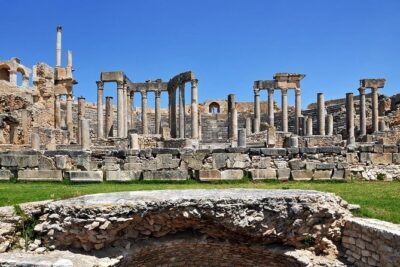
Full Day Dougga & Bulla Regia Via Testour Private tour with Lunch
Read our review →
Private Guided Tour of Dougga and Testour Mosque
Read our review →
Bulla Regia and Beni Mtir Cascade Daytrip from Tunis
Read our review →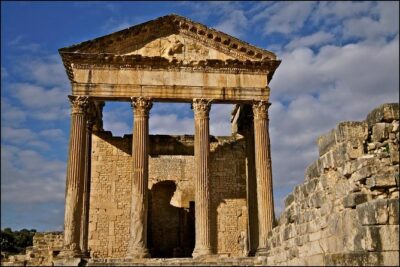
DAY TRIP TO Dougga & Bulla Regia , DEPARTURE FROM Tunis
Read our review →Browse the lists this tour appears in