
Reviewed · THE BARDO
Bardo Museum , Oudhna and the roman aqueduct
The real appeal here is the way four very different Tunisian sights fit into one day: the Bardo Museum’s Roman mosaics, Carthage’s enormous water system, the countryside aqueduct, and Oudhna’s quiet ruins. You get art, engineering, and archaeology without piecing together separate taxis or tours.
I like the private format for up to two people, and I like the contrast between the polished museum and the open archaeological sites. The main consideration is pace: six to seven hours covers a lot of ground, and lunch is not included, so you should plan for a fairly full day.
Key points to know
- The Bardo Museum takes about two hours: Its Ottoman-era royal palace displays one of the world’s largest collections of Roman mosaics.
- The aqueduct tells a complete water story: You see the Carthage cisterns, then part of the 132-kilometre channel from Zaghouan.
- Oudhna adds major Roman ruins: The amphitheatre held about 16,000 spectators, while the Capitol and Villa Laberii add detail and scale.
- This is a private tour for up to two people: You avoid a large group and can share the day with just your companion.
- Transport and fees are covered: An air-conditioned vehicle and all fees and taxes are included, while lunch costs extra.
- The day works best for archaeology fans: You need to be happy spending several hours looking closely at mosaics, masonry, cisterns, and ruins.
Why this route works so well
I like this tour because it does not treat Roman Tunisia as a single stop. The Bardo Museum shows what Roman life looked like in art. Carthage shows how the city stored water. Oudhna shows how people gathered, worshipped, lived, and watched public events.
That range gives the day a useful shape. You begin indoors, where the mosaics and palace rooms provide close detail. You then move outdoors to the waterworks and finish among the ruins at Oudhna, where the countryside setting gives the ancient remains more space.
The schedule is listed at roughly six to seven hours. That is long enough to make the route worthwhile, but short enough to fit into a day based in Tunis. You should expect a full outing rather than a quick museum visit. The private arrangement is particularly useful here because the stops have different rhythms. You may want time with a mosaic, a few minutes at a cistern, and longer at the amphitheatre.
More Museum Tours in Tunis
- Private tour: Medina,Carthage ,Sidi Bou Said, Bardo Museum+lunch
★ 5.0 · 230 reviews - Carthage, Bardo Museum, Sidi Bou Said and Medina Private Day Tour
★ 4.5 · 153 reviews - Tunis: Carthage, Bardo Museum, Sidi Bou Said & Medina Group Tour
★ 4.5 · 33 reviews
Two hours among the Bardo Museum mosaics
The National Bardo Museum is the anchor of the day. It occupies a grand royal palace from the Ottoman era, so the setting is part of the visit. You are not simply walking through a modern display hall. The palace rooms frame an extraordinary collection of Roman mosaics.
The collection is described as the world’s largest of its kind. Even if you are not an expert in ancient art, the scale matters. You see how Roman North Africa used mosaic work to decorate floors and communicate stories, symbols, and status.
I would give the museum’s full two hours. A rushed visit would turn it into a parade of pretty floors, while a slower visit lets you notice repeated themes and changes in design. Look closely at the details rather than trying to remember every room. The value is in seeing the variety side by side.
The Bardo also makes a sensible first stop. Indoor exhibits are easier on a long day than beginning in the open sun, and the museum gives you context before you reach the Roman sites. You can then recognize the artistic skill behind details found at Oudhna.
The drawback is simple: anyone who prefers open-air ruins may find two hours indoors demanding. I would still keep this stop, especially if this is your first visit to Tunis. It gives the rest of the route a stronger frame.
The Malaga Cisterns and Carthage’s water supply
At Carthage, the tour visits the end of the aqueduct at the Malaga Cisterns. The site includes 18 large water containers, described as holding up to 32,000 litres of water per day.
This is not the sort of stop where you spend hours wandering. The planned visit is about 30 minutes, which feels right for a quick look at the scale and purpose of the cisterns. The appeal is practical rather than decorative. You are seeing the infrastructure that helped support Carthage, once the capital of Colonia Africa.
I like this stop because it makes the aqueduct easier to understand. A long channel can seem abstract when you only see a surviving section in the countryside. At the cisterns, you see the destination. Water arrived here, was collected, and could then serve the city.
The short timing also keeps the day moving. You get an important piece of the story without losing the best part of your afternoon at Oudhna. Bring your attention to the size, arrangement, and function of the containers. This is a place for understanding how a city worked, not just taking a quick photograph.
The supplied description uses the figure of 32,000 litres per day. Since that wording describes the capacity connected with the cisterns, I would treat it as an impressive indication of the water system’s role rather than try to turn the visit into a technical calculation.
Following the 132-kilometre Roman aqueduct
From Carthage, the route continues toward the Zaghouan aqueduct. The channel once carried water from mountain springs at Zaghouan to Carthage, over a distance of 132 kilometres.
That distance is the engineering marvel. The aqueduct linked a distant mountain water source with the city, and this route gives you two ends of the story: the cisterns at Carthage and the aqueduct corridor south of the city.
The drive from Carthage toward the aqueduct is listed at about 30 minutes. The aqueduct stop itself is also about 30 minutes and is free of charge. It is located roughly six kilometres from Oudhna, on the road between Mhammedia and El Fahs.
This part of the tour is best for you if ancient engineering interests you. The remains may not offer the polished presentation of a museum, but that is also the point. You are looking at a large-scale Roman solution to a basic problem: how to bring reliable water to a major settlement.
I would not expect this to be a long guided walk from the information given. The stop is brief, so use it to appreciate the route, the surviving architecture, and the connection between Zaghouan and Carthage. If you want every technical detail explained, you should ask questions during the visit.
The aqueduct is also a welcome change of mood. After the palace galleries and enclosed cisterns, you are back outside, with the road and countryside helping you picture the system across a much larger area.
More Bardo Museum visits:
- Private Day Tour Tunis Medina Carthage Sidi Bou Said Bardo Museum
★ 5.0 · 30 reviews - Daytrip Carthage Sidi Bousaid Bardo and Tunis Medina
★ 5.0 · 20 reviews - Private Tour Sidi bou Said Medina Carthage & bardo Museum
★ 4.5 · 13 reviews - Tunis Group Tour: Carthage, Sidi Bou Said, Bardo museum & Medina
★ 5.0 · 5 reviews
Oudhna’s 16,000-seat amphitheatre
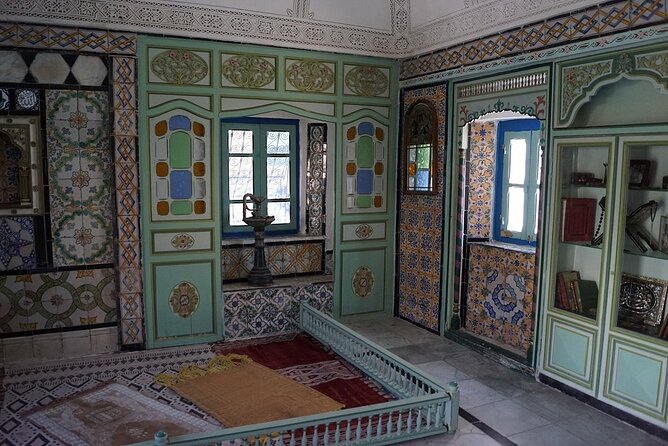
Oudhna Archaeological Park is the day’s broadest stop, with about two hours planned there. The site includes a Roman amphitheatre that could hold around 16,000 spectators.
That number gives the ruins weight. This was not a minor local venue. It was built for large public events, and its size helps you imagine the scale of Roman urban life in North Africa.
I like Oudhna because it feels different from Bardo and Carthage. The museum is carefully presented, while Oudhna places you among the remains themselves. The site is surrounded by nature, which adds quiet and space to the visit. You can focus on the shape of the buildings instead of moving from one display to the next.
The amphitheatre is likely to be the visual highlight for many people. Take time to look at the seating arrangement and the arena space. A ruin becomes easier to understand when you consider who occupied it and how many people it was designed to hold.
The site also rewards patience. Two hours is enough to see the main features, but you should not expect every corner to be explained in a few minutes. Wear comfortable shoes and be prepared for an outdoor archaeological visit. Specific ground conditions are not provided, so practical footwear is the safest choice.
The Capitol, underground vaults, and Villa Laberii mosaics
Oudhna is more than an amphitheatre. The park also includes the Capitol, impressive underground vaults dating to the Byzantine era, and the Villa Laberii mosaics.
The Capitol gives you a religious and civic counterpoint to the arena. It helps show that Oudhna was a functioning Roman settlement with more than one kind of public building. The underground vaults add another layer, reaching into the Byzantine period rather than stopping with Roman rule.
Then come the Villa Laberii mosaics. These connect Oudhna back to the Bardo Museum, but in a more direct setting. At the museum, you see a large national collection inside a palace. At Oudhna, you can connect mosaic decoration with a specific villa and archaeological site.
I would save some energy for these details. It is easy to let a large amphitheatre take all your attention, but the Capitol, vaults, and villa remains make the stop more complete. Together, they show public entertainment, religion, later use, and private decoration.
The supplied timing gives Oudhna two hours, which should help prevent the visit from becoming a rushed photo stop. Still, the whole day includes several sites, so you should expect the guide to manage the order and pace. The private format gives you a better chance to ask for a little extra time where your interests are strongest.
What the private format adds for two people
The price is $258.49 per group of up to two people. If two people share the booking, that works out to about $129.25 each. The price includes all fees and taxes, as well as an air-conditioned vehicle.
That is not a budget outing, but the value depends on what you would otherwise need to arrange. You are combining a major museum, two Carthage water sites, and Oudhna in one day. A private vehicle also avoids the work of coordinating transport between Tunis, Carthage, and the countryside.
The private setup suits couples, friends, or a parent and adult child. You share the vehicle only with your own group, and most people can participate. Service animals are allowed, and the tour is near public transportation, though pickup is offered.
Lunch is not included. That matters because the day runs six to seven hours. You should ask about the lunch plan or prepare to pay separately. One account connected with the experience describes lunch on a farm as a pleasant addition, but it is not part of the listed inclusions, so treat that as optional rather than guaranteed.
The air-conditioned vehicle is another practical plus, especially on a warm day. You are moving between several sites, and a cool ride gives you a break between walks and museum rooms.
Who should book this Tunis day trip?
I would choose this tour if you want Roman Tunisia in a compact, private format. It is especially good for you if mosaics, ancient construction, amphitheatres, and archaeological sites hold your interest.
It also suits anyone who wants more than the usual city visit. The route links Tunis with Carthage and Oudhna, so you see both a celebrated ancient city and a less urban archaeological setting.
Families can benefit from the variety. The museum offers close visual detail, the aqueduct provides a simple engineering story, and the amphitheatre gives children a sense of size. The day is still long, so younger children may need breaks.
I would think twice if you want a slow day with one main attraction. Four stops plus driving require energy. I would also reconsider if lunch arrangements are important to you and you do not want to organize an extra meal.
The available rating is 4.8 from four published reviews, but the useful point is the pattern of praise: the Bardo is described as fabulous, the aqueduct as a wonder, and Oudhna as an archaeological site set among nature. A separate note about street sellers and crowded activity advises keeping valuables close, a sensible habit around busy Tunisian sights even though no serious problems were reported in that account.
Final verdict: a strong archaeology day with a full schedule
I recommend this tour for a first serious look at Tunisia’s Roman heritage, particularly if you are staying in Tunis and want private transport. The Bardo Museum gives you the art, Carthage gives you the water system, and Oudhna gives you the scale of a Roman town.
The strongest reason to book is the combination. You are not seeing four versions of the same ruin. You are following a story from decorated palace floors to cisterns, a 132-kilometre aqueduct, and a 16,000-seat amphitheatre.
The main caution is time. Six to seven hours is a useful length for this route, but it will feel busy if you linger at every stop. Book it when you want a focused, well-packed day, and remember that lunch is extra. Free cancellation is available up to 24 hours before the start time, while poor weather can lead to a new date or a full refund.
FAQ
How long does the tour last?
The tour lasts approximately six to seven hours.
What places are included?
The route includes the National Bardo Museum, Carthage’s Malaga Cisterns, the Zaghouan aqueduct, and Oudhna Archaeological Park.
How much does the tour cost?
The price is $258.49 per group of up to two people.
Is this a private tour?
Yes. Only your group participates, and the booking is for up to two people.
Is transportation included?
Yes. An air-conditioned vehicle is included, and pickup is offered.
Are admission fees included?
All fees and taxes are included. Admission is listed as included for the Bardo Museum and the Carthage cisterns. The aqueduct and Oudhna stops are listed without an additional admission charge.
Is lunch included?
No. Lunch is not included in the tour price.
How long is the visit to the Bardo Museum?
The planned visit to the Bardo Museum lasts about two hours.
Can I cancel the booking?
Yes. You can cancel up to 24 hours before the experience starts for a full refund. Changes or cancellations made less than 24 hours before the start time are not accepted for a refund.
More Museums in Tunis
- Bardo Museum with Medina, Carthage and Sidi Bou Private Tour
★ 5.0 · 5 reviews - Bardo Museum- The ruins of Carthage- Village of Sidi Bou Said
★ 5.0 · 4 reviews - Private Tour Bardo Museum, Carthage, Sidi Bou Said and Medina
★ 4.5 · 3 reviews - Private tour: Medina,Carthage ,Sidi Bou Said, Bardo Museum+lunch
★ 5.0 · 194 reviews
Just added around Tunis
- Private Group Day Tour Tunis Medina Carthage Sidi Bou Said★ 4.5 · 3 reviews
- Private Tour Bardo Museum, Carthage, Sidi Bou Said and Medina★ 4.5 · 3 reviews
- 3-Day South of Tunisia Guided Tour from Tunis★ 4.0 · 3 reviews
- Explore Tunisia in Depth:The Private Grand Tour in 8 Days★ 5.0 · 3 reviews
- From Tunis: Star Wars 5 day tour★ 5.0 · 4 reviews
- DAY TRIP TO Dougga & Bulla Regia , DEPARTURE FROM Tunis★ 5.0 · 4 reviews
- Private Tour to El Jem, Sousse, and Monastir From Tunis_Hammamet★ 5.0 · 4 reviews
- Private Walking Tour of Carthage Archaeological Site in Tunisia★ 4.5 · 4 reviews
Bardo Museum Tours, compared.
VIP Tour: Tunis Medina/Bardo, Sidi Bou Said, Carthage
Read our review →
Private tour: Medina,Carthage ,Sidi Bou Said, Bardo Museum+lunch
Read our review →
Tunis: Carthage, Bardo Museum, Sidi Bou Said & Medina Group Tour
Read our review →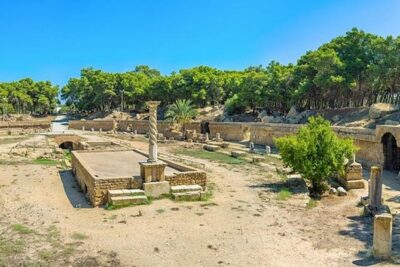
From Hammamet or Tunis: Carthage, Bardo, Sidi Bou said and Medina
Read our review →
Daytrip Carthage Sidi Bousaid Bardo and Tunis Medina
Read our review →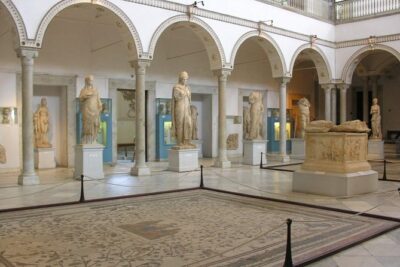
Bardo Museum- The ruins of Carthage- Village of Sidi Bou Said
Read our review →Browse the lists this tour appears in