
Reviewed · THE BARDO
Daytrip Carthage Sidi Bousaid Bardo and Tunis Medina
Carthage, Sidi Bou Said, the Tunis Medina, and the Bardo Museum pack much of northern Tunisia’s story into one long day. You move from Punic ports and Roman baths to blue-and-white streets, medieval souqs, and some of the finest mosaics in the Mediterranean.
I like the private vehicle and flexible guiding, especially if you want to focus on archaeology. I also like the mix of major sights and ordinary city life, from Carthage’s ruins to the Medina’s workshops and cafes. The tradeoff is pace: seven stops in 7 to 8 hours leaves little room for lingering.
Key points at a glance
- Carthage comes first: See the Tophet, Punic ports, Byrsa Hill, the Carthage Museum, and the Baths of Antoninus.
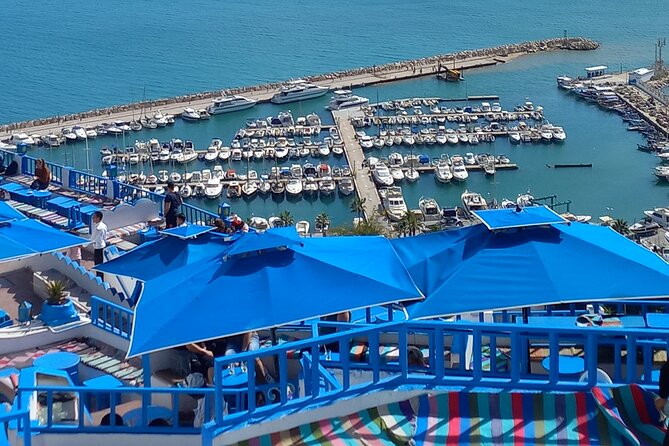
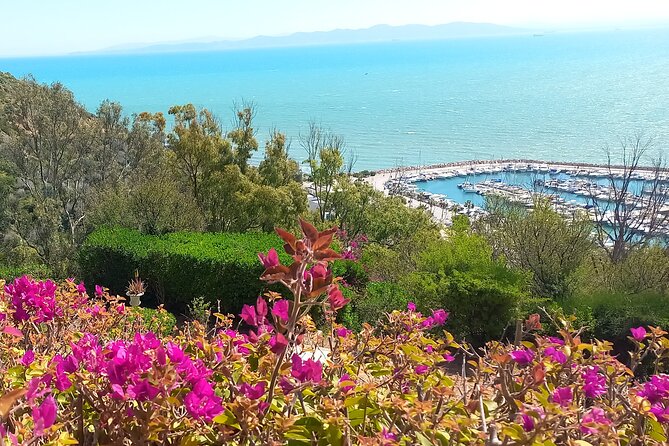
- Sidi Bou Said adds a change of mood: Its blue-and-white buildings, steep lanes, and sea views make a good contrast to the ruins.
- The Medina is best with a guide: Historic mosques, palaces, schools, hammams, and covered souqs can be hard to understand on your own.
- The Bardo Museum completes the history lesson: Its mosaic collection links Tunisia to the many cultures that shaped the Mediterranean.
- Private touring has real value: Guides including Ghassen, Sana, Mohammed, and Moncef can adjust the emphasis to your interests.
- Plan around Monday: The Bardo Museum is closed that day, so the museum portion is not available on Mondays.
Why this full-day route works
This is a history-heavy outing, but it does not feel like seven versions of the same ruin. Carthage gives you Punic and Roman remains. Sidi Bou Said offers architecture, views, and a slower walk. Tunis brings you into a living medieval quarter, while the Bardo Museum gathers the pieces indoors.
I like this structure because Tunisia’s past can otherwise feel scattered. A broken column at Carthage means more after you have seen Punic harbor plans, Roman baths, and museum mosaics. The guide helps connect those stops instead of leaving you with a string of impressive but unrelated photo stops.
The tour lasts about 7 to 8 hours and uses a private, air-conditioned vehicle. Pickup and return are offered from hotels in Tunis or Hammamet. That matters because the sites are spread across the capital area, and public transport would make this ambitious schedule far harder to manage.
The price is $162.60 per person. For one person, that is not a cheap sightseeing day. For a small group, though, the private vehicle, driver, guide, hotel transport, and several included admissions can make the price easier to justify. Group discounts may also be available.
Lunch is not included, so allow for that when comparing the total cost with other day tours. The schedule is also tight enough that a long restaurant stop could reduce time at one of the sights.
More Carthage and Sidi Bou Said days:
- Private tour: Medina,Carthage ,Sidi Bou Said, Bardo Museum+lunch
★ 5.0 · 230 reviews - Carthage, Bardo Museum, Sidi Bou Said and Medina Private Day Tour
★ 4.5 · 153 reviews - Guided Bike Tour of Carthage Archeological Site in Tunisia
★ 5.0 · 88 reviews
Carthage begins with the Tophet
The Tophet is a small but emotionally charged start to the day. It is often described as a children’s cemetery, though historians have debated exactly how the site was used. The ancient Carthaginians appear to have dedicated infants who died young to Baal and Tanit, major deities in their religious world.
Your guide can help separate archaeological evidence from later stories. For centuries, dramatic accounts of the site painted a picture of cruel priests, flames, and ritual sacrifice. Those images became especially powerful through 19th-century writing, but the actual evidence is more complicated.
You have about 20 minutes here, with admission included. That is enough for an introduction and a close look at the carved stelae, but not enough for a long archaeological discussion. If Punic religion is your main interest, tell your guide early. Ghassen, in particular, has been praised for shaping the day around Carthage and the Punic Wars.
The Punic ports reveal Carthage’s power
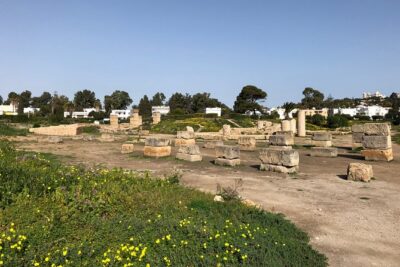
The next stop explains why Carthage became a major sea power. A narrow channel once linked two harbors: a long commercial port and a circular naval harbor. The military harbor was tucked away from outside view, while the Carthaginian fleet could watch the sea.
The naval port reportedly held space for about 220 ships in dry docks and around the quay. The commercial port covered about seven hectares and had quays and warehouses for trade. The ports were later filled in after Carthage was destroyed by Rome in 146 BC, then reshaped by the Romans centuries later.
The visit takes about 20 minutes and has no separate admission charge. The remains can be hard to picture without guidance, so this is one of the stops where a good explanation matters more than the physical ruins alone. I would pay close attention to the layout rather than expect grand walls or complete buildings.
Roman Carthage at the Baths of Antoninus
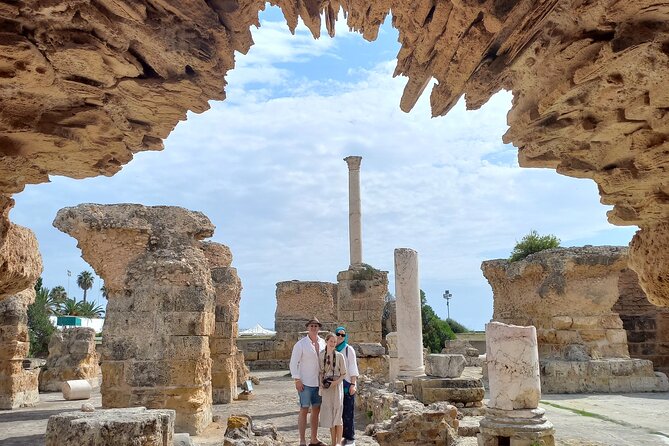
The Baths of Antoninus provide the day’s clearest look at Roman Carthage. Built in the second century, this was a large public bathing complex and is now part of an archaeological park.
You have about 45 minutes here, making it one of the longer Carthage stops. The scale helps show that Roman Carthage was not a minor outpost. It was a major city with public facilities, engineering, and social spaces built to serve a large population.
Admission is not included at this stop, so ask your guide about the current entry arrangement. The site involves walking over uneven archaeological ground, and the full day requires a moderate level of fitness. Comfortable shoes are a practical choice.
More Bardo Museum visits:
- Tunis: Carthage, Bardo Museum, Sidi Bou Said & Medina Group Tour
★ 4.5 · 33 reviews - Private Day Tour Tunis Medina Carthage Sidi Bou Said Bardo Museum
★ 5.0 · 30 reviews - Private Tour Sidi bou Said Medina Carthage & bardo Museum
★ 4.5 · 13 reviews - Tunis Group Tour: Carthage, Sidi Bou Said, Bardo museum & Medina
★ 5.0 · 5 reviews
Byrsa Hill and the Carthage Museum
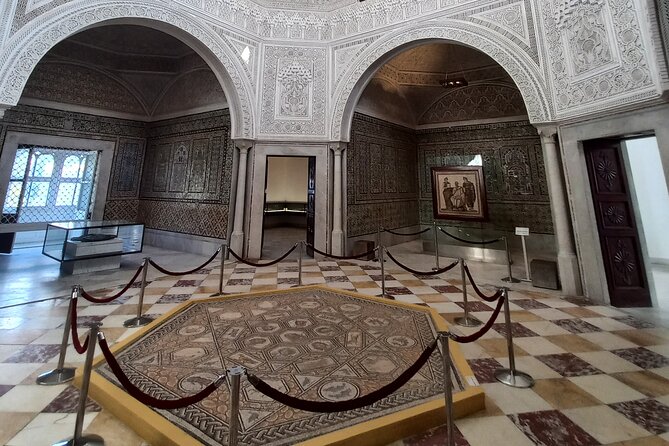
The Carthage Museum sits on Byrsa Hill, a symbolic location at the center of the ancient Punic city. From here, you can take in the surrounding remains and get a sense of how the old city occupied the hill and coast.
The museum was founded in 1875 and is the oldest museum in Tunisia. Its displays cover the civilizations connected with Carthage, including Punic and Roman material. The collection gives you the smaller objects and artistic details that open-air ruins cannot provide.
The visit lasts about 30 minutes, with admission included. That is useful, but brief. You will get an overview rather than a slow examination of every display. I would treat this as a compact orientation to Carthaginian culture and a chance to place the ruins into a wider story.
The hill also provides a natural pause between the archaeological sites and the rest of the day. If you are taking photographs, this is one of the better points for seeing the area from above.
Sidi Bou Said changes the pace
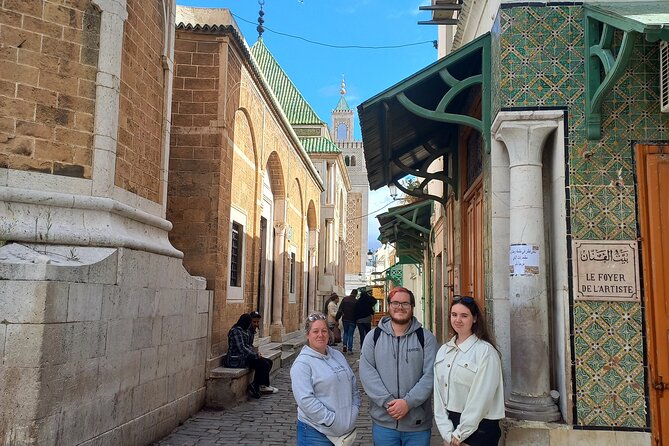
Sidi Bou Said is the most visually striking stop. The village is known for blue-and-white buildings, cobbled lanes, and wide views toward the sea. Its architecture reflects Ottoman and Andalusian influences, including the arrival of Spanish Muslims in Tunisia during the 16th century.
The village was protected in 1915, helping preserve its distinctive appearance. It also became associated with European artists and writers, including Paul Klee and André Gide. That outside fascination is part of the story, but the village is more than an attractive backdrop. Its lanes, doors, balconies, and painted walls show how a local style became a carefully protected identity.
You have about an hour here, with no separate admission charge. That is enough to walk, take photographs, and pause for the views. It is also one of the busiest-feeling parts of the route at popular times, and the sloping streets can be tiring after the morning at Carthage.
The guide can point out good photo locations. Ghassen has a reputation for finding strong photo spots in Sidi Bou Said and the Medina, while Sana has been praised for knowing when to explain and when to let the day unfold. Those small choices can make a private tour feel less mechanical.
The Tunis Medina rewards careful walking
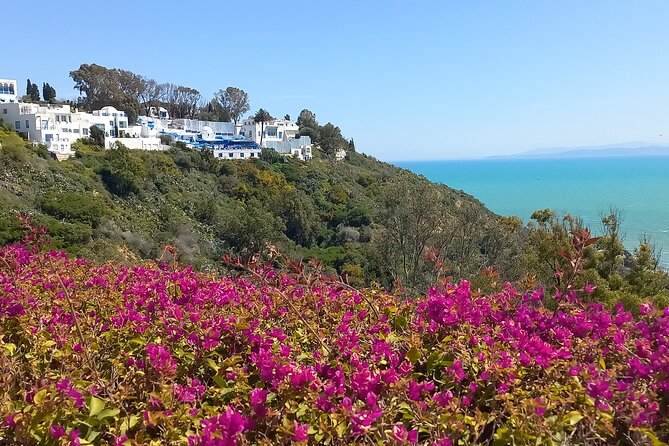
The Medina of Tunis is the most atmospheric part of the tour for me. This is not a museum quarter emptied of daily life. It is a maze of narrow streets, covered souqs, workshops, cafes, religious buildings, and residential lanes.
You may pass shops selling shoes, shisha pipes, and other local goods. Grand doorways lead to historic homes, while mosques, hammams, and Quranic schools appear behind plain street fronts. Inside, tiled walls, carved stucco, and marble columns reveal the care that went into these buildings.
The Medina is a UNESCO World Heritage site and one of North Africa’s important medieval quarters. Its complexity is exactly why a guide helps. A first visit can otherwise become a walk through attractive lanes without understanding what you are seeing.
The tour allows about 90 minutes here. That is a useful introduction, but not enough to cover every major building or browse every souq. If shopping is important to you, tell the guide before the walk so the route can allow some time for it. If architecture is your priority, ask to focus on the doors, religious schools, and historic interiors that are open during your visit.
The Medina also requires flexibility. Narrow streets, uneven paving, and crowded passages are part of the setting. The private vehicle cannot follow you inside, so expect a good amount of walking during this section.
The Bardo Museum ties the day together
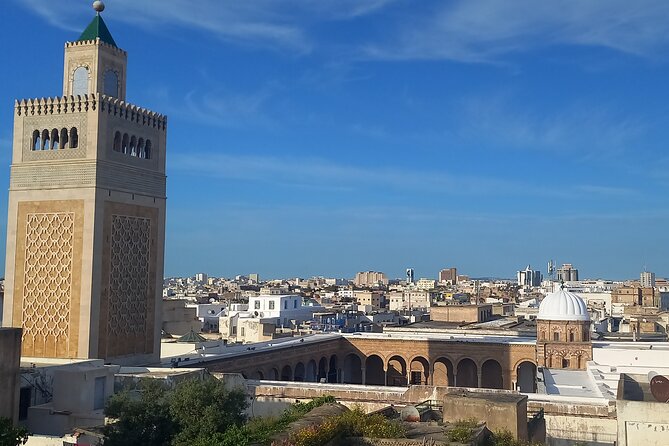
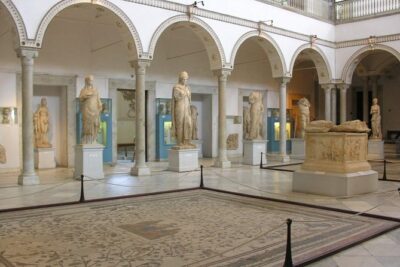
The National Bardo Museum is a strong final stop because it gives you a place to see Tunisia’s history in detail after visiting the sites where much of it was found. It is one of the major museums in Africa and is especially known for its mosaic collection.
The displays cover the cultures that developed around the Mediterranean, with Punic, Roman, and later material helping explain Tunisia’s position between Africa and Europe. The mosaics are the main draw, but the value of the museum is broader. It shows how artistic styles, religions, and political powers changed over time.
The guided visit takes about an hour, and admission is included. One caution is worth noting: the Bardo is closed on Mondays, so this stop is not available then. Confirm the day before booking if the museum is a priority.
The quality of explanation may vary by guide and subject. The archaeology-focused guiding associated with Ghassen is a strong fit for Carthage, while one detailed experience found the Bardo explanation less thorough than expected. If the museum matters greatly to you, tell the company that you want extra depth there rather than assuming every guide will spend the same amount of time on the collection.
How the private format affects the day
The private format is the main reason to choose this experience over a cheaper group excursion. Only your party takes part, and guides can adjust the emphasis. You can ask for more Punic history, more architecture, better photo stops, or more explanation in the Medina.
The driver also matters. Sana has been praised for being punctual, friendly, and calm on narrow roads and in tight parking spaces. That is useful in a day that moves through several busy urban areas.
The vehicle is air-conditioned, a welcome feature during a long sightseeing day. You also avoid repeatedly arranging taxis between Tunis, Carthage, Sidi Bou Said, and the Medina. For a group of friends or family, this convenience may be worth more than the price difference between a private and shared tour.
The drawback is that private does not mean leisurely. The route still has a fixed number of stops, and the total driving and walking time leaves limited space for spontaneous changes. If you prefer to spend half a day in one museum or explore the Medina without a schedule, book separate visits instead.
Who will get the most from this tour
I would recommend this day to first-time visitors who want a strong overview of Tunis and its surrounding sights. It suits people who care about history but also want architecture, views, markets, and a comfortable ride.
It is especially useful if you are staying in Hammamet and want to see the capital region without arranging several separate transfers. Families and small groups can also benefit from the private setup, since the guide can adjust the pace and explanations.
You should think twice if you dislike full schedules or have limited mobility. The tour requires moderate physical fitness, with walking through archaeological areas, cobbled lanes, and the Medina. The Bardo is also unavailable on Mondays, and lunch must be arranged separately.
Free cancellation is available if you cancel at least 24 hours before the start time. Changes or cancellations made within 24 hours are not refunded, so keep that cutoff in mind when making plans.
Should you book it?
Book this tour if you want to connect Tunisia’s main northern sights in one organized day and value a private guide who can shape the history around your interests. The combination of Carthage, Sidi Bou Said, the Medina, and the Bardo gives you a much fuller picture than any one stop alone.
I would book it for a first visit, especially with a small group. I would also request an archaeology-focused guide such as Ghassen if Punic Carthage is your main reason for going, or ask in advance for a detailed Bardo visit if mosaics are your priority. Skip it only if you want a slow, unstructured day, since this route covers a lot of ground at a steady pace.
FAQ
How long does the tour last?
The tour lasts approximately 7 to 8 hours.
Where does pickup take place?
Pickup and return are offered from hotels in Tunis or Hammamet.
Is the tour private?
Yes. Only your group participates in the activity.
Is the vehicle air-conditioned?
Yes. Transportation is provided in a private, air-conditioned vehicle.
Is lunch included?
No. Lunch is not included in the tour price.
Is the Bardo Museum open every day on this tour?
No. The Bardo Museum is closed on Mondays, so there is no museum visit on that day.
What is the cancellation policy?
You can cancel at least 24 hours before the start time for a full refund. Cancellations or changes made within 24 hours are not accepted for a refund.
Just added around Tunis
- Private Group Day Tour Tunis Medina Carthage Sidi Bou Said★ 4.5 · 3 reviews
- Private Tour Bardo Museum, Carthage, Sidi Bou Said and Medina★ 4.5 · 3 reviews
- Explore Tunisia in Depth:The Private Grand Tour in 8 Days★ 5.0 · 3 reviews
- 3-Day South of Tunisia Guided Tour from Tunis★ 4.0 · 3 reviews
- Bardo Museum , Oudhna and the roman aqueduct★ 5.0 · 4 reviews
- From Tunis: Star Wars 5 day tour★ 5.0 · 4 reviews
- DAY TRIP TO Dougga & Bulla Regia , DEPARTURE FROM Tunis★ 5.0 · 4 reviews
- Private Walking Tour of Carthage Archaeological Site in Tunisia★ 4.5 · 4 reviews
Bardo Museum Tours, compared.
VIP Tour: Tunis Medina/Bardo, Sidi Bou Said, Carthage
Read our review →
Private tour: Medina,Carthage ,Sidi Bou Said, Bardo Museum+lunch
Read our review →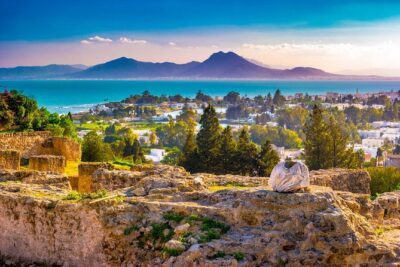
Tunis: Carthage, Bardo Museum, Sidi Bou Said & Medina Group Tour
Read our review →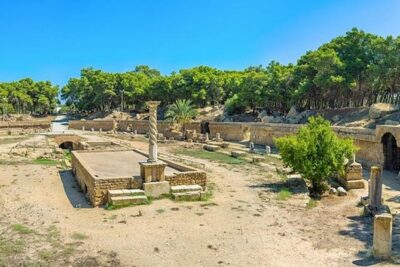
From Hammamet or Tunis: Carthage, Bardo, Sidi Bou said and Medina
Read our review →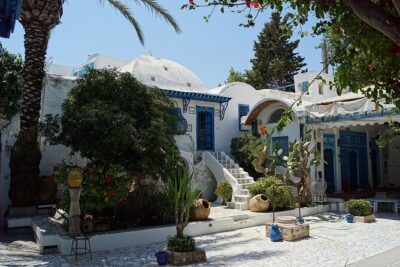
Bardo Museum- The ruins of Carthage- Village of Sidi Bou Said
Read our review →Browse the lists this tour appears in