
Reviewed · EL JEM
Kairouan Holy City and El Jem Colosseum Tour from Sousse
The most striking part of this day is the sharp change in scale and culture: you begin among the calm courtyards and sacred architecture of Kairouan, then finish beneath the massive stone arches of El Jem’s Roman amphitheatre. Few Tunisian day trips offer such a clear meeting of Islamic and Roman history.
I like the strong mix of sights, especially the chance to see the Great Mosque and Aghlabid Basins in Kairouan before exploring El Jem’s colosseum and museum. I also like that hotel pickup, entrance fees, and buffet lunch are included. The main drawback is the pace. This is a long, full day, and some stops can feel rushed. A carpet shop visit has also been reported, even though it is not part of the advertised schedule.
Key points to know before booking
- Two major historic centers in one day: Visit Kairouan, a UNESCO-listed spiritual center, and El Jem, home to one of the best-preserved Roman amphitheatres in the world.
- A strong guide can make the difference: Fares, Faris, and Aida are named as guides who gave clear explanations and handled questions well.
- The Great Mosque may have access limits: Non-Muslim visitors may not be permitted inside the mosque, so you should be prepared to admire parts of it from designated areas.
- Lunch and admission are included: The package covers the main entrance fees, the El Jem Museum, the amphitheatre, and a buffet meal. Drinks cost extra.
- Expect an early start and a long day: Pickup begins at 7:00 am, and the outing lasts about eight hours.
- The group can be large: The maximum is 50 people, so this is not a private or intimate tour.
Why Kairouan and El Jem work so well together
Kairouan and El Jem tell very different chapters of Tunisian history. Kairouan is tied to the development of Islam in North Africa, while El Jem recalls the Roman period and its public spectacles. Seeing both in one outing gives you a useful frame for understanding how Tunisia changed across centuries.
The contrast is not only historical. Kairouan’s religious buildings use courtyards, tilework, carved details, and carefully controlled light. El Jem is all exposed stone, steep seating, underground passages, and huge open spans. I like this pairing because the second half does not feel like a repeat of the first.
The tradeoff is time. With transport from the Sousse area, four scheduled Kairouan stops, lunch, and El Jem packed into roughly eight hours, you will not have unlimited freedom. If you prefer slow museum visits or long walks through an old quarter, a private or longer itinerary would suit you better.
More El Jem amphitheatre trips:
- Fun VIP Tour: El Jem, Kairouan, Monastir/Sousse (PICKUP ALL City)
★ 5.0 · 451 reviews - Private Tour to Kairouan, El Jem & Monastir from Tunis_hammamet
★ 5.0 · 301 reviews - Daytrip to Kairouan and El Jem Colosseum
★ 4.5 · 55 reviews
The Great Mosque of Kairouan in two hours
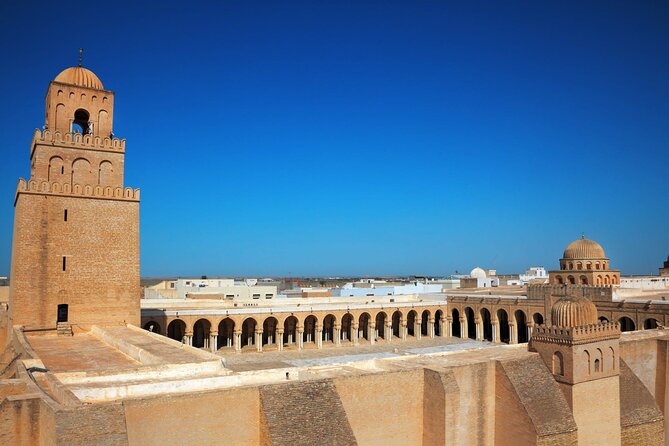
The Great Mosque is the visual and religious anchor of the Kairouan portion. It is one of North Africa’s oldest and most important Islamic monuments, with a broad courtyard, a powerful minaret, and a sense of order that makes the building feel calm even when the wider day is busy.
Your guide’s explanation matters here. The site is not simply a place to photograph. It helps you understand Kairouan’s role as a major center of Islamic learning and worship. Look at the proportions of the courtyard, the heavy exterior walls, and the way the minaret gives the complex its unmistakable profile.
The scheduled two hours sound generous, but they include the guided visit and likely movement around the site. You should listen closely at the beginning, then use any free minutes for your own photographs and quiet observation.
Access is an important point. One person specifically noted that non-Muslims were not allowed into the mosque, while Muslim visitors could enter and make a short prayer. Since access rules can shape your experience, do not book this day expecting a guaranteed interior visit if you are not Muslim. The mosque remains valuable to see from the permitted areas, but the distinction should be clear before you go.
Dress and behavior should reflect the religious setting. The supplied information does not give a formal dress code, but this is a revered place of worship, not simply an archaeological monument. Modest clothing and a respectful manner are sensible choices.
Sidi Sahbi, the Barber Mosque, and its tilework
The next stop is Mosque Sidi Sahbi, often called the Mosque of the Barber. It is a zaouia dedicated to a companion of the Prophet Muhammad and sits just outside Kairouan’s ancient medina.
This is a different experience from the Great Mosque. The Great Mosque feels monumental and restrained. Sidi Sahbi is known for decorative tilework and a more intimate, richly ornamented setting. Give yourself time to look at the walls and patterns rather than treating the stop as a quick photo break.
The scheduled visit lasts about one hour, which should be enough for a guided explanation and a look around, but it leaves little room for wandering. The site’s religious role is just as important as its decoration. Your guide can help explain why this place is revered and how it fits into Kairouan’s spiritual identity.
Guides named Fares, Faris, and Aida received especially strong praise for their friendly manner and clear explanations. Their names matter because this tour covers complex subjects quickly. A guide who welcomes questions can help you connect the buildings to Tunisian culture instead of leaving you with a string of disconnected facts.
The Aghlabid Basins and medieval water engineering
The Aghlabid Basins are easy to underestimate. At first glance, they may look like large stone reservoirs. Their real importance is practical: they formed part of an elaborate water system that supplied Kairouan and rank among the best-known medieval hydraulic works in the Islamic world.
This stop gives the day a useful change of focus. At the mosques, you are looking at belief, architecture, and decoration. At the basins, you are looking at the engineering needed to support a major city in a dry region. I like this because it shows that historic achievement is not limited to grand religious buildings.
The visit is scheduled for one hour. That is ample time to hear the explanation and take in the scale of the reservoirs, though it is not a long walking stop. If you enjoy archaeology and old infrastructure, pay attention to the way your guide explains the basins’ purpose rather than judging them only by appearance.
More Kairouan days out:
- Kairouan and El Jem Private Day Tour
★ 4.5 · 38 reviews - Private and Guided Tour to Kairouan and El Jem and Monastir
★ 4.5 · 22 reviews - Kairouan & El Djem Guided Day Trip with Lunch from Hammamet
★ 4.0 · 18 reviews - Kairouan day trip from Sousse.
★ 4.5 · 16 reviews
Buffet lunch before El Jem
A buffet lunch is included after the Kairouan visits. The meal is described as varied and is served at a nice hotel outside El Jem. Drinks are not included, so keep that small extra cost in mind.
A buffet is a practical choice for a group of up to 50 people. It keeps the schedule moving and lets you choose how much you want before the afternoon visit. It also gives you a proper pause during a day that starts early and includes substantial time on the road.
Do not expect lunch to feel like a long independent restaurant stop. The purpose is to feed the group efficiently before El Jem. Still, having food included adds real value to the $85.96 price, especially since transport, a guide, and entrance fees are also covered.
Entering El Jem’s Roman amphitheatre
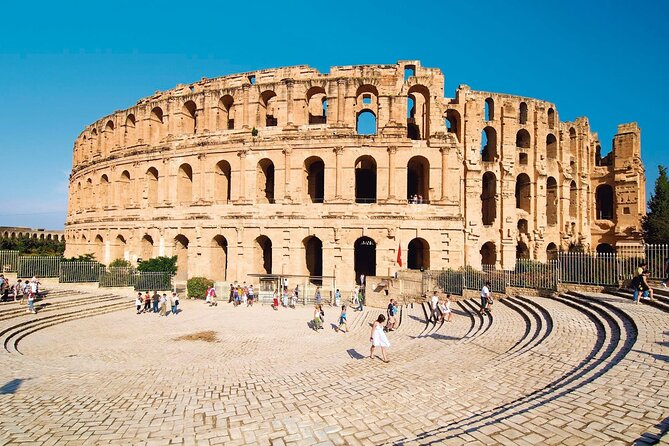
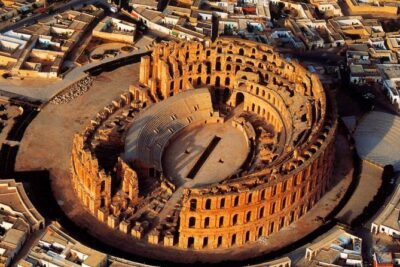
El Jem is the dramatic payoff. Its amphitheatre once held up to 35,000 spectators, and its surviving stone structure gives you a clear sense of the size of Roman public entertainment. The broad seating tiers, corridors, and heavy arches are far more impressive when you understand that crowds once gathered here for gladiatorial contests and other public events.
The site is not just a place to stand outside and take a picture. You can explore the amphitheatre’s interior spaces and corridors, then look out from higher levels to understand how the building was arranged. The stonework and repeated arches make the scale easy to read, even if you know little about Roman architecture.
The schedule gives El Jem four hours, which is the most generous portion of the day. That time includes the amphitheatre and museum, and it appears to allow some independent exploration. One person particularly appreciated having spare time at the colosseum, while another found the overall day tightly packed. Both points can be true: El Jem receives a substantial block of time, but the complete outing still asks you to keep moving.
The museum adds important context. Its mosaics and displays help explain the Roman world around the amphitheatre, so do not skip it if you care about archaeology. The combination of museum and monument is stronger than seeing the arena alone.
El Jem is also the place where the tour may feel most rewarding for families and mixed-interest groups. The building is immediately understandable. You do not need specialist knowledge to appreciate its size, and the guide’s explanations can add detail for anyone interested in ancient history.
What the guide adds to a fast-moving day
This tour depends heavily on the quality of its guide. Fares, also spelled Faris in the supplied information, is praised for explaining Kairouan, El Jem, and Tunisia as a whole in an interesting way. He is also described as someone who invited questions and looked after the whole group.
Aida is also named as a strong guide, particularly for making good use of the itinerary and allowing free time at El Jem. These details suggest that the guiding style may vary by departure, but the experience is designed around a local expert rather than a simple transfer between monuments.
You should ask questions as you go. Useful topics include the role of Kairouan in Islamic culture, the function of the Aghlabid water system, the religious meaning of Sidi Sahbi, and how the amphitheatre was used. The day covers a lot, so a short question can help you focus on what interests you most.
The bus driver was also praised for providing a safe and well-run journey, though the driver’s full name was not certain. Since pickup is included, you avoid arranging separate transport to distant sites. That convenience is one of the tour’s strongest practical benefits.
The $85.96 price and what it covers
At $85.96 per person, this is not the cheapest way to see Tunisia, but the price is reasonable if you use everything included. Hotel pickup and drop-off, a local guide, admission to El Jem’s amphitheatre and museum, the Kairouan visits, and buffet lunch are all part of the package.
The value is strongest for anyone who wants one organized day rather than several separate arrangements. You do not need to work out how to reach Kairouan, find onward transport to El Jem, buy entrance tickets, or choose a lunch stop. That saves time and reduces the risk of missing one of the major sites.
The price is less attractive if you dislike group travel or want complete control over timing. With up to 50 people, loading the bus and gathering the group may take time. You may also have less freedom to linger in Kairouan’s medina or return to a favorite building.
A carpet shop visit has been reported despite not appearing in the stated schedule. If shopping stops are not your interest, ask the guide at the start how the day will run. This is a fair thing to clarify before settling into the outing.
Who should book this day trip?
I would recommend it most strongly to people who want a broad introduction to Tunisia’s religious, architectural, and Roman past. It suits couples, families, and mixed-age groups because the main sights are varied and the day does not depend on one narrow interest.
It is especially good for:
- First-time visitors staying in the Sousse or Monastir area
- People interested in Islamic architecture and Roman archaeology
- Anyone who wants transport, lunch, and entrance fees handled together
- Visitors who appreciate a guide’s historical and cultural explanation
- Muslim visitors hoping to experience Kairouan’s sacred setting, subject to site access rules
I would hesitate if your top priority is a relaxed day, extended medina wandering, or a private guide. The schedule is demanding, and the group may be large. Kairouan receives several important stops, but not much spare time for simply getting lost in its old streets.
Free cancellation is available if you cancel at least 24 hours before the start time. The tour also requires a minimum number of participants, so a cancellation by the operator may lead to another date, another experience, or a full refund.
Final verdict: a worthwhile history-packed outing
You should book this tour if you want to see two of Tunisia’s most important historic places in one well-organized day. The Great Mosque, Barber Mosque, and Aghlabid Basins give Kairouan real depth, while El Jem supplies the visual thrill of a huge Roman amphitheatre that you can explore from within.
The best reason to choose it is the range of the experience. The day moves from worship and tilework to water engineering, mosaics, and gladiatorial architecture. The main warning is the pace, plus the possible carpet shop stop and uncertainty over interior mosque access for non-Muslims.
For a first visit from Sousse, the $85.96 cost buys a lot: transport, guidance, admissions, and lunch in a single package. Go in ready for an early start and a full schedule, and you will get a strong, useful look at Tunisia beyond the coast.
FAQ
Where does the Kairouan and El Jem tour start?
The tour starts with hotel pickup, and the listed start time is 7:00 am. Pickup and drop-off are included.
How long does the tour last?
The tour lasts approximately eight hours.
Which places are visited in Kairouan?
The itinerary includes the Great Mosque of Kairouan, Mosque Sidi Sahbi, also called the Mosque of the Barber, and the Aghlabid Basins.
What will I see at El Jem?
You will visit the El Jem Amphitheatre and its museum. The amphitheatre once held up to 35,000 spectators.
Is lunch included?
Yes. A varied buffet lunch is included. Drinks are not included.
Are entrance fees included?
Yes. Admission fees are included for the listed sites, including the El Jem Amphitheatre and Museum.
Can non-Muslim visitors enter the Great Mosque?
Access can be restricted. The supplied information includes a report that non-Muslim visitors were not allowed inside, while Muslim visitors could enter and pray.
What is the cancellation policy?
You can cancel for a full refund up to 24 hours before the experience starts. Changes or cancellations made less than 24 hours before the start time are not accepted for a refund.
Just added around Tunisia
- From Djerba : 1 day in the footsteps of Star Wars “Mos Eisley”★ 5.0 · 3 reviews
- PRIVATE 2 day SAFARI (Ksar Ghilane and Atlas Mountains) from Jerba★ 4.5 · 3 reviews
- Private Group Day Tour Tunis Medina Carthage Sidi Bou Said★ 4.5 · 3 reviews
- Private Tour Bardo Museum, Carthage, Sidi Bou Said and Medina★ 4.5 · 3 reviews
- 3-Day South of Tunisia Guided Tour from Tunis★ 4.0 · 3 reviews
- Explore Tunisia in Depth:The Private Grand Tour in 8 Days★ 5.0 · 3 reviews
- 2 Hour Hergla Visit and Sousse Medina Heritage Tour★ 4.5 · 3 reviews
- 3DAYS 4×4 safari from Sousse/Hammamet/Tunis 100km deep in desert camp★ 4.5 · 3 reviews
El Jem Amphitheatre Tours, compared.
Fun VIP Tour: El Jem, Kairouan, Monastir/Sousse
Read our review →
Private Tour to Kairouan, El Jem & Monastir from Tunis Hammamet
Read our review →
Half-day excursion from Sousse to the amphitheater of El Jem
Read our review →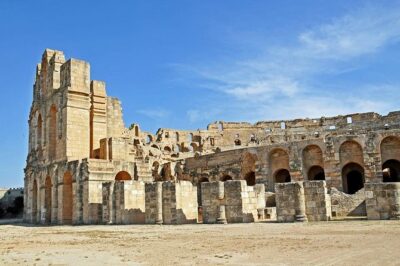
Private and Guided Tour to Kairouan and El Jem and Monastir
Read our review →Private Day Tour , Kairouan & Amphitheatre of el Jem From Tunis /Hammamet/Sousse
Read our review →Browse the lists this tour appears in