Reviewed · HISTORICAL TOURS
2 Hour Hergla Visit and Sousse Medina Heritage Tour
Hergla and Sousse show you two very different sides of Tunisia in one compact morning. Hergla is a quiet, whitewashed village above the sea, while Sousse brings you into a maze of market lanes, workshops, cafés, and old Arab architecture.
I like the sharp contrast between the two stops, and I like that you get both guided context and free time to shop in Sousse. The French-speaking guide has been praised for excellent commentary, and the driver for a smooth ride.
The main drawback is the tight schedule. With about one hour in each place, you will get a good introduction, not a leisurely visit. Shoppers may wish for more time, and a group of up to 50 can feel large in narrow medina lanes.
Key points to know before you book
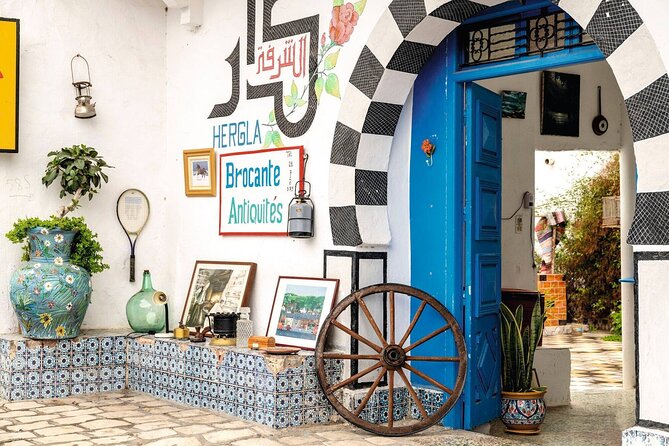
- Hergla’s clifftop setting: Walk through whitewashed lanes with blue doors and windows, then look down toward the sea and harbor.
- Raffia craftsmanship: Hergla is known for basket weaving and other designs made from dried raffia, a plant fiber used in practical and decorative goods.
- Sousse’s UNESCO medina: Spend an hour in a historic quarter filled with souks, old architecture, workshops, food stalls, and cafés.
- A useful shopping contrast: Look for Kairouan rugs, embroidered textiles, copper lamps, leather slippers, and olive wood pieces.
- Air-conditioned transport: The vehicle matters in Tunisia’s heat, especially when you are moving between two coastal towns.
- Simple morning timing: The tour begins at 8:30 am and lasts about two hours, with roughly one hour at each stop.
Why the Hergla and Sousse pairing works
This tour succeeds because it does not treat every Tunisian town as the same. Hergla gives you a slower start, with narrow streets, pale walls, blue-painted doors, and views from the coastal cliffs. Sousse then changes the pace with its crowded lanes and active market life.
That contrast is useful if you are staying around Monastir and want more than a single large sightseeing stop. You see a village shaped by the coast, then a major medina shaped by trade, religion, craft, and daily business.
I also like the balance between looking and buying. The tour is not only a shopping run, but shopping is part of the experience. You can see how Tunisian crafts appear in real shops and workshops, then decide if a rug, lamp, textile, slipper, or olive wood item deserves space in your luggage.
The short length is both its strength and its limit. Two hours is easy to fit into a morning, especially if you have limited time in the Monastir area. But you should arrive ready to keep moving. This is an introduction, not a full exploration of either town.
More ancient sites near Tunisia:
- Guided tour in the UNESCO world heritage Medina of Tunis
★ 5.0 · 68 reviews - Historical Tour of Ancient Carthage
★ 5.0 · 51 reviews
Hergla in one hour: white walls, blue doors, and raffia work
The first stop is Hergla, a seaside town set above the coast. Its whitewashed buildings and blue doors and windows give the streets a clear visual identity, with the colors echoing the water below.
You will walk through the lanes rather than simply stop for a photograph. The old mosque is one of the sights to look for, and the town’s raffia artisans are a key part of the visit. Raffia is a dried plant fiber that can be woven into baskets and other useful objects. If artisans are working during your visit, you may see the process rather than only finished goods in a shop.
That small detail makes Hergla feel more grounded. You are not just passing through a pretty village. You are seeing a local craft tied to everyday life and the town’s identity.
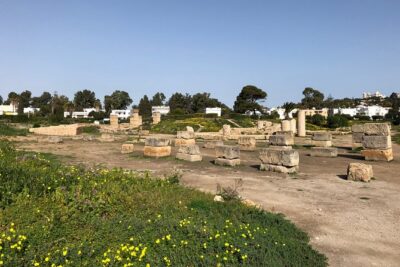
Hergla also has an ancient Roman connection. It was the site of Horrea Coelia, though this two-hour experience does not promise a full archaeological visit or a long explanation of Roman remains. Think of that detail as historical context for the town, not the main event.
The harbor adds another possible moment. You might catch fishing boats returning with their catch, but this depends on the timing of the morning and the activity at sea. It is best treated as a pleasant possibility rather than a guaranteed part of the program.
Because admission is free at Hergla, the stop focuses on walking, views, local work, and guide commentary. You will not need to budget for a separate ticket here. The tradeoff is that one hour passes quickly, so you will need to choose between lingering over the scenery, watching artisans, and browsing.
Sousse Medina: one hour inside a UNESCO quarter
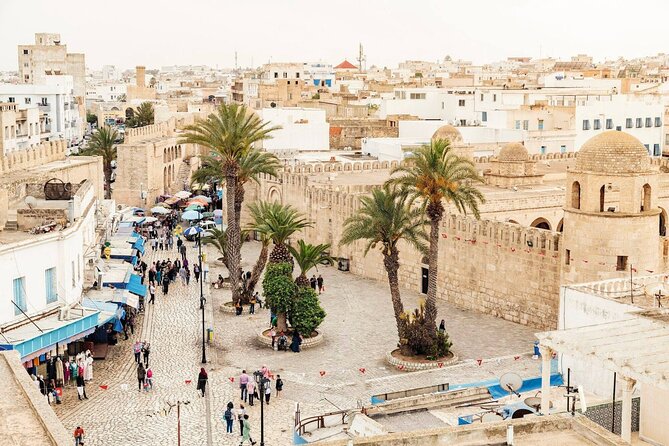
After Hergla, the tour moves to Sousse. The medina is the busier half of the experience, with a network of lanes enclosed by historic walls and filled with shops and local activity.
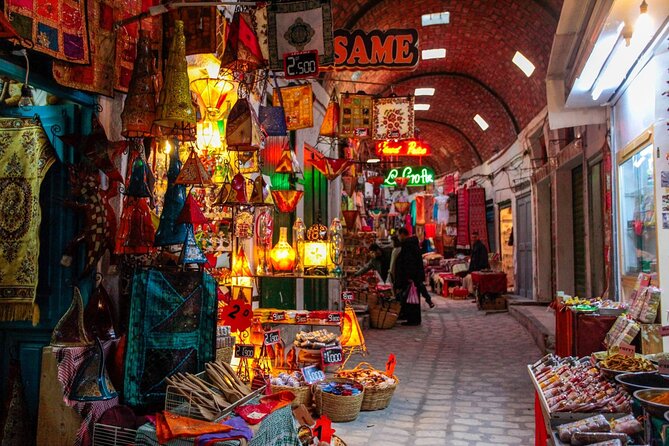
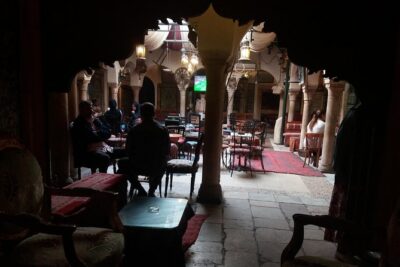
Sousse’s medina is recognized by UNESCO for its Arab architecture and long-preserved urban character. In practical terms, that means you should expect winding lanes rather than a neat sightseeing route. The pleasure comes from turning a corner and finding a workshop, a food stand, a small café, or a shop displaying handmade goods.
The main market area at Bab Jadid is one place to focus your attention. Bab il Gharbi is also worth seeking out. It is described as a good area for shopping, watching craftsmen, sampling street food, and taking a break at a café.
With only an hour here, you should listen carefully to the guide’s orientation at the start. Once you understand the main entrances and the areas being highlighted, you can use free time more wisely. If shopping matters to you, avoid spending the whole hour in the first shop you enter.
The medina is also where the group size may matter most. The maximum is 50 people, and narrow lanes can make a large group feel less nimble. The guide may provide useful commentary as you enter, but you should not expect an intimate, private walk at this price.
Still, the included admission and guided introduction give the stop a practical structure. You get a sense of the medina’s architecture and commercial life, then time to make your own choices.
What you can shop for in Sousse
The shopping side of the tour covers familiar Tunisian crafts, but the variety is useful if you are still deciding what kind of souvenir you want.
Kairouan rugs are among the most notable possibilities. They are colorful and can be substantial purchases, so take your time before committing. A short stop is enough to see examples, but not enough for a careful comparison of quality, size, materials, and price.
Embroidered textiles offer a lighter option. They may be easier to pack than a rug and can show regional decorative styles. Copper lamps are another classic item, with pierced metalwork that can create patterned light when used at home.
You may also see leather slippers, often a practical choice for shoppers who want something small. Olive wood pieces are useful for the same reason. They connect the product to Tunisia’s olive-growing culture and are generally easier to carry than larger home goods.
The tour summary tells you to have your haggling skills ready. Treat bargaining as part of the market culture, but keep your head. You do not need to buy anything, and a low price is not automatically a good deal if the item is poorly made or unsuitable for your luggage.
I recommend deciding your budget before entering the medina. If you want a rug or lamp, know your approximate spending limit. If you prefer a modest souvenir, look first at textiles, leather goods, or olive wood.
Same base, a completely different day out:
- VIP Tour: Tunis Medina/Bardo, Sidi Bou Said, Carthage |PICKUP ALL
★ 5.0 · 512 reviews - Fun VIP Tour: El Jem, Kairouan, Monastir/Sousse (PICKUP ALL City)
★ 5.0 · 451 reviews - Private Tour to Kairouan, El Jem & Monastir from Tunis_hammamet
★ 5.0 · 301 reviews - Private tour: Medina,Carthage ,Sidi Bou Said, Bardo Museum+lunch
★ 5.0 · 230 reviews
The guide and the value of commentary
The guide is included, and the strongest available praise concerns the quality of the commentary from a French-speaking guide. No guide name is provided, so you should not book expecting a particular person.
That language detail matters. If French is useful to you, the commentary may add much more than a basic transfer between towns. The guide can give the streets, crafts, mosque, medina, and shopping areas a clearer shape, especially when you have limited time.
The tour also includes an air-conditioned vehicle. That may sound ordinary, but it is a real comfort in Tunisia, particularly when you are moving from an outdoor clifftop walk into another walking stop. It gives you a cooler break between Hergla and Sousse.
The driver has also been praised for providing a good ride. You should still see this as transport included with a guided excursion, not as a private chauffeur service. The maximum group size is 50, so the vehicle and pace will depend on the day’s turnout.
At $41.66 per person, the value rests on convenience and structure. You are paying for a guide, transportation, two destinations, and included entry to the Sousse medina experience. If you would otherwise need to arrange transport from Monastir, plan the route, and negotiate your own time in both places, the price is reasonable.
The value is weaker if you want a slow, highly personal tour or a long shopping session. Two hours leaves little room for delays, extended café stops, or detailed browsing. You are buying an efficient overview rather than depth.
Timing, pickup, and group size
The stated start time is 8:30 am. That early departure helps you make use of the morning, when you may find it easier to walk before the day becomes hotter and the markets grow busier.
Pickup is offered, but the exact pickup point is not provided in the tour details. Check the confirmed arrangements before the morning of departure, particularly if you are staying outside central Monastir or at a property with several entrances.
The tour lasts approximately two hours. The planned rhythm is simple:
- About one hour in Hergla
- About one hour in Sousse
That schedule works well for a first look. It also means you should wear shoes suitable for uneven lanes and expect to spend most of the experience walking or standing. The information says most people can participate, but it does not provide detailed mobility guidance for every part of the route.
A mobile ticket is offered, which is convenient if you do not want to print paperwork. Confirmation is provided when you book. Free cancellation is available until 24 hours before the start time, but cancellations or changes made within that final 24-hour period are not refunded or accepted.
Who will get the most from this short tour
I would recommend this experience to you if you want a quick taste of two coastal Tunisian towns without giving up a full day. It suits first-time visitors who want a guide to set the scene, shoppers who are curious about local crafts, and anyone staying in the Monastir area who prefers organized transport.
It is also a good fit if you enjoy variety. Hergla supplies quiet streets, sea views, raffia work, and village character. Sousse supplies the medina, markets, workshops, food, and cafés.
You may want a different plan if your main goal is serious shopping. One hour in Sousse can be enough to look and make one or two purchases, but it is not generous for comparing rugs, bargaining carefully, and stopping for food.
You should also think about group size. A group of up to 50 is a clear possibility. If you prefer quiet walks and long conversations with a guide, a smaller private visit may suit you better, though this tour offers a simpler price point.
Should you book the Hergla and Sousse visit?
Book it if you want an efficient morning with a clear contrast between a quiet coastal village and one of Tunisia’s best-known medinas. The French-speaking guide, air-conditioned transport, free cancellation until 24 hours ahead, and time to shop all add practical value.
Go in with realistic expectations. You will not see every corner of Hergla or Sousse, and you will not have a long, relaxed shopping session. But for $41.66, the tour gives you two distinct places, useful local context, and an easy way to sample Tunisian crafts and medina life from Monastir.
FAQ
How long does the Hergla and Sousse tour last?
The experience lasts approximately two hours, with about one hour planned in Hergla and one hour in the Sousse medina.
What time does the tour start?
The stated start time is 8:30 am.
Is pickup available?
Yes. Pickup is offered, though the specific pickup arrangements are provided when your booking is confirmed.
What is included in the price?
The price includes a guide, an air-conditioned vehicle, and admission for the Sousse medina stop. Admission to Hergla is free.
How much does the experience cost?
The listed price is $41.66 per person.
How large can the group be?
The activity can have a maximum of 50 travelers.
Can I cancel for a full refund?
Yes. You can cancel at least 24 hours before the experience start time for a full refund. Cancellations or changes made less than 24 hours before the start time are not refunded or accepted.
Just added around Tunisia
- From Djerba : 1 day in the footsteps of Star Wars “Mos Eisley”★ 5.0 · 3 reviews
- PRIVATE 2 day SAFARI (Ksar Ghilane and Atlas Mountains) from Jerba★ 4.5 · 3 reviews
- Private Group Day Tour Tunis Medina Carthage Sidi Bou Said★ 4.5 · 3 reviews
- Private Tour Bardo Museum, Carthage, Sidi Bou Said and Medina★ 4.5 · 3 reviews
- 3-Day South of Tunisia Guided Tour from Tunis★ 4.0 · 3 reviews
- Explore Tunisia in Depth:The Private Grand Tour in 8 Days★ 5.0 · 3 reviews
- 3DAYS 4×4 safari from Sousse/Hammamet/Tunis 100km deep in desert camp★ 4.5 · 3 reviews
- From Tozeur: 3-Day Desert Trip★ 5.0 · 3 reviews
Historical Tours, compared.
Guided tour in the UNESCO world heritage Medina of Tunis
Read our review →