
Reviewed · CARTHAGE
Historical Tour of Ancient Carthage
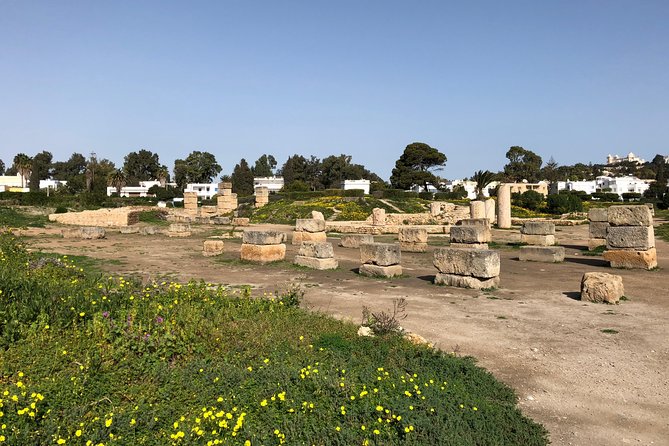
The most striking part of this tour is how much Carthage you can cover in a short morning or afternoon. In roughly three and a half hours, you move from a Roman arena to the ancient Punic harbor, a religious sanctuary, and the ruins of one of North Africa’s oldest churches.
I like the private format, which lets your group ask questions and adjust the pace. I also like the practical help from guides such as Tarek, who has made the complicated history easier to follow and has even helped arrange a preferred lunch stop. The main consideration is time: each site receives only about 30 to 45 minutes, so this is a sharp introduction rather than a slow archaeological study.
Key points to know before booking
- Four major Carthage sites in one outing: See Roman, Punic, and early Christian remains in a single tour.
- A private group experience: Only your party participates, giving you room to ask questions and request reasonable adjustments.
- Tarek is a highly praised guide: His storytelling and willingness to answer questions are central to the experience.
- Private transport is included: This matters because the archaeological sites are spread around modern Carthage.
- Saint Cyprian’s Basilica brings the best views: The seaside ruins give the tour a welcome change of pace.
- Plan for lunch separately: Food is not included, though the guide can suggest good places to eat.
Why this short Carthage tour works
Carthage is not a single compact ruin with one grand entrance. Its remains are scattered around the modern suburb of Carthage, near Tunis. That makes a private vehicle useful. You spend less energy figuring out routes and more time listening, looking, and asking questions.
The tour also gives you four different windows into the city. The Roman arena shows how Carthage changed after Rome defeated the Punic city. The Punic Ports and Tophet point back to the earlier civilization. Saint Cyprian’s Basilica brings you into the early Christian period.
I like that range. You are not simply walking past one set of stones while hearing the same story repeated. Each stop has a different purpose, and the guide connects them into a clear sequence.
The price is $104 per person. That is not a bargain for a three-and-a-half-hour outing, but it includes private transportation, admission fees, and a guide for your own group. If you are traveling with several people, group discounts may improve the value. For a couple or solo visitor, the price is easier to justify if you value convenience and historical explanation over independent sightseeing.
The experience is booked about 70 days ahead on average, so I would not leave it until the last minute if your Tunis schedule is fixed. Pickup is offered, and a mobile ticket makes the arrival process simple.
More Carthage and Sidi Bou Said days:
- Private tour: Medina,Carthage ,Sidi Bou Said, Bardo Museum+lunch
★ 5.0 · 230 reviews - Carthage, Bardo Museum, Sidi Bou Said and Medina Private Day Tour
★ 4.5 · 153 reviews - Guided Bike Tour of Carthage Archeological Site in Tunisia
★ 5.0 · 88 reviews
The Roman arena at the Site Archeologique de Carthage
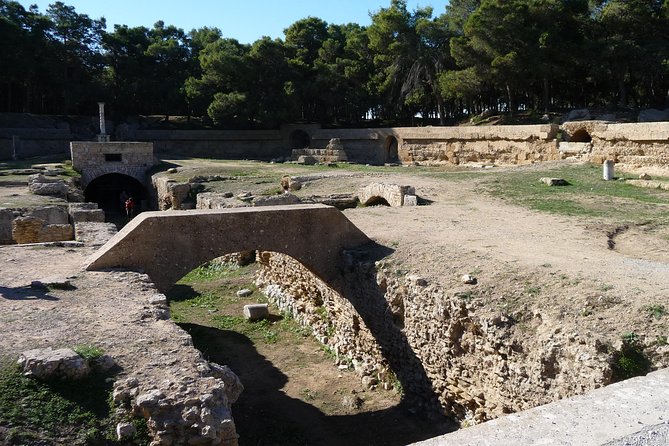
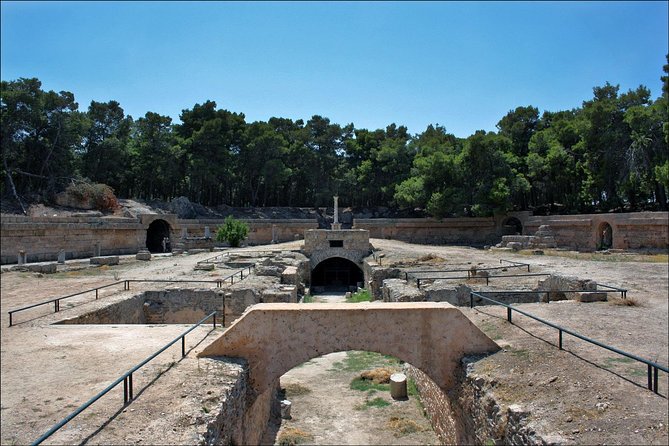
The first stop is the Site Archeologique de Carthage, described here as the Arena of Carthage. You have about 45 minutes, the longest stop on the route, and admission is included.
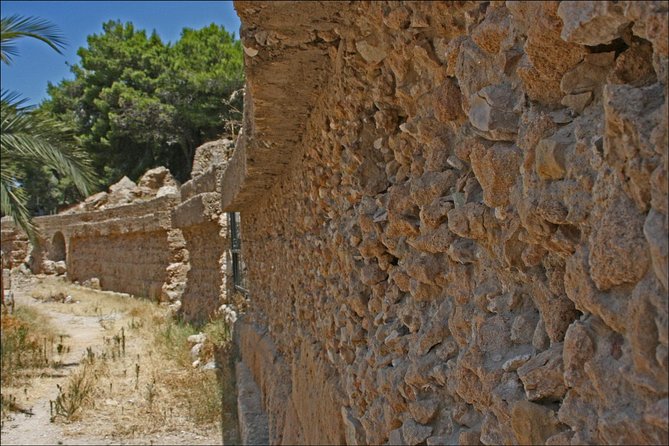
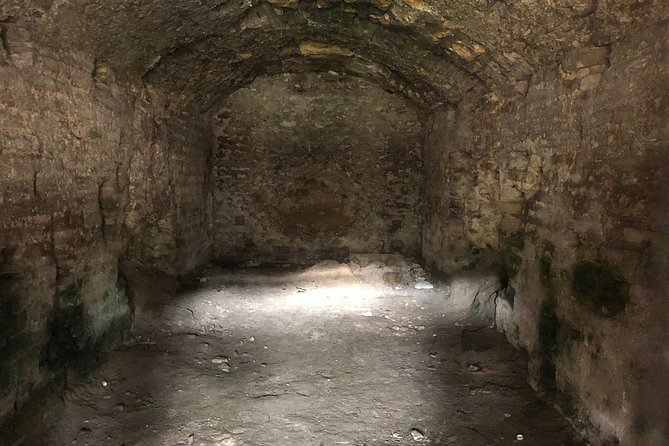
This is a useful opening because it gives you a physical sense of Carthage under Roman rule. The arena has been preserved well enough for you to explore the premises and picture the public life that once filled the space. Your guide explains the site and places the ruins within the larger story of Roman Carthage.
I would pay close attention to the layout rather than expecting a complete building. Archaeological sites often make more sense when you let your guide point out what survives, what has disappeared, and how the space was used. Tarek’s role is especially helpful here because the remains alone do not tell the full story.
Forty-five minutes is enough for an introduction and photographs. It is not enough for every corner or a detailed study of Roman architecture. If you are fascinated by ancient arenas, you may wish the tour gave this stop more time. For most people, the schedule provides a good first look without allowing one site to consume the entire outing.
Reading the ancient harbor at the Punic Ports
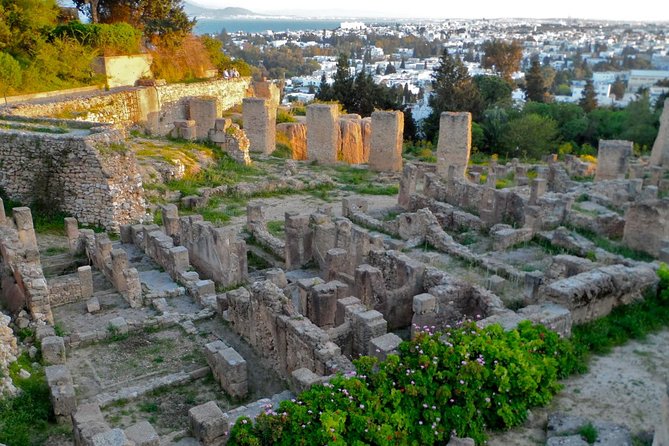
The Punic Ports and Museum receive about 30 minutes. This stop takes you back before Roman control, to the harbor system that helped make Carthage a major Mediterranean power.
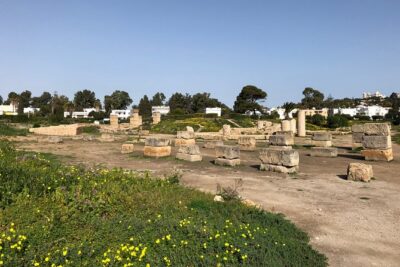
The port is more than a pile of old stones. It helps explain why the city mattered. Carthage was tied to movement by sea, trade, and naval power, and the remains give your guide a concrete place to explain those connections. Walking through the ruins is more useful than simply viewing them from a roadside stop.
The museum adds context, though the supplied details do not specify how large it is or how many exhibits are open during your visit. I would treat this as a focused stop, not a full museum visit. Thirty minutes passes quickly once you include the walk, explanation, and time to look around.
This is one of the places where going alone could be frustrating. Without a guide, the outline of an ancient port may not immediately make sense. Tarek’s explanations can help turn the harbor into a working part of the old city rather than an isolated ruin.
The religious world of Tophet de Carthage
Tophet de Carthage is another 30-minute stop, and it deals with one of the most sensitive parts of Carthaginian history. The site was an ancient religious compound, and the guide discusses Carthaginian beliefs and religious practices.
This stop adds weight to the tour. Ancient religion was not a side issue in Carthage, and Tophet raises difficult questions about ritual, belief, and the way historians interpret archaeological evidence. I appreciate that the site offers a chance to understand Carthage as a society with its own religious traditions, not simply as an enemy described through Roman sources.
You should expect an interpretive visit rather than a large monument. The interest lies in what the place represents and how its remains are explained. If you prefer only grand architecture, this may feel less immediately dramatic than the arena or the basilica.
Your guide matters a great deal here. A good explanation can provide context without turning a serious subject into a simple story. The private setup also gives you a better chance to ask questions if the topic raises issues you want to understand more clearly.
More ancient sites near Tunis:
- Guided tour in the UNESCO world heritage Medina of Tunis
★ 5.0 · 68 reviews - 2 Hour Hergla Visit and Sousse Medina Heritage Tour
★ 4.5 · 3 reviews
Sea views at La Basilique de Saint Cyprien
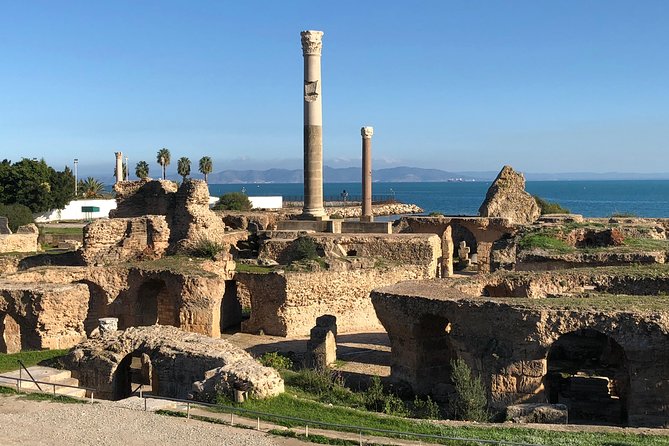
The final stop is La Basilique de Saint Cyprien, with about 30 minutes to explore the ruins. This early Christian basilica overlooks the Mediterranean and offers some of the finest views on the route.
After the arena, harbor, and Tophet, the basilica changes the mood. You are now looking at the remains of one of the oldest churches in North Africa, set above the sea. The combination of religious history and open coastal views gives the tour a strong finish.
The site is also a reminder that Carthage did not disappear after the Punic Wars. Its story continued through Roman and Christian periods, and the basilica helps show that longer timeline. Ask your guide to explain how this church fits into the development of Christianity in North Africa.
The half-hour visit should be enough to see the ruins, hear the main explanation, and enjoy the view. If you want a quiet period to sit and take in the Mediterranean, the schedule may feel tight. Still, this is a well-chosen final stop because it provides visual variety and a calmer ending.
Tarek’s role can make the difference
The strongest personal praise for this experience centers on Tarek. He is described as friendly, kind, attentive, and able to answer a wide range of questions. His value is not only in naming dates and buildings. He helps connect the separate sites and makes a large amount of information easier to absorb.
That last point matters. Carthage covers several civilizations, and the tour moves quickly. You will hear about Punic religion, Roman public life, ancient ports, and early Christianity in one outing. A guide who can keep those periods separate while showing how they connect is worth paying for.
Tarek has also accommodated a special request and helped arrange a desired shawarma lunch. Lunch is not part of the price, but optional recommendations are available. If food matters to you, mention your preferences early and ask what can be arranged.
The driver is also part of the experience. Mohammed has been specifically praised for his service. Private transportation means you do not need to work out how to move between the different Carthage sites, and that saves valuable time during a short tour.
You should confirm the assigned guide and driver when booking or before pickup. Names and staffing can change, but Tarek and Mohammed are the people associated with the strongest praise provided for this experience.
A private group is more useful than it sounds
Private tours are not automatically better. They cost more than joining a larger group, and some people prefer the social energy of meeting other visitors. Here, though, the private format solves several practical problems.
First, you can ask basic questions without worrying about slowing down a busload of people. Second, your guide can respond to your interests. If you care more about Roman Carthage than the Punic period, you can request extra explanation where time allows. A special request has already been accommodated on this tour, so flexibility is part of its appeal.
Do not expect unlimited freedom. The outing lasts about 210 minutes, and the listed site visits account for about 135 minutes. The remaining time covers driving, moving between sites, and the practical business of getting in and out. The private format gives you flexibility within that framework, not a completely open schedule.
The experience is also suitable for most people, and it is near public transportation. Since private pickup is offered, you may not need to use public transit at all. The key advantage is door-to-door ease, especially if you are visiting Tunis for a short time.
Who gets the best value for $104
At $104 per person, I would recommend this most readily to people who want a guided introduction to Carthage and do not want to manage transport between scattered sites.
The price includes:
- Private transportation
- All fees and taxes
- Admission to the listed sites
- A private guide for your group
Lunch is extra. You can receive recommendations for good lunch spots, but you should budget separately for food.
The value improves for families or small groups that can use a group discount. It also improves if you are staying in Tunis briefly, have limited time, or want an expert to organize the sequence. If you already know Carthage well and prefer to spend hours at one site, the short schedule may not suit you.
I would also compare the cost with your alternative. Independent sightseeing may appear cheaper, but you would need to arrange transportation, pay admissions, navigate between sites, and supply your own historical context. The tour fee pays for all of that convenience, plus the chance to ask questions in real time.
The 98 percent recommendation rate and five-star average from 51 ratings suggest a consistently strong experience, with the clearest praise directed at the guide’s warmth and explanations. I would still keep expectations sensible: this is a compact overview, not a specialist archaeology course.
Timing, weather, and the small practical details
The full experience lasts approximately three hours and 30 minutes. The four stops are scheduled for 45 minutes, 30 minutes, 30 minutes, and 30 minutes. That leaves some moving time, so do not book a tight connection immediately afterward.
Pickup is offered, but the supplied information does not specify the exact pickup area or time. Confirm those details before the day of the tour. A mobile ticket is accepted, and booking confirmation is received at the time of booking.
The tour requires good weather. If poor weather forces cancellation, you will be offered another date or a full refund. That is useful to know when planning around a short stay in Tunis.
You can cancel for a full refund up to 24 hours before the local start time. Changes or cancellations inside that 24-hour window are not accepted for a refund. I would keep that deadline in mind, especially if your Tunis plans depend on cruise timing, flights, or uncertain transport.
Most people can participate, but the available information does not give detailed mobility notes for each archaeological site. If you have a specific access concern, ask the provider before booking rather than assuming every ruin has an even surface.
Who should book this Carthage experience
I think this suits you best if you are visiting Tunis for the first time, want several historical periods in one outing, and prefer a guide to explain what you are seeing.
It is also a good fit for families and small private groups. Children or first-time history visitors may find the stories easier to follow with a guide, while adults can ask more detailed questions without a large group schedule.
You may want another format if your main goal is photography, quiet reflection, or extended study at one archaeological site. The tour keeps moving, and each stop has a firm time limit.
I would also think twice if you dislike private vehicle tours or prefer to discover places without narration. The whole point here is efficient movement and interpretation. You are paying for the guide’s voice, the transport, and the connections between sites.
Should you book the Historical Tour of Ancient Carthage?
Book it if you want a well-organized, private introduction to Carthage and value having Tarek or another strong local guide explain the sites. The combination of Roman ruins, Punic ports, Tophet, and Saint Cyprian’s Basilica gives you a clear view of Carthage across several centuries.
The best reasons to choose it are simple: private transport, included admission, a compact schedule, and a guide who can answer questions and adjust to your interests. The main tradeoff is that $104 per person buys a fast overview, not a leisurely day among the ruins.
For a first visit to Tunis, I think the convenience is worth serious consideration. Add lunch afterward, leave some space in your schedule, and ask about pickup details and the assigned guide before you go.
FAQ
How much does the Historical Tour of Ancient Carthage cost?
The tour costs $104 per person. Group discounts are available.
How long does the tour last?
The experience lasts approximately three hours and 30 minutes.
Is hotel or location pickup offered?
Pickup is offered. Confirm the exact pickup details with the provider before the tour.
Is this a private tour?
Yes. Only your group participates in the activity.
What transportation is included?
Private transportation is included.
Are entrance fees included?
Yes. All fees and taxes are included, including admission for the listed stops.
Is lunch included?
No. Lunch is not included, but the guide can recommend suitable lunch spots.
Which sites does the tour visit?
The tour visits the Site Archeologique de Carthage, Punic Ports and Museum, Tophet de Carthage, and La Basilique de Saint Cyprien.
Can I cancel for a full refund?
Yes. You can cancel at least 24 hours before the local start time for a full refund.
What happens if bad weather cancels the tour?
If poor weather causes cancellation, you will be offered a different date or a full refund.
Just added around Tunis
- Private Tour Bardo Museum, Carthage, Sidi Bou Said and Medina★ 4.5 · 3 reviews
- Private Group Day Tour Tunis Medina Carthage Sidi Bou Said★ 4.5 · 3 reviews
- Explore Tunisia in Depth:The Private Grand Tour in 8 Days★ 5.0 · 3 reviews
- 3-Day South of Tunisia Guided Tour from Tunis★ 4.0 · 3 reviews
- Bardo Museum , Oudhna and the roman aqueduct★ 5.0 · 4 reviews
- From Tunis: Star Wars 5 day tour★ 5.0 · 4 reviews
- DAY TRIP TO Dougga & Bulla Regia , DEPARTURE FROM Tunis★ 5.0 · 4 reviews
- Private Tour to El Jem, Sousse, and Monastir From Tunis_Hammamet★ 5.0 · 4 reviews
Carthage & Sidi Bou Said Day Trips, compared.
VIP Tour: Tunis Medina/Bardo, Sidi Bou Said, Carthage
Read our review →
Private tour: Medina,Carthage ,Sidi Bou Said, Bardo Museum+lunch
Read our review →
Guided Bike Tour of Carthage Archeological Site in Tunisia
Read our review →
1 day excursion Tunis Sidi Bousaid Carthage departure from Sousse
Read our review →
Archaelogical Site Of Carthage + Picturesque Village Of Sidi Bou Said
Read our review →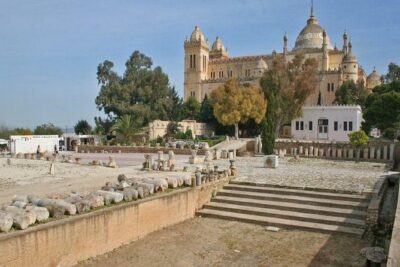
Tunis, Sidi Bousaid and Carthage day trip from Hammamet
Read our review →
Tunis: Carthage, Bardo Museum, Sidi Bou Said & Medina Group Tour
Read our review →Browse the lists this tour appears in