
Reviewed · CARTHAGE
Guided Bike Tour of Carthage Archeological Site in Tunisia
Carthage makes far more sense when you see its ruins as part of one connected city, and this private bike tour lets you move between its scattered sites without spending the morning waiting for transport. You will visit the Tophet, Punic ports, Antoninus Baths, Roman Theatre, and Byrsa Hill with a guide who explains how Punic and Roman Carthage fit together.
I like the chance to use an electric bicycle, especially in Tunisian heat and on the slopes around Byrsa Hill. I also like the private format: guides such as Kareem, Jibrane, and Chedi have been praised for giving each stop proper time instead of rushing from ruin to ruin. The drawback is that this is still a physical outing, and the Carthage Museum on Byrsa Hill is closed, while Saint Louis Cathedral is viewed only from outside.
Key points to know before booking
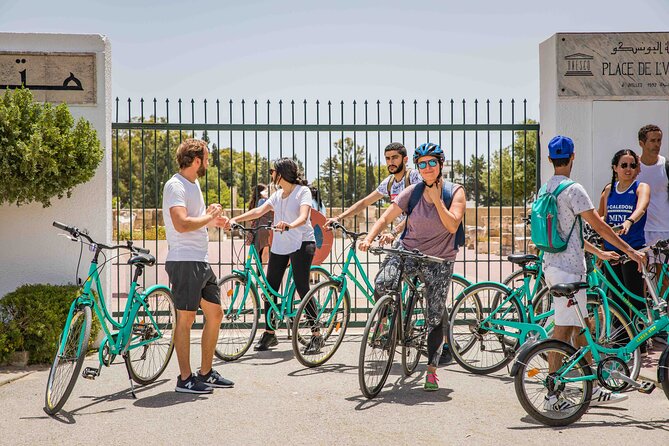
- You cover five major Carthage sites in about three hours, including the Tophet, Punic ports, Antoninus Baths, Roman Theatre, and Byrsa Hill.
- The electric bike upgrade matters in the heat, particularly on hills and during stretches of local traffic.
- Your guide is central to the experience, with Kareem, Jibrane, and Chedi each praised for clear, engaging explanations.
- Admission, bicycle, helmet, taxes, and fees are included, so the listed price covers more than a simple bike rental.
- This is a private activity, meaning only your own group takes part.
- Hotel pickup is not included, and you must reach 9 Rue Hannibal at the Carthage archaeological site.
Why a bike helps you understand Carthage
Carthage is not one compact ruin with a single entrance and a neat path through it. The ancient city’s important remains are spread across the modern area, so the bicycle gives you a practical way to connect the pieces.
You are not simply pedaling for exercise. The movement helps you picture Carthage as a working port city, a Punic religious center, and later a major Roman settlement. Your guide can explain the relationship between the sites as you travel, rather than treating each ruin as an isolated photo stop.
The private setup is another real advantage. You can ask questions, pause for an explanation, or spend more time at a place that catches your interest. Guides named Kareem, Jibrane, and Chedi have received especially strong praise for their historical explanations and friendly manner, though the guide assigned to your booking may vary.
At $91.89 per person, this costs more than visiting Carthage independently. But the price includes a professional guide, bicycle, helmet, taxes, fees, and admission to the listed archaeological stops. For two or more people, the value improves if you care about context and convenience rather than only getting inside the ruins.
More Guided Tours in Tunis
- Guided tour in the UNESCO world heritage Medina of Tunis
★ 5.0 · 68 reviews - Group Guided Bike Tour of Carthage Archeological Site in Tunisia
★ 5.0 · 57 reviews - 7 Day Guided Tunisia Tour Including Pickup
★ 5.0 · 27 reviews
Starting at the Tophet of Carthage
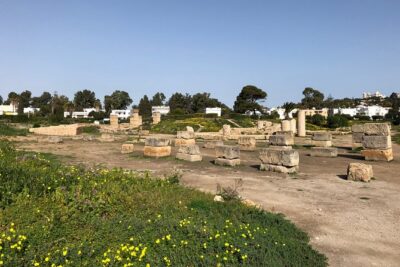
The tour begins at the Tophet, a Punic sanctuary where you spend about 30 minutes. This is an important first stop because it introduces the religious side of Carthaginian culture before the tour moves into the city’s ports and Roman remains.
Your guide explains the Punic beliefs connected with the sanctuary and helps you read the site beyond its stone remains. Without that background, the Tophet can seem quiet and difficult to interpret. With a guide, the stop becomes a chance to consider how religion shaped daily life and public space in ancient Carthage.
Thirty minutes is enough for an introduction, though it is not a long archaeological study. If you want to examine every visible feature closely, the private format gives you a better chance to ask for extra explanation than a large group tour would.
Seeing the Punic Ports and Museum area
Next, you spend about 30 minutes at the Punic ports. These ports are one of the clearest places to connect Carthage with the wider Mediterranean world. Your guide explains their role in maritime history and helps you understand why this city became such an important power.
This stop works well by bicycle because it comes as part of a moving route through the ancient city. You are not confined to one ruin. Instead, you begin to see how the ports related to the religious and civic parts of Carthage.
The scheduled time is brief, so expect an informative visit rather than a long museum session. Admission is included for the listed stops, and the tour description also refers to a museum at the Punic ports. The Carthage Museum on Byrsa Hill, however, is closed, so do not book this tour expecting a full museum visit later in the morning.
Spending an hour at the Baths of Antoninus
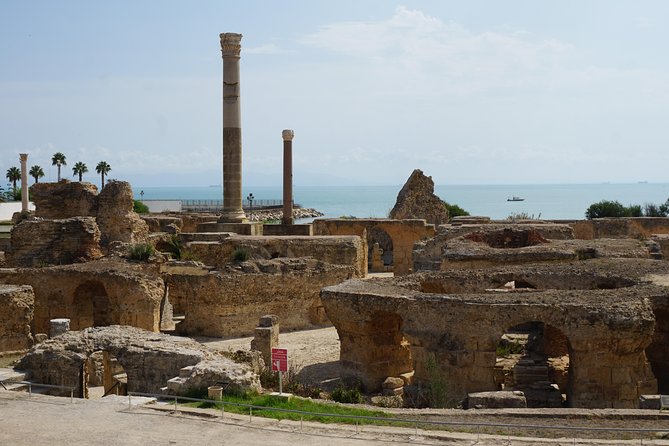
The longest stop is the Baths of Antoninus, with about one hour set aside. That extra time is sensible. The site contains extensive Roman remains, including the baths facing the sea, and it is one of the tour’s main visual highlights.
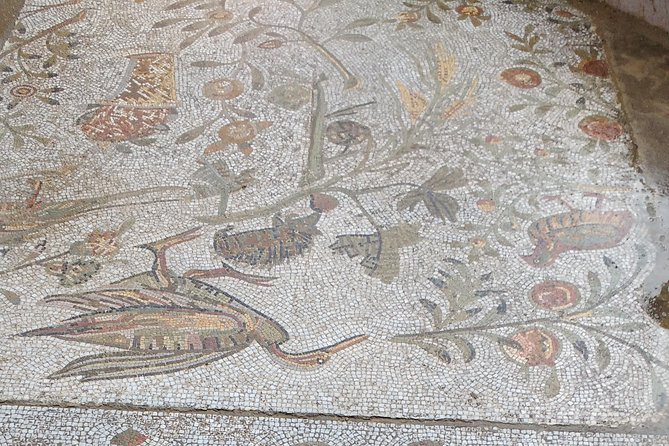
Your guide explains how the bath complex worked and why it mattered in the Roman city. You will see more than a single preserved building. The ruins spread across a broad area, with columns, walls, and foundations that help you picture the scale of one of the Roman Empire’s major bath complexes.
This is where the tour’s guide-led approach pays off most. Ancient walls can blur together when you visit alone, especially under strong sun. A clear explanation gives each section a purpose and helps you understand what you are looking at.
The open archaeological setting also means you should plan for heat and walking alongside the cycling. The bicycle reduces the distance between sites, but it does not turn the entire experience into a seated ride. A moderate level of fitness is required, and the electric bike can make this stop and the connecting route easier.
More Carthage and Sidi Bou Said days:
- Private tour: Medina,Carthage ,Sidi Bou Said, Bardo Museum+lunch
★ 5.0 · 230 reviews - Carthage, Bardo Museum, Sidi Bou Said and Medina Private Day Tour
★ 4.5 · 153 reviews - Archaelogical Site Of Carthage + Picturesque Village Of Sidi Bou Said
★ 5.0 · 56 reviews - Historical Tour of Ancient Carthage
★ 5.0 · 51 reviews
A short look at the Roman Theatre
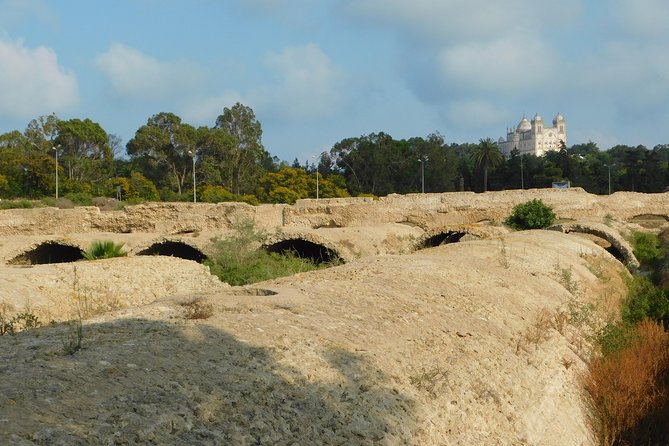
The Roman Theatre receives about 20 minutes. It is described as a beautiful site, and its shape offers a different view of Roman Carthage from the baths.
The shorter stop suggests a focused visit. You will have time to see the theatre and hear its place in the ancient city, but not necessarily enough for a long architectural inspection. That is fine within a three-hour tour, since the goal is to cover several major areas rather than spend the whole morning at one monument.
I would treat this as a useful contrast to the Baths of Antoninus. The baths show the scale of Roman public life, while the theatre points to performance and civic entertainment. Together, they give the Roman section of the tour more variety.
Finishing on Byrsa Hill
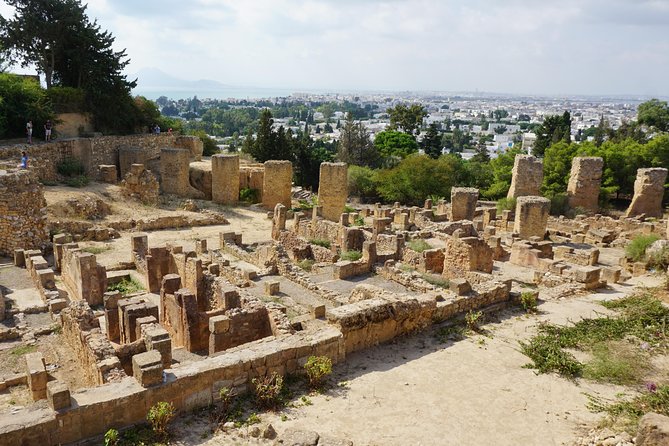
The final stop is Byrsa Hill, where you spend about 15 minutes. This area lets your guide discuss Punic architecture and the way Roman rule changed the hill.
You will also see Saint Louis Cathedral from the outside. The cathedral is not entered, and the Carthage Museum on the hill is closed. That limitation is worth noting because some visitors may expect the hilltop stop to include both the cathedral interior and a museum visit.
The short time here works more as a final orientation point than a full visit. Byrsa Hill helps tie the tour together, since you can look back at the wider Carthage area and consider how the city changed across different periods. Your guide’s explanation matters more here than the number of minutes on the schedule.
What the private format changes
A private tour is not automatically better than a group tour, but Carthage is a good place for the difference to matter. The sites cover several historical periods, and you may need extra explanation to connect the Punic sanctuary, commercial ports, Roman baths, theatre, and hilltop architecture.
With only your group taking part, you can ask direct questions without holding up strangers. You can also tell the guide if you want more detail at the Baths of Antoninus or a faster pace at a shorter stop.
The strongest praise has focused on the guides’ ability to explain the past in an engaging way. Kareem has been described as giving plenty of information and enough time at each site. Jibrane has been praised for making the history feel active and immediate, while Chedi has been noted for complete explanations. These comments suggest that the quality of the guiding is the main reason to choose this tour over a simple bicycle rental.
The experience is available for your group alone, but that does not mean the timing is fully custom. The advertised route still takes about three hours and includes five planned stops.
Choosing a regular or electric bicycle
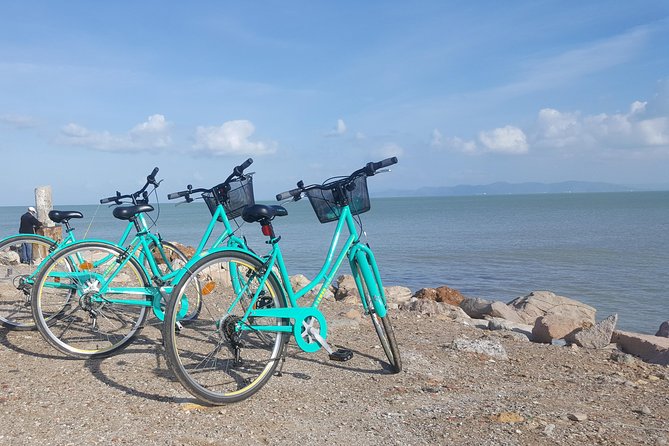
The tour provides a bicycle and helmet. You can also upgrade to an electric bike, which is likely the better choice if you are concerned about hills, heat, or tiring before the archaeological visits are finished.
Several strong comments specifically praised electric bicycles for making Carthage easier to see without becoming worn out. That matters in Tunisia, where the weather can make moderate cycling feel much harder than expected. The electric option also helps when moving through traffic and around the slopes near Byrsa Hill.
A regular bicycle may suit you if you already cycle often and want more exercise. Still, the bike is a means of reaching the ruins, not the main challenge of the activity. If your priority is to stay fresh for the guide’s explanations and the long visit at the baths, the electric upgrade has a clear practical benefit.
You should have a moderate fitness level. The tour involves cycling, getting on and off the bike, and moving around archaeological ground. The bicycle does not remove all walking or uneven surfaces.
Cycling through modern Carthage
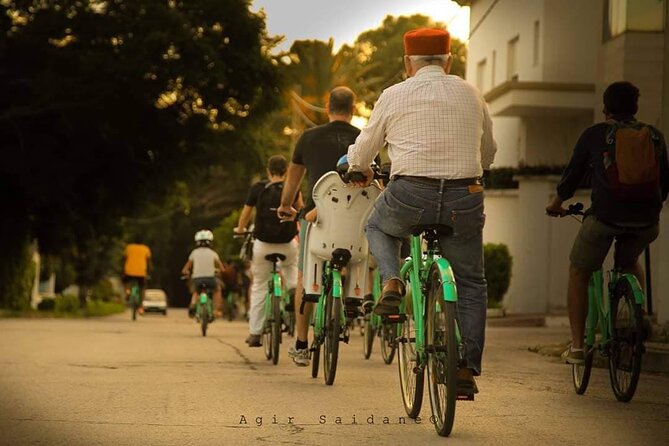
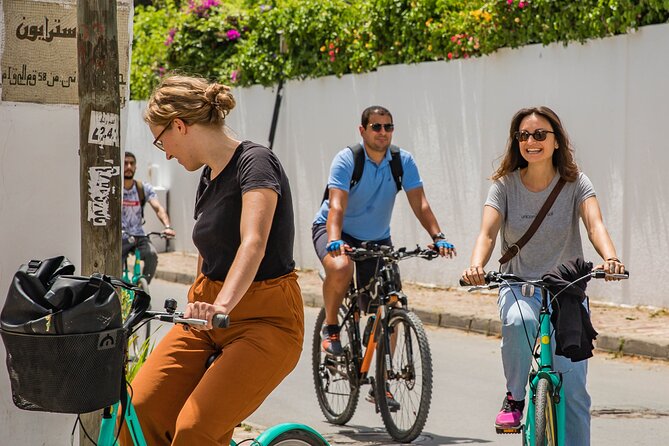
One useful part of this experience is the way it connects ancient remains with present-day Tunisian life. You are not sealed inside an isolated historical park. You cycle through a beautiful neighborhood and learn how bikes, cars, and pedestrians share the roads.
That can be both interesting and demanding. A guide who knows the area helps you navigate the local streets, but you still need to pay attention and follow instructions. If riding in traffic makes you nervous, ask about the route and bike choice when you arrive.
The bicycle also gives you a better sense of distance. Carthage was not just a collection of monuments. Moving between the sites shows how much ground the ancient city covered and why a vehicle or bicycle can save time compared with walking the whole route.
Timing, meeting point, and what to bring
The tour lasts about three hours and begins at 9 Rue Hannibal, Site archéologique de Carthage, in Tunis. It ends back at the same meeting point, so you need to arrange your own way there and onward travel.
Hotel pickup and drop-off are not included. The site is near public transportation, which helps if you are staying elsewhere in Tunis, but the tour does not provide a transfer service.
A current valid passport is required on the day of the activity. Bring it, along with clothing suited to outdoor cycling and archaeological walking. The supplied information does not list a separate snack or drink service, so you should not assume refreshments are provided.
The tour requires good weather. If poor weather causes cancellation, you can choose another date or receive a full refund. For your own plans, allow some flexibility if Carthage is a major part of your day.
Free cancellation is available up to 24 hours before the start time. Changes or cancellations made less than 24 hours in advance are not accepted for a refund, and the cut-off follows local Tunisian time.
Who will get the most from this tour
I would choose this for someone who wants more than a quick look at famous ruins. The guide gives you a historical thread, while the bicycle lets you cover a wide area in a short morning.
It suits couples, families with older children, and small private groups who enjoy asking questions. It also works well if you have only part of a day in Tunis and want to see several major Carthage locations without arranging separate transport.
The tour may be less suitable if you want a long museum visit, an indoor experience, or a slow, entirely walking-based archaeological tour. The Carthage Museum on Byrsa Hill is closed, Saint Louis Cathedral is viewed only outside, and cycling remains part of the activity even if you select an electric bike.
Should you book the Carthage bike tour?
Book it if you want a personal guide, efficient movement between scattered ruins, and a lively explanation of Punic and Roman Carthage. The 4.9 rating from 88 reviews and 98 percent recommendation rate fit the tour’s clearest strengths: strong guides, useful electric bikes, and enough time at the main sites.
I would pay the $91.89 when the price includes admission and you value the private format. Choose the electric bicycle if you are visiting in hot weather, dislike hills, or want to save energy for the Baths of Antoninus.
Skip it if you mainly want the museum, cathedral interior, or a cheap independent visit. For everyone else, this is a smart way to make sense of a large archaeological area in one focused morning.
FAQ
How long does the Carthage bike tour last?
The activity lasts approximately three hours.
Where does the tour begin?
It begins at 9 Rue Hannibal, Site archéologique de Carthage, 2025, Tunisia.
Where does the tour end?
The tour ends back at the meeting point.
Is this a private tour?
Yes. Only your group participates in the activity.
Is hotel pickup included?
No. Hotel pickup and drop-off are not included.
Is a bicycle provided?
Yes. Bicycle use and a helmet are included.
Can I use an electric bicycle?
Yes. You can upgrade to an electric bicycle for easier riding.
Which Carthage sites are visited?
The route includes the Tophet of Carthage, Punic Ports and Museum, Baths of Antoninus, Roman Theatre of Carthage, and Byrsa Hill with Saint Louis Cathedral viewed from outside.
Is admission included?
Yes. Admission is included for the listed archaeological stops. Saint Louis Cathedral is viewed without entering, and the Carthage Museum on Byrsa Hill is closed.
Do I need a passport?
Yes. A current valid passport is required on the day of the tour.
What happens if the weather is poor?
The experience requires good weather. If it is canceled because of poor weather, you can receive a full refund or choose a different date.
Can I cancel for free?
Yes. You can cancel up to 24 hours before the experience start time for a full refund. Cancellations made less than 24 hours in advance are not refunded.
More Cycling Tours in Tunis
- Self guided bike tour of Carthage archeological site
★ 4.5 · 10 reviews
Just added around Tunis
- Private Group Day Tour Tunis Medina Carthage Sidi Bou Said★ 4.5 · 3 reviews
- Private Tour Bardo Museum, Carthage, Sidi Bou Said and Medina★ 4.5 · 3 reviews
- Explore Tunisia in Depth:The Private Grand Tour in 8 Days★ 5.0 · 3 reviews
- 3-Day South of Tunisia Guided Tour from Tunis★ 4.0 · 3 reviews
- Bardo Museum , Oudhna and the roman aqueduct★ 5.0 · 4 reviews
- From Tunis: Star Wars 5 day tour★ 5.0 · 4 reviews
- DAY TRIP TO Dougga & Bulla Regia , DEPARTURE FROM Tunis★ 5.0 · 4 reviews
- Private Walking Tour of Carthage Archaeological Site in Tunisia★ 4.5 · 4 reviews
Carthage & Sidi Bou Said Day Trips, compared.
VIP Tour: Tunis Medina/Bardo, Sidi Bou Said, Carthage
Read our review →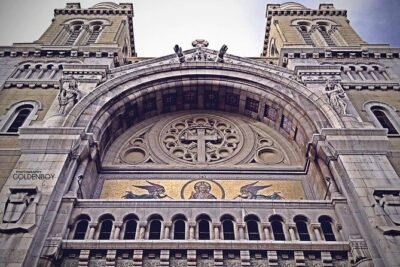
Private tour: Medina,Carthage ,Sidi Bou Said, Bardo Museum+lunch
Read our review →
1 day excursion Tunis Sidi Bousaid Carthage departure from Sousse
Read our review →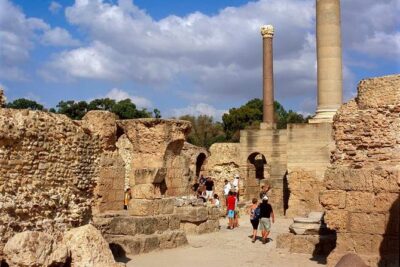
Archaelogical Site Of Carthage + Picturesque Village Of Sidi Bou Said
Read our review →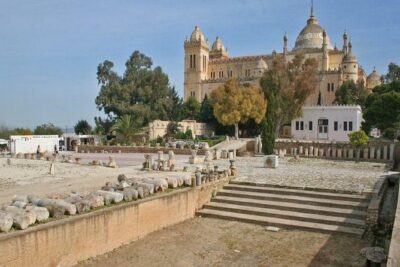
Tunis, Sidi Bousaid and Carthage day trip from Hammamet
Read our review →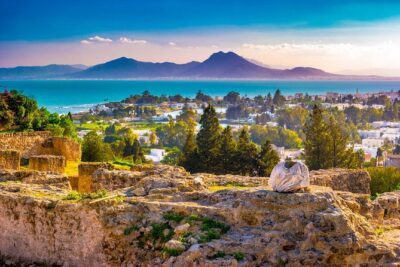
Tunis: Carthage, Bardo Museum, Sidi Bou Said & Medina Group Tour
Read our review →Browse the lists this tour appears in