
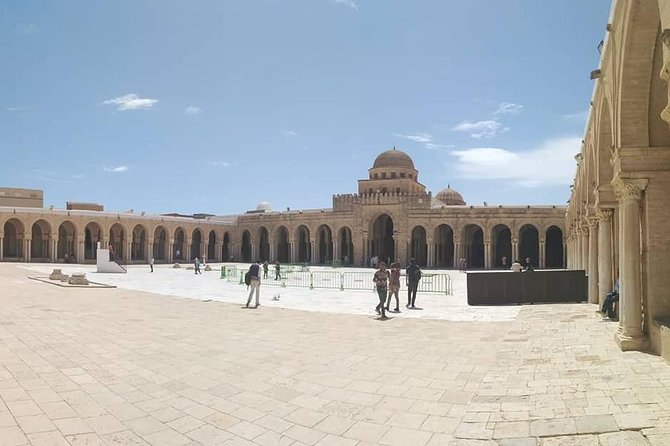
Reviewed · KAIROUAN
Kairouan, El Djem and Monastir Guided Excursion from Hammamet
The big appeal here is the range. In one long day, you move from Kairouan’s Islamic monuments to the vast Roman amphitheater at El Djem, then finish in Monastir with its ribat, marina, and Bourguiba mausoleum. It is a strong way to see several sides of Tunisia without arranging separate transport.
I like the private format for up to two people, which gives you a more personal day than a large coach trip. I also like the mix of major sights and smaller stops, especially the Aghlabite Basins and El Djem’s archaeological museum. The tradeoff is simple: ten hours is a full day, and the schedule leaves limited room for a slow lunch or unplanned wandering.
Key points at a glance
- Three very different Tunisian cities: Kairouan offers Arab-Muslim monuments, El Djem brings Roman spectacle, and Monastir adds medieval and modern history.
- A private vehicle for your group: The price covers up to two people, with hotel pickup offered and no strangers joining your party.
- El Djem takes center stage: You have two hours for the amphitheater, followed by one hour in a Roman villa turned museum.
- Kairouan is more than its famous mosque: The route includes the Aghlabite Basins, Sidi Sahbi Mosque, the medina, and the Mosque of Three Gates.
- Guiding is a strong part of the day: Past departures have included Mtir, who speaks excellent French, and an experienced Spanish-speaking guide.
- Budget for extras: Lunch and entrance fees in El Djem and Monastir are not included in the quoted price.
Why this day trip works from Hammamet
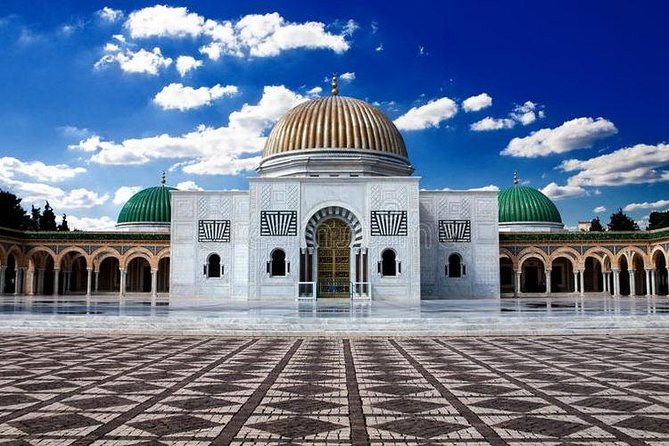
This excursion covers a lot of ground, but it does so with a clear theme. Kairouan represents Tunisia’s Arab-Muslim past, El Djem shows the scale and wealth of Roman Africa, and Monastir connects ancient roots with the modern republic.
The tour lasts about ten hours. That includes driving between the towns, guided visits, and free time. The day is not built around sitting in one place. You will see major monuments, hear historical explanation, and step into old city quarters, but you should also expect a fairly brisk pace.
The private setup matters here. For $292.47 per group of up to two, the effective cost is about $146 per person if two people share it. That covers private transportation, an air-conditioned vehicle, a professional guide, bottled water, and all listed taxes and fees. Compared with paying for transport, a driver, and a guide separately, the price can make sense for a couple or two friends.
The value is less convincing for someone who wants a cheap sightseeing day or plenty of free time. The entrance tickets, lunch, and personal spending come on top. Still, the cost buys convenience and a tailored setting, which are useful when three destinations are packed into one day.
More Guided Tours in Hammamet
- Private and Guided Tour to Kairouan and El Jem and Monastir
★ 4.5 · 22 reviews - Kairouan & El Djem Guided Day Trip with Lunch from Hammamet
★ 4.0 · 18 reviews - Private Guided Excursion Tunis, Carthage and Sidi Bou Said from Hammamet
★ 5.0 · 8 reviews
Kairouan begins with the Aghlabite Basins
The first stop is the Aghlabite Basins, outside Kairouan’s medina walls. These huge ninth-century waterworks were built during the second half of the ninth century and are regarded as among the most important hydraulic works in the Muslim world.
You have about 30 minutes here. That is enough time to understand the scale of the project and take in the setting, though it is not a long, reflective visit. The basins are a good opening stop because they explain how a major city in a dry region supported religious life, trade, and a growing population.
Admission is listed as free. You will not need to use your first visit for ticket arrangements, and the stop provides a useful introduction before the more detailed religious and architectural sights that follow.
Sidi Sahbi Mosque and the story of the Barber
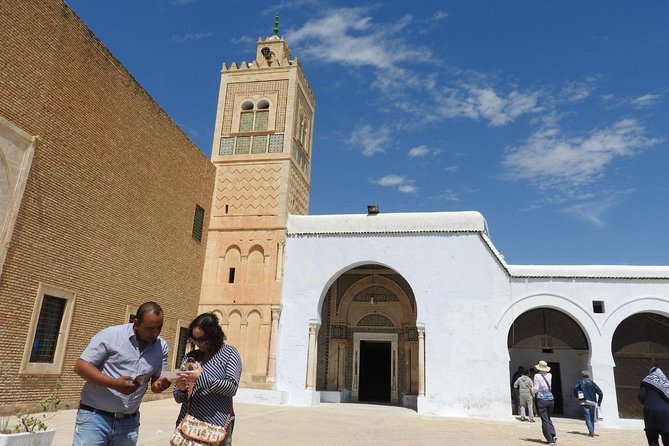
Next comes Sidi Sahbi Mosque, also called the Mosque of the Barber. It is outside the medina walls and is linked to the mausoleum of Sidi Sahbi.
The visit lasts about an hour. This gives your guide time to explain the site and allows you to look closely at the complex rather than treating it as a quick photo stop. The name refers to Sidi Sahbi, traditionally associated with the Prophet Muhammad as a companion and barber, which gives the site an important place in Kairouan’s religious culture.
The attraction here is not only the building. It is the way the mosque and mausoleum help you understand why Kairouan is regarded as the fourth holy city of Islam and Tunisia’s spiritual capital. A good guide can add meaning to the tilework, courtyards, and devotional setting.
Admission is listed as free, but you should still follow local guidance about dress and behavior at a religious site. The supplied details do not specify a formal dress code, so ask your guide before entering any area with special rules.
Kairouan’s medina is the most atmospheric stop
You then spend about an hour in the medina of Kairouan. The old quarter has been on the UNESCO World Heritage List since December 9, 1988, and the visit includes narrow streets, markets, and the Mosque of Three Gates.
This is where the day becomes less about one grand monument and more about the texture of a historic city. The lanes and market areas give you a feel for how Kairouan functions as a living urban center, not simply an open-air museum.
The Mosque of Three Gates is an especially useful stop because its facade is known for its three entrances and decorative design. The schedule allows time for the mosque and the medina, but not for an extended shopping session or a slow wander through every lane.
If you like local crafts and market streets, you may wish you had longer here. If you prefer a clear overview, the one-hour visit is practical. Your guide can help you focus on the important parts instead of losing time in the maze.
More Kairouan days out:
- Kairouan, El Djem, Monastir Self-Guided Excursion from Hammamet
★ 4.5 · 5 reviews - Fun VIP Tour: El Jem, Kairouan, Monastir/Sousse (PICKUP ALL City)
★ 5.0 · 451 reviews - Private Tour to Kairouan, El Jem & Monastir from Tunis_hammamet
★ 5.0 · 301 reviews - Daytrip to Kairouan and El Jem Colosseum
★ 4.5 · 55 reviews
El Djem reveals the power of Roman Africa
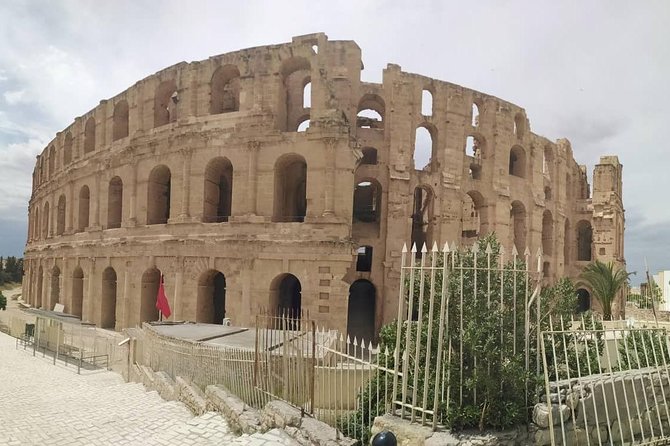
The tour then shifts sharply from Islamic Tunisia to Roman Tunisia with a visit to El Djem. The ancient city was known as Thysdrus and became one of the most prosperous cities in Roman Africa.
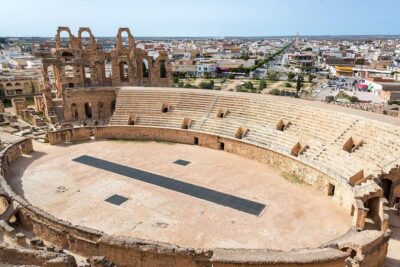
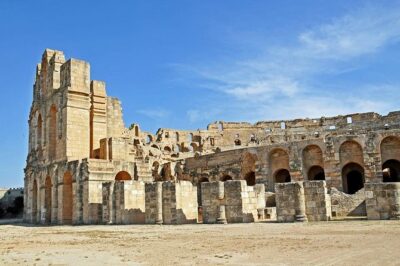
The amphitheater is the main event. Built in the third century AD, it could hold about 30,000 spectators. It is described as the third-largest Roman amphitheater after those in Rome and Capua, and it remains one of the most impressive Roman monuments in Africa.
You have two hours here, the longest single stop on the route. That is a sensible allocation. The scale of the structure needs time. You can examine the outer arches, enter the arena, and see the underground passages that helped organize performances and animals. The high walls also make it easier to picture how public spectacles once filled the building.
The amphitheater was classified as a World Heritage site in 1972. Its value is immediate, even if you are not an ancient-history specialist. Unlike a ruin that requires much imagination, this building gives you a strong sense of size and design as soon as you approach it.
Entrance is not included, so plan for an extra ticket cost. The supplied details do not give the current admission price, and that price can change. Ask the provider or your guide before the day begins if you need an exact budget.
The El Djem museum adds detail after the big monument
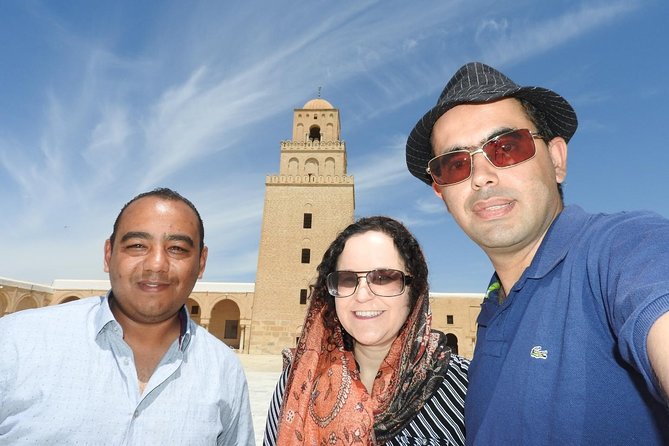
After the amphitheater, you spend about an hour at the Archaeological Museum of El Djem. The museum is housed in a reconstructed Roman villa and contains mosaics, statues, terracotta figures, perfume vials, and other glass objects.
This stop balances the amphitheater well. The arena shows public life on a huge scale, while the museum brings you into the homes and artistic tastes of Roman North Africa. The mosaics are the main reason to pay attention. They provide color, pattern, and small details that a giant stone structure cannot show.
The stated collection covers a period from the second century to the fifth century. The information supplied uses a confusing reference to the eleventh century, but the broader point is clear: the collection focuses on Roman-era material and late antique objects connected with El Djem.
Museum admission is not included. You should also keep your energy in mind. By this point, you have already visited several sites, and the museum may appeal most if you enjoy art, archaeology, and close study of objects. If you prefer outdoor monuments, you may find the amphitheater more memorable.
Monastir combines Ruspina, the ribat, and modern Tunisia
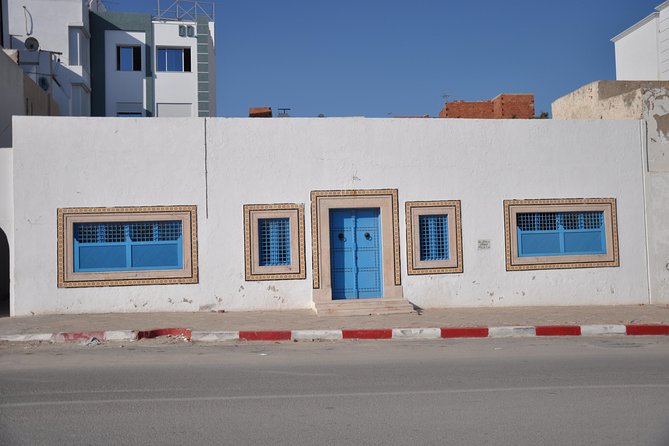
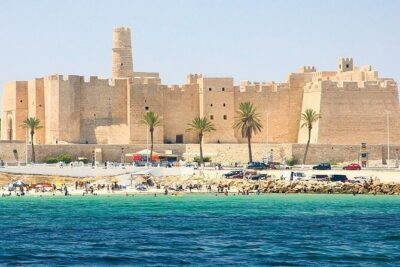
The final stop is Monastir, an ancient Punic and Roman city known in Roman times as Ruspina. The schedule gives you about an hour, including a drive past the birthplace of Habib Bourguiba, Tunisia’s first president, a visit to his mausoleum, and free time around the ribat and marina.
That is a lot for one hour. You should think of Monastir as a short concluding visit rather than a full city tour. The stop gives you a final change of mood after the religious monuments of Kairouan and the Roman arena at El Djem.
The ribat is the main historic sight. This fortified religious complex connects Monastir to Tunisia’s medieval Islamic period and gives the city a strong coastal identity. The marina provides a more modern setting, while the Bourguiba mausoleum points to the country’s twentieth-century political story.
Entrance fees in Monastir are not included. The details do not specify which sites require tickets on the day, so ask your guide before choosing how to use your free time. If the ribat is your priority, say so early. With only an hour, you may need to choose between a detailed interior visit, the mausoleum, and time by the marina.
What the guide and vehicle add
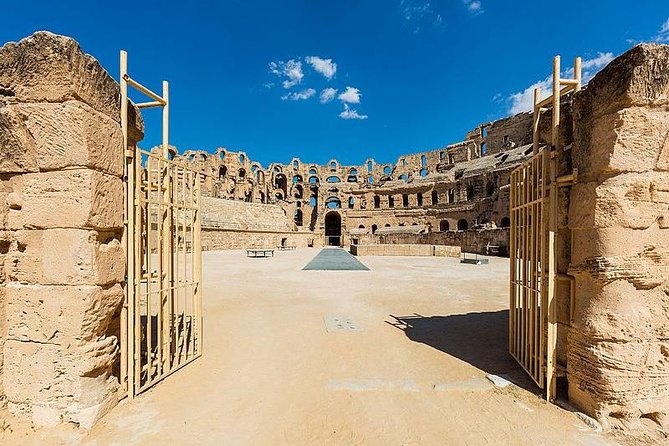
The tour includes private transportation in an air-conditioned vehicle, hotel pickup, bottled water, and a professional guide. Those basics matter on a ten-hour route. You are not left to work out connections between three towns, and the vehicle gives you a place to rest between visits.
The guide can make a major difference because the itinerary crosses several periods and religious traditions. Past departures have included Mtir, described as cultured and fluent in French, and a Spanish-speaking guide with extensive experience abroad. The available guide and language should be confirmed when you book, since the supplied information does not promise a particular person for every departure.
The private format also allows some adjustment. One family described a day with many stops and an individualized itinerary, while another praised the punctual pickup and clear explanations. That does not mean the schedule can be changed without limit. With six listed stops and long transfers, major changes could force you to give up another site.
Tell the guide your priorities at the start. If you care most about the amphitheater, protect the full two-hour visit. If Kairouan’s medina matters more, ask for enough walking time there. A short conversation can make the day feel less like a checklist.
Lunch, tickets, and the real cost
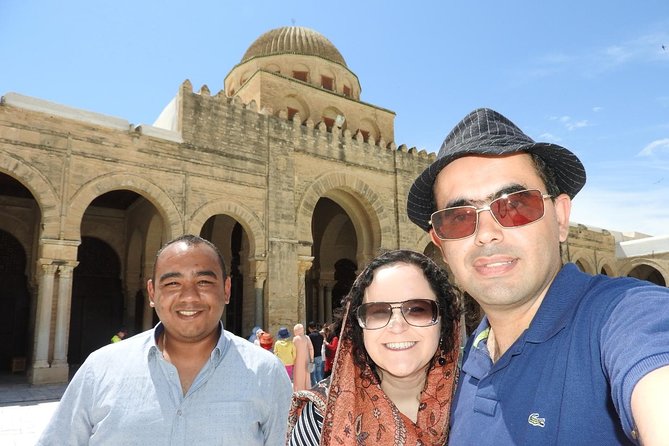
Lunch is not included. The itinerary does not name a restaurant or specify a set meal, so you should clarify how and when lunch will happen. With a ten-hour day, you will need to account for food even if the stop is informal.
Entrance fees are also extra. Kairouan’s listed stops show free admission, while the El Djem amphitheater, the archaeological museum, and Monastir attractions are marked as not included. Personal expenses, such as purchases in the medina, are yours as well.
The quoted price covers a private group of up to two, not two separate seats on a large shared bus. That makes the value strongest for a couple who wants door-to-door transport and a dedicated guide. For a solo visitor, the same group price is harder to justify unless private service is a top priority.
Free cancellation is available until 24 hours before the start time. Changes or cancellations made within 24 hours are not accepted for a refund. Most people can participate, and service animals are allowed.
Who will enjoy this excursion most
I would choose this tour if you want a broad first look at Tunisia and prefer one organized day to several independent trips. It suits couples, friends, and families who value a private vehicle and direct access to a guide.
It is also a good match for anyone interested in architecture. You get Islamic religious sites, Roman engineering, mosaics, medieval fortification, and a modern political memorial in one route.
I would hesitate if you dislike early starts, long road days, or tightly planned sightseeing. The tour is about ten hours, and the list of stops leaves little space for lingering. It is also not ideal if your main goal is a relaxed beach day or an unhurried visit to one city.
Should you book the Kairouan, El Djem, and Monastir tour?
Book it if you want maximum historical variety in one private day from Hammamet. Kairouan gives you religious and urban history, El Djem supplies the unforgettable scale, and Monastir rounds things out with medieval and modern Tunisia.
Before paying, confirm the pickup time, available guide language, entrance costs, and lunch plan. If you accept the long schedule and extra fees, the combination of private transport, personal guiding, and three very different destinations makes this a useful high-coverage excursion.
FAQ
How long does the excursion last?
The excursion lasts approximately 10 hours.
Where does the tour depart from?
The tour is based in Hammamet, and pickup is offered.
Is this a private tour?
Yes. Only your group participates, and the price covers up to two people.
What transportation is provided?
Private transportation is provided in an air-conditioned vehicle.
Is a guide included?
Yes. A professional guide is included.
Is bottled water included?
Yes. Bottled water is included.
Are entrance fees included?
No. Entrance fees for museums and exhibitions are not included. The El Djem amphitheater, El Djem Archaeological Museum, and Monastir attractions list admission as extra.
Is lunch included?
No. Lunch is not included.
Which places are visited?
The route includes the Aghlabite Basins, Sidi Sahbi Mosque, Kairouan medina and Mosque of Three Gates, El Djem amphitheater, El Djem Archaeological Museum, and Monastir.
Can I cancel for a full refund?
Yes, if you cancel at least 24 hours before the experience start time. Cancellations within 24 hours are not refundable.
Just added around Hammamet
- Cap-Bon Self-Guided Excursion from Hammamet★ 4.5 · 3 reviews
- Private Excursion of Friguia Park and Medina of Hammamet★ 4.5 · 4 reviews
- Executive: Transfer Tunis Airport to Hammamet by Mercedes E Class★ 5.0 · 4 reviews
- Tunis, Carthage and Sidi Bou Said Self-Guided Excursion from Hammamet★ 4.5 · 4 reviews
- Airport Tunis Carthage Private Transfer to/from Hammamet★ 4.0 · 4 reviews
- DayTrip to KORBOUS Thalasso-Thermal Bath & Spectacular SEA Cliffs★ 4.5 · 5 reviews
- Kairouan, El Djem, Monastir Self-Guided Excursion from Hammamet★ 4.5 · 5 reviews
- Day trip to Cape Bon★ 4.0 · 5 reviews
Kairouan Holy City Tours, compared.
Fun VIP Tour: El Jem, Kairouan, Monastir/Sousse
Read our review →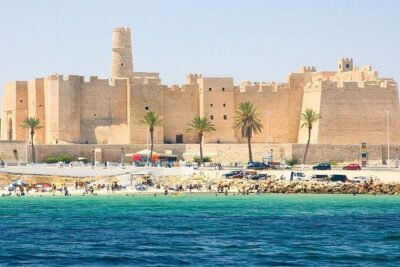
Private Tour to Kairouan, El Jem & Monastir from Tunis Hammamet
Read our review →
Private and Guided Tour to Kairouan and El Jem and Monastir
Read our review →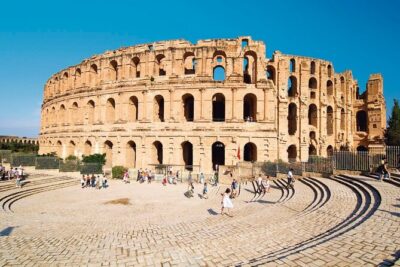
Kairouan & El Djem Guided Day Trip with Lunch from Hammamet
Read our review →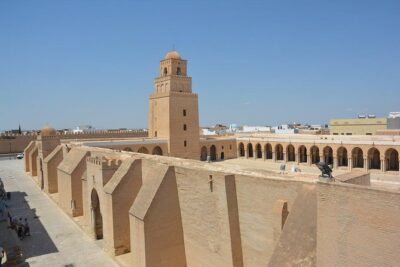
Kairouan Holy City and El Jem Colosseum Tour from Sousse
Read our review →Browse the lists this tour appears in