
Reviewed · CARTHAGE
Carthage Discovery Half-Day Tour with Licensed Guide
Carthage is not one tidy ruin you can see from a single viewpoint. It is a scattered ancient city spread across hills and the coast, and this tour’s private guide helps connect the pieces: the ports, Tophet, museum, baths, villas, and walls that once stretched 21 miles. You get the big picture without wrestling with Tunisian transport or site maps.
I like the private vehicle and hotel pickup, especially for a half-day visit from Tunis or Hammamet. I also like the chance to shape the day around your interests. Guides including Nouraddean, also called Nour, have adjusted timing and explanations for individual groups, and the driver stays with the vehicle while you walk.
The main drawback is the pace. Four hours is enough for a strong introduction, but Carthage covers a wide area, and serious archaeology fans may want more time at each site. Bring water, sun protection, and comfortable shoes, since much of the visit takes place outdoors on uneven ground.
Key points to know before booking
- Carthage is spread across several sites: The private car makes it practical to visit the Tophet, museum, ports, and major ruins in one morning or afternoon.
- Your guide shapes the experience: The tour includes a licensed guide, and the private format allows you to ask questions or request more focus on Roman, Punic, or Tunisian culture.
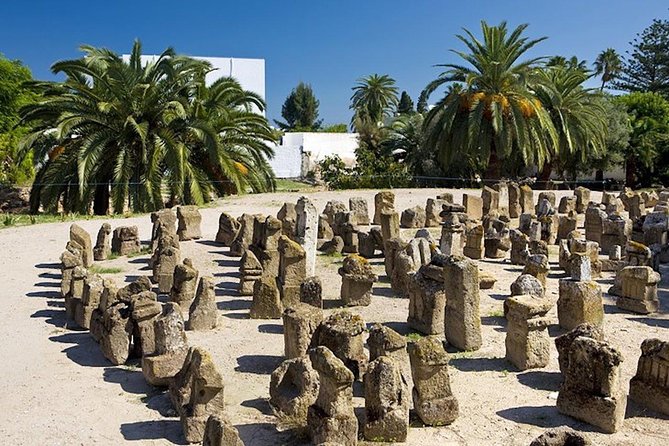
- The Tophet adds a difficult historical question: You will see an ancient cemetery linked to debate about ritual sacrifice involving children and animals.
- The Punic ports explain Carthage’s power: Only their outlines remain, but the clever separation of commercial and naval harbors is easy to understand with explanation.
- The price covers the important basics: At $94.90 per person, you receive hotel transfers from Tunis or Hammamet, private transport, a guide, and entrance fees.
- This suits a first visit more than a specialist study: You will see many key places quickly, but the schedule leaves limited time for lingering.
Why a private visit makes Carthage easier to understand
Carthage was destroyed by Rome in 146 BC, but the city did not vanish without a trace. Excavation has exposed homes as tall as five stories, sewage systems, city walls, public buildings, harbors, and religious sites. The challenge is that these remains are separated across modern Carthage.
That is where the private format earns its keep. You are not simply dropped beside one famous ruin and left to guess what you are seeing. A guide can explain how the Phoenician-Punic city grew into a major power, how its ports supported trade and war, and how later Roman-African and Arab-Muslim periods shaped the same place.
The ride from a Tunis hotel takes about 25 minutes. Along the way, you can see some of Tunisia’s most exclusive villas before reaching the archaeological zone. Pickup is also offered from Hammamet, though the material provided gives no travel time for that transfer.
Because this is a private activity, only your group participates. That matters if you want to stop for questions, move at a comfortable pace, or ask for more detail about a certain period. The guide can also adjust the tour for schedule changes, a useful feature if your arrival in Tunis has been disrupted by flight delays.
More Guided Tours in Tunis
- Guided Bike Tour of Carthage Archeological Site in Tunisia
★ 5.0 · 88 reviews - Guided tour in the UNESCO world heritage Medina of Tunis
★ 5.0 · 68 reviews - Group Guided Bike Tour of Carthage Archeological Site in Tunisia
★ 5.0 · 57 reviews
Byrsa Hill and the scattered remains of ancient Carthage
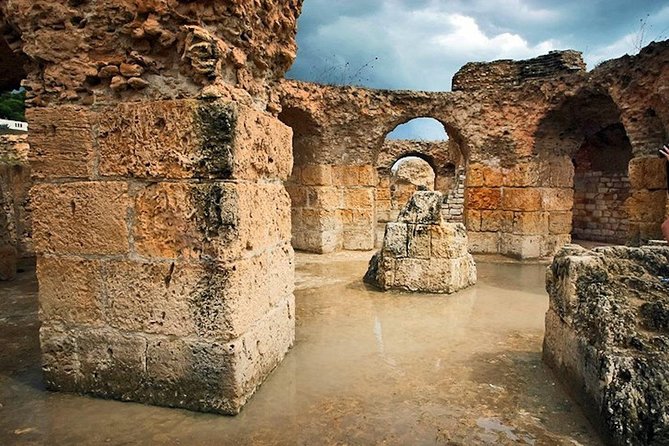
The main archaeological visit lasts about two hours. It gives you time to see a broad selection of Carthage’s remains, including ruins connected with villas, baths, theaters, walls, and the hill of Byrsa.
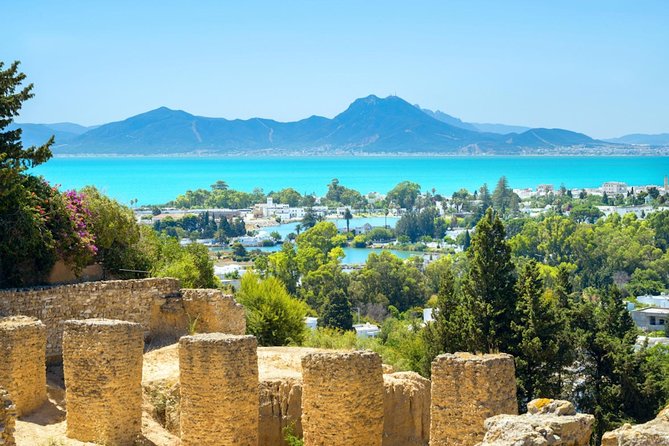
Byrsa Hill was the center of ancient Carthage, and its height helps explain the city’s strategic importance. From the archaeological area, you get broad coastal views as well as a sense of how widely the ancient settlement spread. Ask your guide to point out the relationship between the hill, the ports, and the surrounding city.
One of the most striking details is the scale of what once stood here. Excavations have revealed houses reaching five stories, a reminder that Carthage was not a small outpost. The remains of sewage systems also show a city with organized urban services, not merely grand monuments.
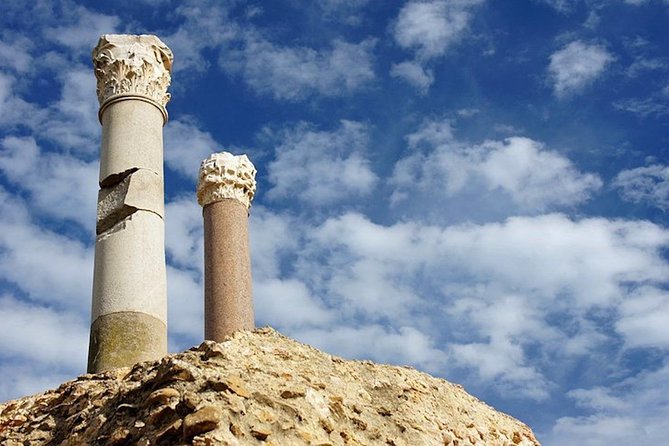
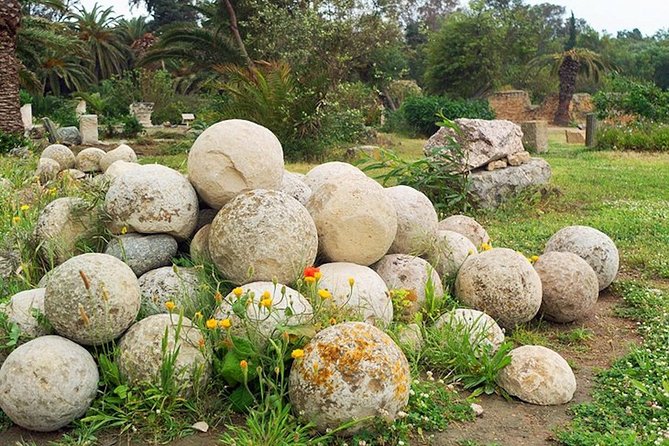
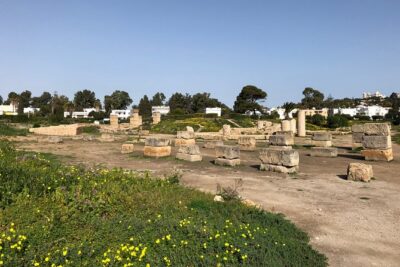
You will not find every structure intact. Much of the attraction comes from reading foundations, streets, fragments, and partial walls. That can be rewarding if you enjoy reconstructing the past, but it can feel less immediately dramatic than a complete Roman amphitheater or temple.
This is the part of the tour where your guide matters most. A pile of stone tells you little on its own. With a clear explanation, you can picture the vanished rooms, public spaces, and defensive lines that occupied the site.
The site includes ancient baths, theaters, and villas, with the Baths of Antoninus Pius among the important remains associated with Carthage. The supplied schedule does not assign a separate stop to every ruin, so the exact time spent at each one may depend on your guide and your interests.
The Tophet, Carthage’s most troubling site
The Tophet receives about an hour, a generous portion of a four-hour tour. It is an ancient cemetery and sacred area at the center of a long-running archaeological debate.
The site is associated with ritual sacrifice involving children and animals. The wording matters here: this is a contested subject, and your guide’s explanation can help separate archaeological evidence from later interpretation. Expect a serious stop rather than a light sightseeing break.
The Tophet is valuable because it shows a side of Carthage that grand ports and wealthy houses cannot. It raises questions about religion, family, politics, and the way ancient societies dealt with death. You may find the material difficult, particularly if you are visiting with children.
Children must be accompanied by an adult, and the tour information says most people can participate. Still, I would prepare young family members in advance for the subject matter. The site is outdoors, so sun and heat can also affect how comfortably you listen.
If you have a strong interest in Punic religion or ancient Mediterranean archaeology, use this hour well. Ask what is known, what is disputed, and how the Tophet fits into the wider Carthaginian world.
Carthage Museum beside Saint-Louis Basilica
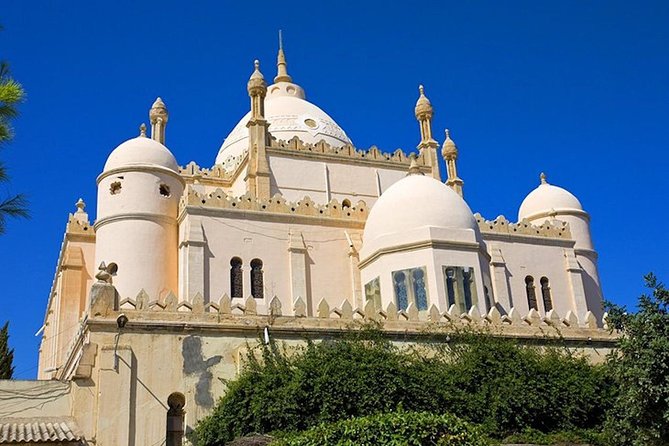
The Carthage Museum visit lasts about 30 minutes. It occupies the ground floor of a former Catholic religious school near Saint-Louis Basilica, built in the late 19th century on the site of the Carthage acropolis.
This stop gives you the objects that the open-air ruins cannot. The collection covers the Phoenician-Punic, Roman-African, and Arab-Muslim periods, making it useful for understanding that Carthage was occupied and reshaped long after Rome’s destruction of the city.
Half an hour is short, but it can work well after the outdoor sites. You will have a chance to see archaeological objects in a more controlled setting and to connect them with the places you have just visited. Ask your guide to identify pieces that clarify daily life, religious practice, trade, or Roman influence.
The museum is also tied to the acropolis area, so its setting adds context. Do not expect enough time for a slow, object-by-object study of the entire collection. If you want to read every display, the schedule may feel tight.
More Carthage and Sidi Bou Said days:
- Private tour: Medina,Carthage ,Sidi Bou Said, Bardo Museum+lunch
★ 5.0 · 230 reviews - Carthage, Bardo Museum, Sidi Bou Said and Medina Private Day Tour
★ 4.5 · 153 reviews - Archaelogical Site Of Carthage + Picturesque Village Of Sidi Bou Said
★ 5.0 · 56 reviews - Historical Tour of Ancient Carthage
★ 5.0 · 51 reviews
The Punic ports and the design behind Carthage’s power
The final stop lasts about 30 minutes and focuses on the Punic ports. Admission is included in the tour overall, though this stop is listed without a separate admission charge.
Today, only the shape of the legendary harbors remains. Yet the layout tells a clever story. A narrow channel connected a southern, oblong commercial port with a northern, circular naval port. The military harbor was hidden from outside view, while Carthage’s navy could look out toward the sea.
The naval base reportedly had dry docks for about 220 ships, with additional moorings around the quay. The commercial port covered about seven hectares and had quays and warehouses for trade.
Those numbers become more useful when you look at the basic design. Carthage protected its war fleet while keeping merchant activity moving nearby. The ports were not just places where ships arrived. They were the working heart of a power built on trade and naval control.
The remains are less visually complete than the baths or villas, so this is another place where explanation improves the visit. If you are short on time, you might initially wonder why an outline in the ground matters. Once you understand the naval and commercial arrangement, the site becomes easier to picture.
What the $94.90 price includes
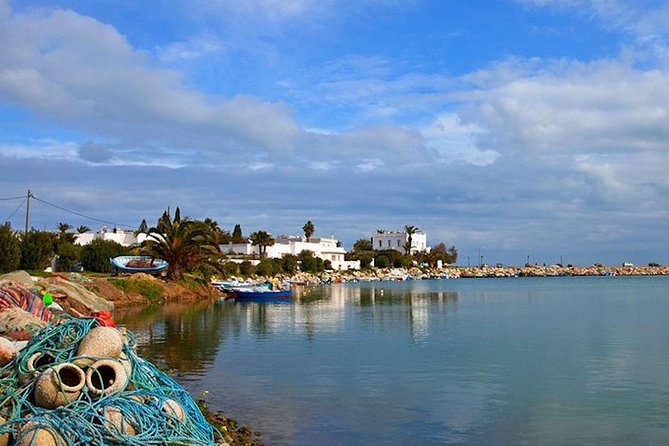
The tour costs $94.90 per person. That is not the cheapest way to reach Carthage, but the value depends on how much you would otherwise spend on transport, entrance fees, and arranging explanations at several separate sites.
The price includes pickup and drop-off at your hotel in Tunis or Hammamet, private transport, a licensed guide, and entrance fees. Lunch is not included. Pickup and drop-off from hotels in other cities are also excluded.
For a couple or small group, the cost buys convenience as well as information. You avoid piecing together transport between the archaeological areas, and you do not need to negotiate a taxi for each move. The private vehicle is especially useful because Carthage’s major locations are spread out.
Group discounts are offered, though the supplied information does not state the discount amount or the number of people needed to qualify. If you are traveling with family or friends, check the final price before booking.
The private format also changes the value calculation. You are paying for a guide focused only on your group, not for a large coach excursion. That can be worthwhile if you ask questions and want the guide to adjust the pace. If you prefer to spend hours studying inscriptions or walking slowly through one site, a longer private visit may offer better value than trying to cover everything in four hours.
Timing, heat, walking, and practical comfort
The tour lasts about four hours, with roughly two hours at the main archaeological site, one hour at the Tophet, 30 minutes at the museum, and 30 minutes at the ports. The schedule is efficient, but it is not leisurely.
Much of the experience takes place outside. One group specifically found the guide and driver attentive in the heat, but also raised concerns about walking and accessibility. That is a useful warning. Most people can participate, yet the ancient sites may include uneven surfaces and open areas with little shade.
Wear sturdy, comfortable shoes. Carry water and protect yourself from the sun. If you tire easily, tell your guide early so the pace can be adjusted where possible.
The air-conditioned private vehicle gives you useful breaks between walking sections. The driver is described as courteous and engaged with the day, while remaining available as part of the transport service. This is a small but meaningful advantage in warm weather.
Service animals are allowed, and the tour is near public transportation, though hotel pickup is already provided for Tunis and Hammamet. Children must be accompanied by an adult.
The guide can add Tunisia beyond the ruins
A good Carthage tour should not treat the site as a disconnected collection of stones. It should explain how Phoenician settlers, Punic Carthage, Roman Africa, and later periods fit into the story of Tunisia.
Nouraddean, also known as Nour, is one guide associated with this experience. His approach includes history and Tunisian culture, and he has adjusted explanations to suit a group’s schedule and interests. That flexibility is useful when one person wants military history while another wants daily life or religion.
The guide can also help you make sense of the city’s destruction. Rome destroyed Carthage in 146 BC, but later Roman building and continued occupation mean the site contains several layers. A guide who explains those changes can prevent the common mistake of treating every ruin as purely Punic.
Ask questions as you go. The private setting is most valuable when you use it. You can request more time at Byrsa Hill, ask for clarification at the Tophet, or have the guide connect the ports with the city’s trade and naval system.
Who should book this half-day tour?
I would recommend this tour to a first-time visitor based in Tunis or Hammamet who wants to see the major Carthage locations without arranging separate transport. It also suits anyone who values a private guide and wants history explained in plain language.
It works well for families and small groups, provided everyone is comfortable with outdoor walking and the serious subject at the Tophet. The ability to ask questions privately is more useful for children than a large group lecture, but adults should decide how much detail is suitable.
History fans will appreciate the range of periods and sites, though specialists may find the four-hour schedule too short. If your priority is photography, coastal views, and a broad introduction, the pace should be productive. If your priority is detailed museum study, inscriptions, or a slow archaeological survey, plan extra independent time if possible.
The tour has earned a perfect rating from seven submitted ratings, with especially strong praise for the guides’ historical explanations, kindness, flexibility, and help with Tunisian culture. That is a small sample, so I would treat it as encouraging rather than final proof, but the pattern is clear: the human guide is the main reason to choose this experience.
Should you book Carthage Discovery?
Book it if you want a well-organized introduction to Carthage with hotel transfers, a private car, entrance fees, and a guide who can adapt the visit. The combination of Byrsa Hill, the Tophet, museum, and Punic ports gives you a useful cross-section of the ancient city in only four hours.
Think twice if you dislike walking outdoors, need a highly accessible route, or prefer to spend a full day at one archaeological site. The price is fair for a private half-day service, but its value depends on using the guide and appreciating convenience.
Free cancellation is available up to 24 hours before the start time for a full refund. Changes made inside 24 hours are not accepted, and there is no refund for late cancellation. The tour requires good weather, with a different date or full refund offered if poor weather forces cancellation.
FAQ
Where does the tour begin?
Pickup and drop-off are offered from hotels in Tunis or Hammamet.
How long does the tour last?
The experience lasts approximately four hours.
Is this a private tour?
Yes. Only your group participates in the activity.
Is transportation included?
Yes. Transport is provided in a private vehicle, with hotel pickup and drop-off from Tunis or Hammamet.
What is included in the price?
The price includes a licensed tour guide, private vehicle transport, hotel transfers from Tunis or Hammamet, and entrance fees.
Is lunch included?
No. Lunch is not included.
Which Carthage sites are visited?
The tour includes the main archaeological site of Carthage, the Tophet, Carthage Museum, and the Punic ports.
How much time is spent at each stop?
The main archaeological site receives about two hours, the Tophet about one hour, the museum 30 minutes, and the Punic ports 30 minutes.
Can children join the tour?
Yes, most people can participate, but children must be accompanied by an adult.
What is the cancellation policy?
You can cancel at least 24 hours before the start time for a full refund. Cancellations within 24 hours are not refunded, and changes inside that period are not accepted. If poor weather cancels the tour, you will be offered another date or a full refund.
More Half-Day in Tunis
- Half-Day Traditional Tunisian Cuisine Cooking Class in Tunis
★ 5.0 · 9 reviews - Half-Day Carthage, Sidi Bou Said Private Tour with Licensed Guide
★ 4.0 · 5 reviews - Half-day excursion from Sousse to the amphitheater of El Jem
★ 5.0 · 47 reviews - Half-day excursion the mountain oases from Tozeur
★ 4.5 · 39 reviews
Just added around Tunis
- Private Group Day Tour Tunis Medina Carthage Sidi Bou Said★ 4.5 · 3 reviews
- Private Tour Bardo Museum, Carthage, Sidi Bou Said and Medina★ 4.5 · 3 reviews
- Explore Tunisia in Depth:The Private Grand Tour in 8 Days★ 5.0 · 3 reviews
- 3-Day South of Tunisia Guided Tour from Tunis★ 4.0 · 3 reviews
- Bardo Museum , Oudhna and the roman aqueduct★ 5.0 · 4 reviews
- From Tunis: Star Wars 5 day tour★ 5.0 · 4 reviews
- DAY TRIP TO Dougga & Bulla Regia , DEPARTURE FROM Tunis★ 5.0 · 4 reviews
- Private Walking Tour of Carthage Archaeological Site in Tunisia★ 4.5 · 4 reviews
Carthage & Sidi Bou Said Day Trips, compared.
VIP Tour: Tunis Medina/Bardo, Sidi Bou Said, Carthage
Read our review →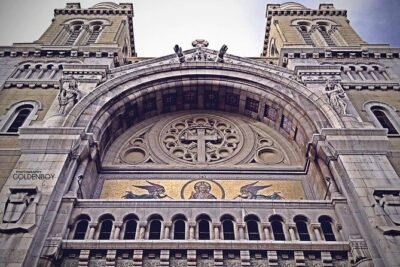
Private tour: Medina,Carthage ,Sidi Bou Said, Bardo Museum+lunch
Read our review →
Guided Bike Tour of Carthage Archeological Site in Tunisia
Read our review →
1 day excursion Tunis Sidi Bousaid Carthage departure from Sousse
Read our review →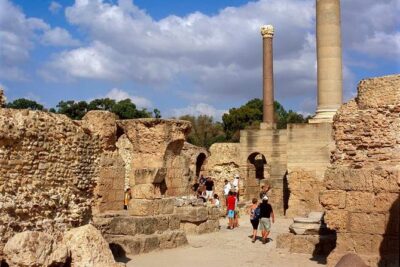
Archaelogical Site Of Carthage + Picturesque Village Of Sidi Bou Said
Read our review →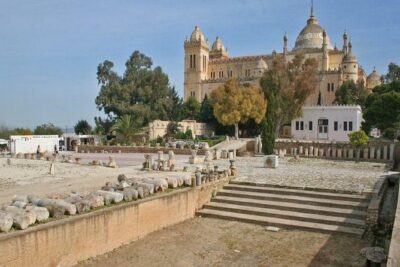
Tunis, Sidi Bousaid and Carthage day trip from Hammamet
Read our review →Browse the lists this tour appears in