
Reviewed · EL JEM
El Jem and Monastir Full-Day Tour with Lunch from Tunis or Hammamet
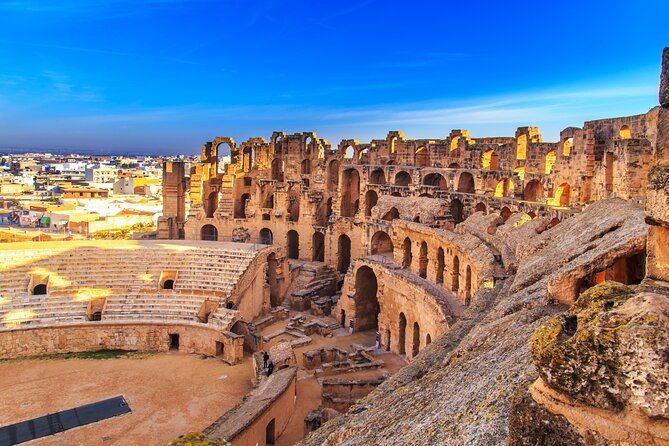
El Jem is the star here: a huge Roman arena rising from the Tunisian countryside, with enough surviving stonework to make ancient public life feel startlingly close. You’ll also visit the excellent El Jem Museum, then continue to Monastir for its old Ribat fortress and the Bourguiba Mausoleum.
I like the private format, since your group can travel at its own pace, and I like the pairing of two very different places: Roman Africa at El Jem, Islamic Monastir afterward. The main drawback is the road time. This is an eight-hour day, and the drive from Tunis or Hammamet takes up a good part of it.
Key points to know before booking
- El Jem’s amphitheater is the main event: You get about two hours to explore one of the largest Roman arenas ever built.
- The museum adds real value: Its mosaic collection gives context to the wealth and daily life of ancient Thysdrus.
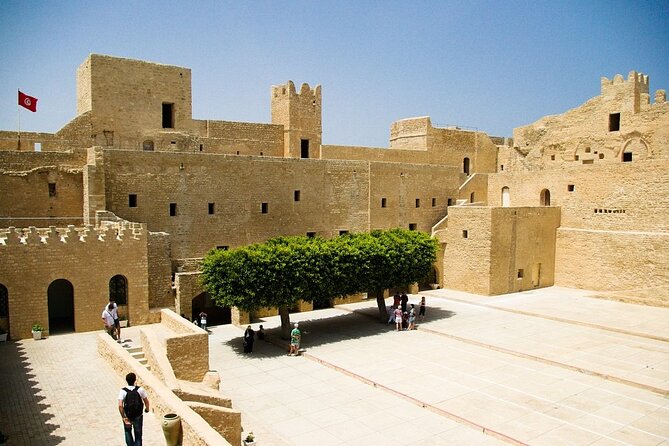
- Monastir brings a different era: The old Ribat shows the defensive side of early Islamic architecture.
- You travel privately: Only your own group takes part, with pickup offered from Tunis or Hammamet.
- Lunch is included: You do not need to arrange a separate midday meal.
- Guide quality matters: Boubou, Bouhdid, Ridha, and other guides have been praised for friendly, informative tours, though one report found the guide’s English weaker than expected.
Why El Jem is worth the long ride
El Jem was ancient Thysdrus, a prosperous Roman-era city in North Africa. Its amphitheater was built around 230 to 240 AD, near the end of Rome’s great arena-building period, and its size tells you something about the city’s importance.
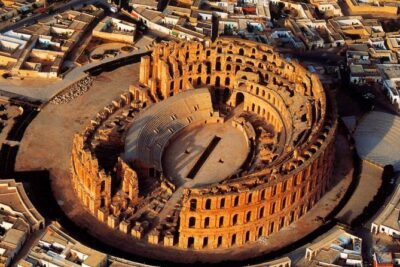
The arena is described as the third-largest in the Roman world, after Rome and Verona. It is also considered better preserved than many larger ruins. That combination makes the visit unusually rewarding: you can understand the building as a whole instead of staring at a few disconnected walls.
You’ll have about two hours at the amphitheater, with admission included. That is enough time to see the arena, explore the interior, and take in the scale of the structure without rushing through it.
The design is often described as an improvement on Rome’s Colosseum. I would not visit expecting a polished monument. Weather, age, and missing sections are part of the experience. But the surviving arches and steep seating levels still make the building easy to read.
Look at the arena from different levels. From below, the walls feel massive and enclosing. From above, the oval plan becomes clear, and you get a better sense of how tens of thousands of spectators could have been arranged around the central floor.
Your guide can add the meaning that stone alone cannot provide. The value of a private tour is especially clear here, since you can ask about the amphitheater’s construction, its place in Roman Africa, and how it compares with the famous arena in Rome.
This is also a good stop for visitors who prefer substantial ruins over small archaeological fragments. You are not simply looking at foundations. You are entering a recognizable building with corridors, seating areas, and a strong sense of its original purpose.
More El Jem amphitheatre trips:
- Private Tour to Kairouan, El Jem & Monastir from Tunis_hammamet
★ 5.0 · 301 reviews - Daytrip to Kairouan and El Jem Colosseum
★ 4.5 · 55 reviews - Kairouan and El Jem Private Day Tour
★ 4.5 · 38 reviews
The El Jem Museum and its remarkable mosaics
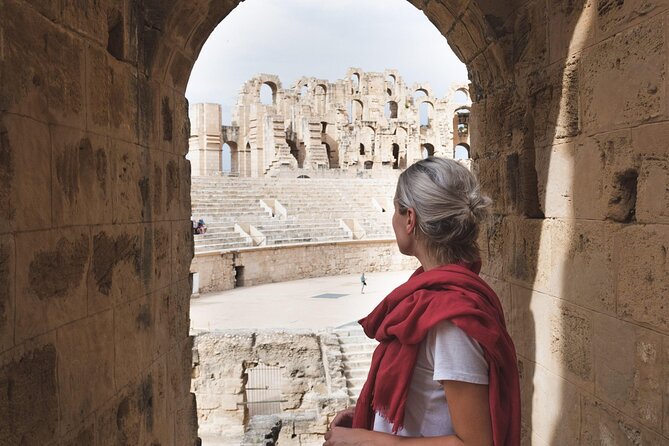
The museum visit completes the amphitheater stop. It is easy to focus so much on the arena that you forget the people who lived in Thysdrus. The museum helps fill that gap.
Its mosaics are a major attraction. They show the artistic skill and wealth found in Roman North Africa, where decorated floors were an important part of private homes and public buildings. One of the strongest points from the day is the quality of the mosaic collection.
Plan to give the museum proper attention rather than treating it as a quick indoor stop. The amphitheater tells you about public spectacle and engineering. The mosaics show taste, status, decoration, and daily life.
The contrast is useful. Outside, you see a huge structure built to hold a crowd. Inside, you encounter detailed work made for close viewing. Together, the two visits make El Jem feel like a city, not just a single ancient monument.
You also get a break from the open-air ruins. El Jem can be exposed, and the museum offers a quieter setting before the journey continues. The exact lunch arrangement is not specified, but lunch is provided during the trip, so you can expect the day to include a planned meal rather than having to organize one yourself.
Monastir’s Ribat, a fortress with a different purpose
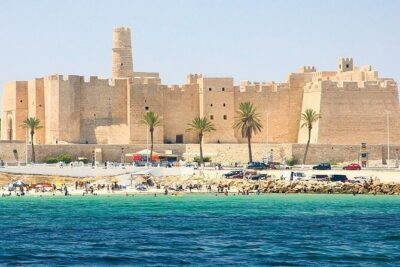
After El Jem, the tour turns to Monastir and its old Ribat. This is a sharp change in time and style. Instead of a Roman arena built for mass entertainment, you see an Islamic defensive structure connected with the early Arab conquest of the Maghreb.
The Ribat is described as the oldest of its kind built by the Arab conquerors in the region. It is also the most prominent monument in Monastir. You’ll have about one hour here, with admission included.
The word ribat refers to a fortified religious and defensive complex. That dual role is important. This was not simply a military wall, and it was not simply a place of worship. Its form reflects a period when defense, faith, and settlement were closely tied together.
Use your time to look closely at the thick walls, towers, courtyards, and elevated points. The building is compact compared with El Jem, but its character is more intimate and defensive. You can better understand how a fortified post controlled movement and protected the coast.
One hour is a sensible amount of time for the stop. It gives you room to see the main structure without turning the day into a long architectural survey. If you prefer slow, detailed visits, you may find this portion brief, but it works well within a day that already includes a major Roman site and museum.
Your guide’s explanation can make a large difference here. The basic shape is easy to see, but the historical setting is less obvious than it is at El Jem. Ask about the Ribat’s purpose and its role in Monastir if those points are not covered clearly.
A short stop at Bourguiba Mausoleum
The final listed stop is the Bourguiba Mausoleum, the burial place of Habib Bourguiba, Tunisia’s first president. The visit lasts about one hour, and admission is free.
This stop adds a modern national chapter to a day otherwise centered on ancient Rome and early Islamic Tunisia. It also gives you a chance to browse at your own pace before returning to your hotel.
The mausoleum is not another archaeological site, so the mood changes again. You are moving from imperial history and medieval defense to the memory of a modern political leader. That variety is one reason the tour feels broader than a simple El Jem excursion.
The information provided does not specify a guided interior tour or detailed commentary here. Your guide may explain the site, but you should expect some free time to look around until the group is ready to leave.
A few more Tunis half-days to weigh up
- Private tour: Medina,Carthage ,Sidi Bou Said, Bardo Museum+lunch
★ 5.0 · 230 reviews - Full Day Dougga & Bulla Regia Via Testour Private tour with Lunch
★ 5.0 · 29 reviews - The Best of Tunisia, 3 Days Guided Tour with Lunch
★ 5.0 · 7 reviews - Tour of Tunis Carthage and Sidi Boussaid with local lunch
★ 5.0 · 7 reviews
The private vehicle changes the pace
This is a private activity, meaning only your group takes part. That is a meaningful advantage on a long day. You are not joining a large coach group with fixed stops for dozens of people, and the tour can be more relaxed if your party wants extra time at a particular site.
Pickup is offered, and the listed starting time is 8:00 am. The tour is available from Tunis or Hammamet, though the exact pickup location should be confirmed when you book. Being near public transportation is also listed as an additional feature.
The drive is a central part of the experience, not a minor transfer. One direct assessment described it as a long day with plenty of time on the road, but still considered the trip worthwhile. That is the right way to judge this outing.
You should book it for the sites, not for a leisurely coastal day. El Jem and Monastir are separated from the capital and resort areas, so a round trip takes time. The benefit is that you see two major destinations without arranging several separate transfers.
The driver is also important. Several reports praise courteous service and safe driving, while one person specifically called the ride safe and comfortable. That matters when you are spending hours in a vehicle.
Guides, language, and the human side of the day
The strongest praise centers on the guides and drivers. Boubou was described as friendly, funny, and well informed, while Bouhdid received similar praise for combining useful explanations with a pleasant sense of humor. Ridha was singled out for professional, friendly touring and excellent English.
Those details are useful because El Jem and the Ribat both benefit from explanation. You can see the size of an arena or the thickness of a defensive wall without help, but a good guide connects those sights to Roman Africa, the Muslim conquest of the Maghreb, and modern Tunisia.
Language ability may vary by guide. One person enjoyed the day but felt the guide’s English was not strong. Other reports specifically praise the guide’s English, so the experience may depend on the individual assigned to your group.
If clear English commentary is important to you, mention it when booking or ask which guide is scheduled. The named guides associated with especially positive feedback include Boubou, Bouhdid, and Ridha, but availability is not guaranteed.
A private tour also gives you a better chance to ask questions. Use that advantage. Ask about the amphitheater’s construction date, the difference between the arena and Rome’s Colosseum, the purpose of the Ribat, and Bourguiba’s place in modern Tunisia.
Is $105 a fair price?
At $105 per person, this is not the cheapest way to see El Jem. It can still be good value if you want the convenience of private transport, a guide, admission to the main paid sites, and lunch bundled into one day.
The price makes more sense for a small group. Since this is a private activity, the cost buys control over the day as well as transport. A larger group can divide the cost of the vehicle across several people, while a solo visitor or couple may find it harder to justify.
You are also covering three stops, not just the amphitheater. The museum is an important part of El Jem, the Ribat is one of Monastir’s main monuments, and the mausoleum adds a modern historical note.
Admission to the amphitheater and Ribat is included. The Bourguiba Mausoleum is free, and lunch is provided. Since the exact meal and restaurant are not specified, I would not book this for cuisine. Book it because the included meal removes one practical chore during a busy sightseeing day.
Group discounts are offered, which may improve the value for families or friends traveling together. Compare the total cost with arranging a private driver and separate admissions on your own. For many people, the time saved will be the deciding factor.
Who will get the most from this tour?
I would recommend this day to anyone staying in Tunis or Hammamet who wants to see El Jem without changing hotels or planning a complicated intercity route. It suits first-time visitors who want a broad introduction to Roman, Islamic, and modern Tunisian history in one outing.
It is also a strong choice for people who value a private vehicle and direct pickup. Families and small groups may appreciate the flexible format, especially when different people need different amounts of time at each stop.
History fans should put it high on their list. El Jem is the clear highlight, and the museum gives the site more meaning than the amphitheater alone. The Ribat then provides a useful contrast rather than repeating the same type of monument.
This may be less suitable if you dislike long drives or want a slow, unhurried visit at each location. The day includes about four hours of named sightseeing time, plus transport, lunch, and transitions. That is a productive schedule, but it is not a relaxed stay in either El Jem or Monastir.
The tour also requires good weather. If poor weather forces cancellation, you will be offered another date or a full refund. For normal changes, free cancellation is available up to 24 hours before the start time. Changes or cancellations within 24 hours are not accepted for a refund.
Should you book the El Jem and Monastir day?
Book this tour if you want the simplest way to combine El Jem’s extraordinary amphitheater and museum with Monastir’s Ribat and Bourguiba Mausoleum. The private format, included lunch, admission tickets, and praised drivers make the $105 price easier to defend, especially for a small group.
Skip it if you want a short outing or cannot tolerate several hours of driving. If you do go, protect the full day, start ready for an early departure, and ask about English-speaking guide availability. For most visitors based in Tunis or Hammamet, El Jem alone is worth the journey, and Monastir makes the return trip feel more complete.
FAQ
How long is the El Jem and Monastir tour?
The tour lasts approximately eight hours. The listed sightseeing time includes two hours at the El Jem Amphitheatre, one hour at the Ribat of Monastir, and one hour at the Bourguiba Mausoleum, along with transport and lunch.
What time does the tour start?
The listed start time is 8:00 am. Pickup is offered from Tunis or Hammamet, but you should confirm the exact meeting location when booking.
Is lunch included?
Yes. Lunch is provided during the trip. The available information does not specify the menu or restaurant.
Are entrance tickets included?
Admission to the El Jem Amphitheatre and the Ribat of Monastir is included. Entry to the Bourguiba Mausoleum is free.
Is this a private tour?
Yes. Only your group participates in this private activity. Group discounts are also offered.
Can I cancel for a full refund?
You can cancel up to 24 hours before the experience start time for a full refund. Cancellations or changes made less than 24 hours before the start time are not accepted, and poor-weather cancellations are handled with a different date or a full refund.
More Full-Day in Tunis
- Full-Day Kairouan and El Jem Tour from Tunis
★ 4.0 · 7 reviews - Full day Star Wars Tour
★ 4.5 · 10 reviews - Full-Day Shore Excursion Private Tour in Tunisia Carthage ,Medina, Sidi Bou said
★ 4.5 · 6 reviews - Tamerza, Chebika, Mides Canyons and Star Wars Full-Day Tour
★ 5.0 · 4 reviews
Just added around Tunis
- Private Group Day Tour Tunis Medina Carthage Sidi Bou Said★ 4.5 · 3 reviews
- Private Tour Bardo Museum, Carthage, Sidi Bou Said and Medina★ 4.5 · 3 reviews
- Explore Tunisia in Depth:The Private Grand Tour in 8 Days★ 5.0 · 3 reviews
- 3-Day South of Tunisia Guided Tour from Tunis★ 4.0 · 3 reviews
- Bardo Museum , Oudhna and the roman aqueduct★ 5.0 · 4 reviews
- From Tunis: Star Wars 5 day tour★ 5.0 · 4 reviews
- DAY TRIP TO Dougga & Bulla Regia , DEPARTURE FROM Tunis★ 5.0 · 4 reviews
- Private Walking Tour of Carthage Archaeological Site in Tunisia★ 4.5 · 4 reviews
El Jem Amphitheatre Tours, compared.
Fun VIP Tour: El Jem, Kairouan, Monastir/Sousse
Read our review →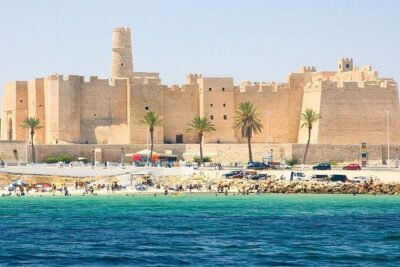
Private Tour to Kairouan, El Jem & Monastir from Tunis Hammamet
Read our review →
Half-day excursion from Sousse to the amphitheater of El Jem
Read our review →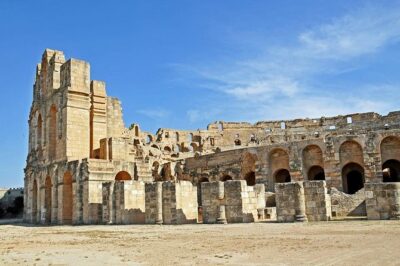
Private and Guided Tour to Kairouan and El Jem and Monastir
Read our review →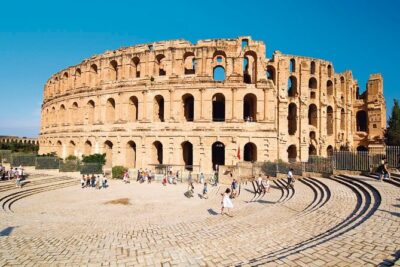
Kairouan Holy City and El Jem Colosseum Tour from Sousse
Read our review →Browse the lists this tour appears in