
Reviewed · KAIROUAN
Kairouan, El Djem, Monastir Self-Guided Excursion from Hammamet
The biggest draw here is the sheer variety packed into one long day: Kairouan’s Islamic monuments, El Djem’s giant Roman amphitheater, and Monastir’s modern Tunisian identity. You move through three very different chapters of Tunisia without changing hotels or arranging several separate rides.
I like the private format for a group of up to three, since you have your own air-conditioned vehicle and can discuss the day directly with the driver. I also like the strong El Djem pairing: two hours at the amphitheater followed by an hour in the archaeological museum gives the Roman site more meaning than a quick photo stop. The main concern is pace. Ten hours is a lot of road time, and the route can feel rushed if you want a slow visit in every city.
Key points to know before booking
- Three major sights in one day: Kairouan, El Djem, and Monastir offer a useful cross-section of Tunisia’s Arab-Muslim, Roman, and modern eras.
- Private transport for up to three people: The $303.51 group price can be reasonable when shared, especially if you value door-to-door transport.
- El Djem gets the most time: Plan on two hours at the amphitheater and one hour at the museum, making this the day’s strongest historical stop.
- A guide is not included: You receive private transportation, but professional guiding and entrance fees cost extra.
- Monastir has limited time: The final stop is about an hour, so you may need to choose between the mausoleum, ribat, and marina.
- Ask about extras clearly: One Spanish-speaking customer reported confusion over a locally offered guide and the price quoted, so confirm any guide fee before accepting.
A long day that connects three Tunisias
This excursion works because its route has a clear idea behind it. Kairouan represents Tunisia’s Islamic tradition, El Djem brings you into the Roman period, and Monastir links the past with the country’s modern political story.
You leave Hammamet at about 8:30 a.m. and return after roughly 10 hours. The schedule is not a leisurely wander through three towns. It is a sightseeing circuit with several defined stops, private transport, and enough time to see the main points at each place.
The vehicle is air-conditioned, and bottled water, private transportation, insurance, and taxes are included. Lunch is not included, and neither are admission charges to the museums or other paid sites. Since there is no professional guide included, you should decide in advance if you are happy to explore independently or want to budget for local guiding.
The price is $303.51 per group of up to three, not per person. For three people, that works out to about $101 per person before entrance fees, lunch, and any guide. For one person, it is a much heavier price, though private transport over this distance may still appeal if convenience matters more than keeping costs low.
More Guided Tours in Hammamet
- Private and Guided Tour to Kairouan and El Jem and Monastir
★ 4.5 · 22 reviews - Kairouan & El Djem Guided Day Trip with Lunch from Hammamet
★ 4.0 · 18 reviews - Private Guided Excursion Tunis, Carthage and Sidi Bou Said from Hammamet
★ 5.0 · 8 reviews
Kairouan’s Aghlabite water basins
The first stop is the Bassins Aghlabites, outside Kairouan’s medina walls. You have about 30 minutes here, and admission is not included.
These ninth-century reservoirs are more than a quick architectural curiosity. They show how an important Islamic city dealt with water in a dry region. The basins date from the beginning of the second half of the ninth century and are described as among the most important hydraulic works in the Muslim world.
Thirty minutes is enough to look over the site and understand its scale, but not enough for a long, detailed visit. I would treat this as an orientation stop rather than the emotional high point of Kairouan. It gives you useful context before you enter the city itself.
Sidi Sahbi Mosque and the story of the Barber
Next comes the Mosque of Sidi Sahbi, also called the Mosque of the Barber. It is outside the walls of Kairouan’s medina, and the planned visit lasts about an hour. Admission is listed as free.
The site is also known as the mausoleum of Sidi Sahbi. Its religious importance gives Kairouan a more personal side. Instead of looking only at walls, gates, and urban plans, you encounter a place connected with devotion and pilgrimage.
You should allow time to take in the decorative details and the calm atmosphere. The excursion does not include a professional guide, so the meaning of the site may be less clear if you arrive without background information. A local guide can add useful context, but agree on the price first. One customer reported that a driver offered a local guide and that the price later became a serious source of confusion. That is an avoidable problem: ask for the full cost before the guide begins.
Kairouan’s medina and narrow market streets
The medina visit lasts about an hour and includes the Mosque with Three Gates, narrow streets, and market areas. Kairouan’s medina has been on the UNESCO World Heritage List since December 9, 1988, meeting five of the six listed evaluation criteria.
This is the part of Kairouan where you get a sense of the city as a living place, not only as a collection of monuments. The lanes and markets reward attention to small details, from doorways to shopfronts and changing street views.
An hour is useful but tight. You can see the main character of the medina, but you will not have time to explore every lane or shop at leisure. If shopping matters to you, keep an eye on the clock. The route still has El Djem and Monastir ahead, and the driver will need to keep the day moving.
Kairouan is the spiritual capital of Tunisia and the fourth holy city of Islam. That status makes this stop especially valuable for anyone interested in North African religious culture. It also explains why the visit feels different from the later Roman and modern sites.
More Kairouan days out:
- Kairouan, El Djem and Monastir Guided Excursion from Hammamet
★ 5.0 · 5 reviews - Fun VIP Tour: El Jem, Kairouan, Monastir/Sousse (PICKUP ALL City)
★ 5.0 · 451 reviews - Private Tour to Kairouan, El Jem & Monastir from Tunis_hammamet
★ 5.0 · 301 reviews - Daytrip to Kairouan and El Jem Colosseum
★ 4.5 · 55 reviews
Two hours inside El Djem’s Roman amphitheater
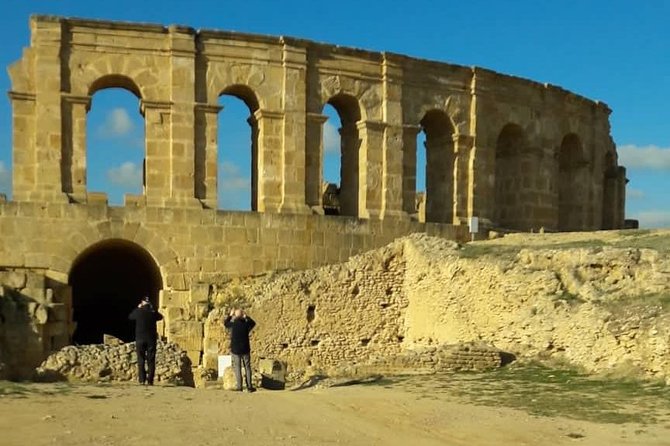
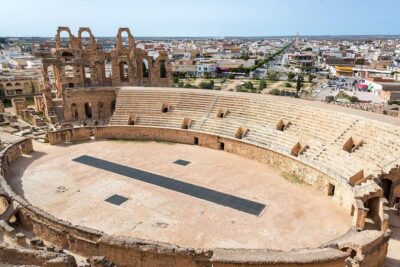
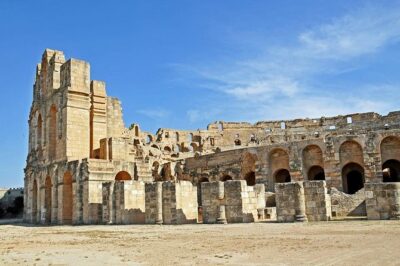
El Djem is likely to be the day’s strongest stop. The ancient city was known as Thysdrus and became one of the most prosperous cities of Roman Africa. Its amphitheater dates from the third century AD and could hold about 30,000 spectators.
The size is what makes the visit memorable. This is not a small provincial ruin that requires imagination to appreciate. The amphitheater is one of the most impressive Roman monuments in Africa and ranks third in size in the Roman world, after Rome’s Colosseum and the amphitheater at Capua.
You have about two hours here, with admission not included. That is a generous block compared with the short visits elsewhere. Use it to look at the exterior, enter the arena, and explore the lower areas if open during your visit. The exact access available can vary, so do not build your whole day around seeing every corridor.
I like the way this excursion gives El Djem room to breathe. A quick stop would reduce it to a photograph, while two hours lets you grasp the engineering and scale. One customer specifically considered El Djem and its museum the highlight of the day.
Bring comfortable shoes and water, even though bottled water is supplied. The visit involves walking, and the sheer size of the site makes it easy to spend more time on your feet than expected.
Roman mosaics at the El Djem Archaeological Museum
The museum visit follows the amphitheater and lasts about an hour. It is installed in a reconstructed Roman villa, giving you a useful change of scale after the massive arena.
The collection includes Roman mosaics, statues, terracotta statuettes, perfume containers, and other glass objects. The mosaics cover a period described as running from the fifth to the eleventh century in the supplied information. Admission is not included.
This pairing is one of the smartest parts of the route. At the amphitheater, you see public spectacle and Roman construction on a huge scale. In the museum, you get closer to domestic art and objects. The villa setting helps connect the displays with everyday Roman life.
The museum also protects you from making El Djem only about the amphitheater. If you have interest in Roman art, allow the full hour rather than treating the museum as an optional extra. If your priority is seeing as much of Monastir as possible, you may feel the schedule is too weighted toward El Djem, but the balance makes sense for most history-minded visitors.
Monastir, Bourguiba, the ribat, and the marina
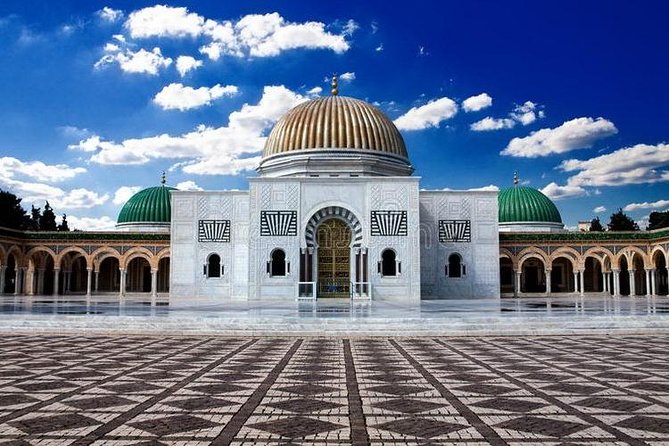
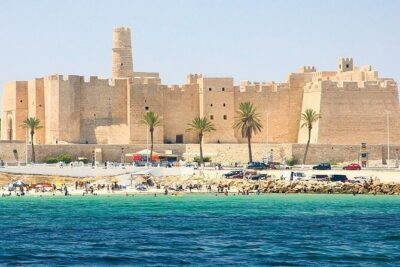
The final stop is Monastir, with about one hour available. The route passes the birthplace of Habib Bourguiba, the first president of the Tunisian Republic, then allows time for the Bourguiba mausoleum, the ribat, and the marina.
This is a sharp change from Kairouan and El Djem. Monastir brings you into Tunisia’s modern national story, while its older identity reaches back to the Punic and Roman city of Ruspina.
The difficulty is time. You have several possible sights but only one hour. If the mausoleum matters to you, go there first. If you prefer older architecture, focus on the ribat. The marina offers a lighter finish, but it may leave less time for the historic sites.
One customer reported that the driver tried to persuade the group to skip Monastir, then there was not enough time to visit the ribat after seeing the mausoleum. That does not mean the same thing will happen on every departure, but it is a useful warning. Before setting off, confirm that Monastir is part of your agreed route and ask how the final hour will be divided.
What the private vehicle adds
Private transport is the practical heart of this excursion. You are not sharing the vehicle with a large group, and only your party participates. That gives you a simpler day than arranging separate taxis or trying to connect these three destinations by public transport.
The air-conditioning matters during a full day on the road. Bottled water is included, and the vehicle is covered by private transportation, insurance, taxes, and fees listed as included.
The tradeoff is that a private driver is not automatically a guide. You may receive helpful local suggestions, but the service does not include a professional guide. If you want detailed explanations at Kairouan’s religious sites or El Djem’s Roman remains, arrange that separately and confirm the price in writing or before the visit begins.
There was also a complaint about driving at a very high speed, with 150 kilometers per hour cited by one customer. That is a serious safety concern, even though it reflects one reported experience rather than a stated feature of the tour. I would ask for a comfortable driving pace and speak up if you feel rushed on the road.
Timing, food, and extra costs
The 8:30 a.m. start is sensible. It gives you a chance to reach Kairouan before the later stops consume the day, but the route remains demanding. You will spend much of the day moving between places, so this suits you best if you prefer a full sightseeing circuit to a slow local day.
Lunch is not included. The schedule does not name a restaurant or set a meal break, so plan to ask the driver early when and where lunch will fit. Do not assume that a long restaurant stop is built into the 10 hours.
Entrance fees to museums and exhibitions are also excluded. The amphitheater, El Djem Archaeological Museum, and Monastir’s paid attractions may therefore add to the advertised group price. Personal expenses and tips are extra as well.
The booking confirmation is provided at the time of booking. Pickup is offered, though the supplied details do not specify every pickup location or hotel. Confirm the exact meeting point and pickup time before the day begins.
Who will get the most from this excursion
I would choose this trip if you are staying in Hammamet and want to see major inland and coastal sights without changing accommodation. It is particularly good for a small group that can split the $303.51 cost and prefers private transport.
It also suits you if your interests are broad. You get Islamic architecture in Kairouan, Roman engineering and art at El Djem, and Tunisia’s modern political story in Monastir. Few day trips offer such a clear change of period from stop to stop.
I would hesitate if you dislike early starts, long drives, or fixed schedules. You may also want a different plan if Monastir is your main goal, since the one-hour stop is short. Likewise, anyone wanting in-depth interpretation should budget for a guide, because the included service is transport rather than guided touring.
The overall rating is 4.4 from five reviews, with one especially positive account praising the punctual, professional driver and the value of the day. That matches the tour’s strongest feature: efficient access to several important sites. The concerns about guide pricing, the shortened Monastir visit, and driving speed are worth addressing before departure.
Should you book this Tunisia day trip?
Book it if you want maximum historical range in one day and value a private car more than a relaxed pace. El Djem is the clear centerpiece, and the Kairouan stops give the day religious and cultural depth before the Roman visit.
I would book for two or three people, confirm the pickup details, ask for the full entrance and guide costs, and agree that Monastir will remain on the route. I would also make your preferred pace clear to the driver.
Skip it if you want long meals, extended market time, or a slow visit to each city. For the right small group, though, this is a practical way to connect three very different sides of Tunisia from Hammamet.
FAQ
How long does the excursion last?
The excursion lasts approximately 10 hours, beginning at about 8:30 a.m.
How many people can join the private tour?
The price covers one private group of up to three people. Only your group participates.
Is a professional guide included?
No. A professional guide is not included. You can explore independently, and any local guide offered during the day should have a clearly agreed price before the visit.
Are entrance fees included?
No. Admission fees to museums, exhibitions, and other paid attractions are not included in the group price.
Is lunch provided?
No. Lunch is not included. Personal expenses and tips are also separate.
What is included in the price?
The listed inclusions are bottled water, an air-conditioned vehicle, private transportation, all fees and taxes, and insurance.
More Self-Guided Tours in Hammamet
- Tunis, Carthage and Sidi Bou Said Self-Guided Excursion from Hammamet
★ 4.5 · 4 reviews - Cap-Bon Self-Guided Excursion from Hammamet
★ 4.5 · 3 reviews - Self guided bike tour of Carthage archeological site
★ 4.5 · 10 reviews
Just added around Hammamet
- Cap-Bon Self-Guided Excursion from Hammamet★ 4.5 · 3 reviews
- Private Excursion of Friguia Park and Medina of Hammamet★ 4.5 · 4 reviews
- Executive: Transfer Tunis Airport to Hammamet by Mercedes E Class★ 5.0 · 4 reviews
- Tunis, Carthage and Sidi Bou Said Self-Guided Excursion from Hammamet★ 4.5 · 4 reviews
- Airport Tunis Carthage Private Transfer to/from Hammamet★ 4.0 · 4 reviews
- DayTrip to KORBOUS Thalasso-Thermal Bath & Spectacular SEA Cliffs★ 4.5 · 5 reviews
- Day trip to Cape Bon★ 4.0 · 5 reviews
- Ancient Carthage and Sidi Bou Said Half Day Tour with Lunch★ 4.0 · 9 reviews
Kairouan Holy City Tours, compared.
Fun VIP Tour: El Jem, Kairouan, Monastir/Sousse
Read our review →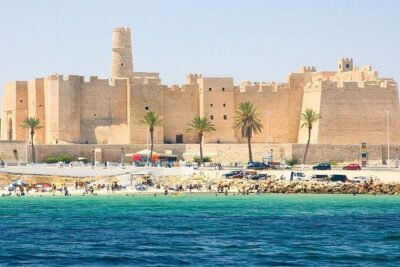
Private Tour to Kairouan, El Jem & Monastir from Tunis Hammamet
Read our review →
Private and Guided Tour to Kairouan and El Jem and Monastir
Read our review →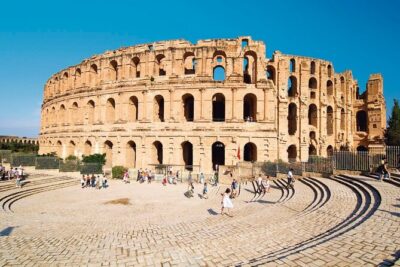
Kairouan & El Djem Guided Day Trip with Lunch from Hammamet
Read our review →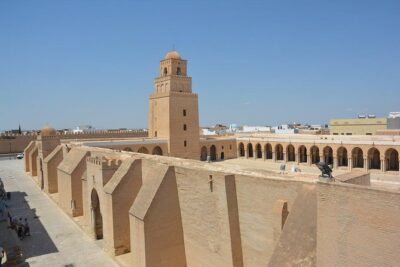
Kairouan Holy City and El Jem Colosseum Tour from Sousse
Read our review →Browse the lists this tour appears in