
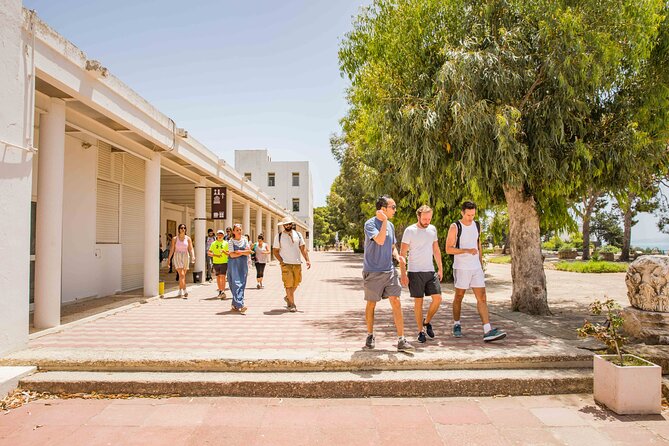
Reviewed · CARTHAGE
Private Walking Tour of Carthage Archaeological Site in Tunisia
Carthage is best understood on foot, one scattered ruin at a time. This private tour connects the Punic sanctuary, ancient ports, Roman villas, theatre, and the huge Baths of Antoninus, giving you a clear look at how one city changed from a major Punic power into a Roman center.
I like the private format, since your guide can keep the pace suited to your group. I also like the mix of Punic and Roman sites, especially the chance to compare the ancient ports with the seaside baths. The main caution is communication before the tour: one booking guest had asked about extending the visit to Tunis and did not receive a reply to a follow-up message.
Key points to know before booking
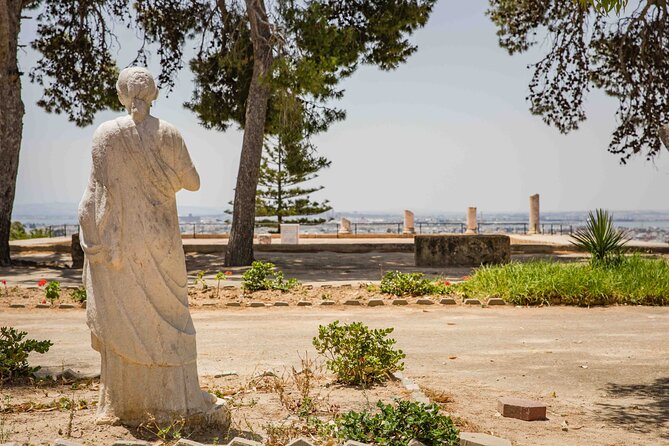
- Six archaeological stops cover Punic sanctuaries, ports, Roman villas, baths, and a theatre.
- The Baths of Antoninus receive the longest dedicated visit, about 40 minutes, and face the sea.
- Chedi, Mohammed, and Rania are named members of the local team, with Chedi noted for careful guiding and Rania for helping with a taxi.
- The tour is private, so only your group takes part.
- The price is $61.94 per person, with group discounts available and admission included.
- You finish at the Amphitheatre of Carthage, not at your starting point, and the guide can help you find a taxi or train station.
Why this Carthage walk works better than a quick photo stop
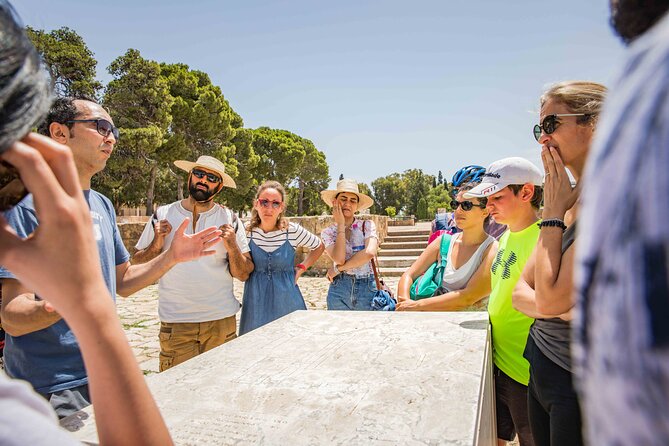
Carthage is not one compact monument with a single entrance. Its important remains are spread across a broad archaeological area near the sea. If you visit without a plan, it is easy to see broken walls and columns without understanding which parts belong to Punic Carthage and which belong to the later Roman city.
This tour gives those fragments a useful order. You move from Punic culture and maritime power to Roman public life, private homes, entertainment, and bathing. That sequence matters. It turns a collection of sites into a story about a city rebuilt and reshaped over time.
The private setup is the biggest practical advantage. You are not tied to the pace of a large group, and you can ask questions as the ruins raise them. The description promises a professional guide, and the named guides give you useful expectations: Chedi is described as prepared and attentive, Mohammed as a good guide, and Rania as helpful with taxi arrangements.
The walk lasts roughly two to three hours. The listed stop times add up to about two hours and 40 minutes, although the first stop gathers several points of interest into a one-hour visit. Plan for a walking-focused outing rather than a brief guided introduction.
More Private Tours in Tunis
- Private Tour to Kairouan, El Jem & Monastir from Tunis_hammamet
★ 5.0 · 301 reviews - Private tour: Medina,Carthage ,Sidi Bou Said, Bardo Museum+lunch
★ 5.0 · 230 reviews - Carthage, Bardo Museum, Sidi Bou Said and Medina Private Day Tour
★ 4.5 · 153 reviews
Starting at the archaeological site
The meeting point is Le Lemon Tour at 9 Rue Hannibal, within the Carthage archaeological area. The stated operating hours are Monday through Sunday from 9:00 a.m. to 4:00 p.m., for the period listed through June 17, 2026.
You are not collected from your hotel. Hotel pickup and drop-off are not included, so you need to reach the starting point yourself. The area is near public transportation, which helps if you are staying in Tunis or arranging your own route to Carthage.
The tour ends elsewhere, at the Amphitheatre of Carthage. This is worth noting before you set out. You will not simply return to the meeting point after the final stop, but the guide can help you reach a cab or a train station.
A current valid passport is required on the day of the tour. Keep it with you, even though this is a walking visit rather than a border crossing or day trip out of Tunisia.
One hour among Carthage’s main archaeological points
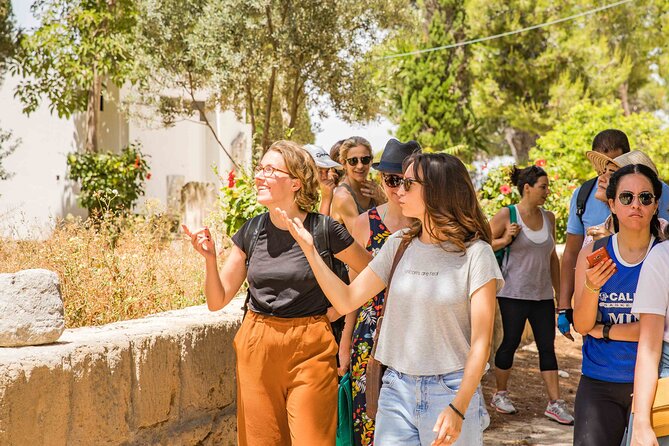
The opening section is the broadest. Over about an hour, you walk between several important parts of the archaeological site, including the Punic sanctuary, the Magon Quarter, the ancient Punic ports, and the Antonine baths.
This opening walk is useful because it establishes the city’s scale. Carthage was not only a set of temples or a Roman resort. It was also a port city, a religious center, a residential place, and later a major Roman urban center.
The Magon Quarter adds a domestic side to the story. Instead of looking only at grand public ruins, you get a sense of how an urban district fit into the wider city. The Punic sanctuary shifts the focus to religion and ritual, while the ports show why Carthage mattered across the Mediterranean.
The first hour may feel quick if you want a close look at every ruin. Several major subjects are packed into one section, so listen for the overall explanation and save detailed follow-up questions for your private guide. The benefit is coverage. You see the main structure of the site without spending the entire tour in one area.
Fifteen minutes at the Tophet of Carthage
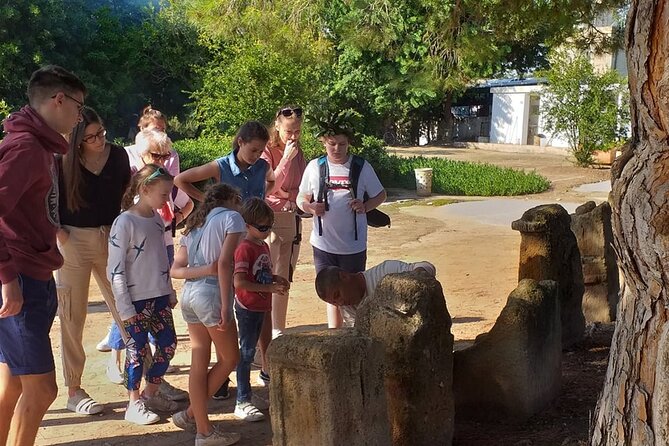
The Tophet is a short stop, scheduled for about 15 minutes, but it is one of the places where the Punic side of Carthage comes most sharply into focus. Here, the guide explains Punic culture and the role of this sanctuary.
Because the visit is brief, you should expect an introduction rather than a long archaeological lecture. Still, this stop gives the tour a necessary cultural center. Without it, the experience could lean too heavily toward Roman ruins and overlook the civilization that first made Carthage a major power.
The subject can raise difficult questions about ancient religious practice. A private guide is useful here because you can ask for clarification instead of relying on a short label or a quick glance. Chedi’s careful, attentive approach would be particularly helpful at a site where context matters as much as what remains on the ground.
More Carthage and Sidi Bou Said days:
- Guided Bike Tour of Carthage Archeological Site in Tunisia
★ 5.0 · 88 reviews - Group Guided Bike Tour of Carthage Archeological Site in Tunisia
★ 5.0 · 57 reviews - Archaelogical Site Of Carthage + Picturesque Village Of Sidi Bou Said
★ 5.0 · 56 reviews - Historical Tour of Ancient Carthage
★ 5.0 · 51 reviews
The Punic ports and Carthage’s maritime story
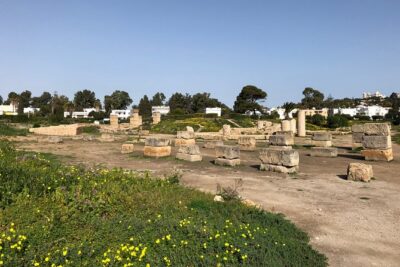
The Punic Ports receive another 15 minutes. These were a major part of Carthage’s Mediterranean importance, and the stop helps connect the city’s political power with its position beside the sea.
You will not spend a long time at the ports, so think of this as a focused explanation of why the harbor area mattered. The seaside setting also gives the walking route some visual variety. After sanctuaries and urban ruins, the port area opens the story toward trade, ships, and regional influence.
This is one of the places where a guide adds real value. Ruins around a former harbor can be hard to read without help. A good explanation can show you how the port fitted into the city, even when the surviving remains do not look dramatic at first glance.
Forty minutes at the Baths of Antoninus
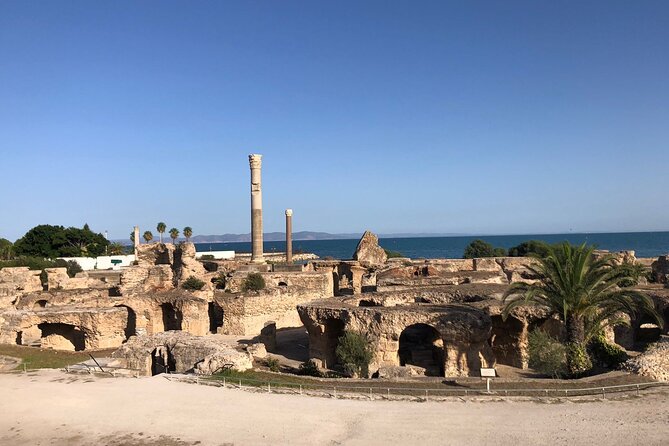
The Baths of Antoninus receive the longest dedicated stop, about 40 minutes. These Roman baths were among the largest in the Roman Empire, and their seaside position gives the visit a memorable setting.
The site contains many ruins, not just the bath buildings themselves. You can expect to walk among the remains of a large Roman complex while the guide explains how the baths fit into Roman public life. The scale is the key point here. Even in ruin, the site communicates the size and ambition of Roman Carthage.
I would treat this as the tour’s visual centerpiece. The combination of open ruins, Roman engineering, and views toward the sea makes it easier to picture the city as a functioning Roman center rather than a quiet archaeological park.
The timing is also sensible. Forty minutes gives you enough room to look around and ask questions without allowing one site to swallow the whole tour. If you have mobility concerns, remember that the experience requires a moderate level of physical fitness and involves walking between sites.
Twenty minutes in the Roman Villas
The Roman Villas provide a change of scale. After the massive baths, you visit an example of Roman domestic architecture, including mosaics and a sightseeing viewpoint.
Mosaics are often the detail that makes Roman ruins feel personal. They show decoration inside a private setting, giving you a glimpse of taste and status beyond the public buildings. The villas also help balance the tour. You are not looking only at monumental remains built for thousands of people.
The scheduled 20 minutes should be enough for a guided overview and a look at the mosaics. If you enjoy decorative details, this may be one of the stops where you want to use your private format well by asking the guide to point out what to notice.
The visit is also a reminder that Carthage was a lived-in city. Public baths and theatres tell one part of the story, while villas show how Roman life took shape at home.
Ten minutes at the Roman Theatre
The Roman Theatre is the shortest stop, at about 10 minutes. That makes it more of a concise visit than a full theatre tour.
You will see the Roman performance site and receive an explanation of its place in Carthage. The brief timing keeps the whole outing within the advertised two to three hours, but it does mean that theatre enthusiasts may want additional independent time if the schedule allows.
The route ultimately ends at the Amphitheatre of Carthage. The information supplied identifies that as the endpoint, while the itinerary also lists the Roman Theatre as a stop. Since the tour finishes at a different location from the beginning, listen carefully to the guide’s directions at the end and confirm your onward transport.
What $61.94 per person gets you
At $61.94 per person, this is not the cheapest way to look at Carthage. The price makes more sense if you value a private guide, a planned route, and admission to the listed sites rather than simply walking around on your own.
All taxes, fees, handling charges, and entrance tickets are included. That removes some of the small costs and decisions that can slow down an independent visit. You are mainly paying for the guide’s time and for having the major locations connected into one visit.
The value improves for a small group, especially since group discounts are available. A private experience can also be more efficient than hiring separate transport or trying to work out which sites fit together.
The price is harder to justify if you already know Punic and Roman history well, or if you prefer to spend a full day studying each ruin at your own pace. The stops are tightly timed, particularly the Tophet, ports, and theatre. This is a guided overview with useful depth, not an all-day archaeological seminar.
The tour is booked an average of 29 days in advance. That does not guarantee that every date sells out, but it does suggest that you should arrange it ahead of a busy Tunisia itinerary rather than leave it until the morning before.
Guides, communication, and the human side of the tour
The guide can make or break a site like Carthage. Chedi is described as prepared and attentive, and Mohammed as good at guiding the visit. Those qualities matter here because the ruins need explanation, and the schedule moves through several periods and locations.
Rania is noted for helping with a taxi. That is a practical touch, especially because the tour ends away from its starting point. You should still handle any special request clearly and in advance.
One important lesson is to get written confirmation for extra arrangements. A request to extend the tour to Tunis in the afternoon received an initial response, but a later message went unanswered and the extension had not been arranged. Do not assume that a proposed add-on is confirmed until the company clearly agrees to it.
The published experience itself is the Carthage walking tour. Any added visit to Tunis should be treated as a separate arrangement unless you receive firm confirmation.
Walking, weather, and timing tips
You need a moderate level of physical fitness. The tour moves between archaeological points, and the experience is built around walking rather than sitting in a vehicle.
The route is close to the sea, with sun and open archaeological areas. Good weather is required. If poor weather forces cancellation, you will be offered another date or a full refund.
A morning start is likely the most comfortable choice within the stated 9:00 a.m. to 4:00 p.m. opening window, particularly if you want to avoid the strongest part of the day. The supplied information does not promise a particular start time beyond the operating hours, so confirm your selected time when booking.
Wear practical walking shoes and bring sun protection. Those are sensible choices for any outdoor archaeological visit, especially one that links several sites rather than keeping you inside a single museum.
Who will get the most from this private visit
This tour suits you if you want to see the main Carthage sites in one organized outing and prefer a guide who can explain the difference between Punic and Roman remains.
It is a good fit for:
- First-time visitors to Carthage who want a clear introduction.
- Couples, families, or small groups that prefer a private pace.
- History-minded visitors who want both Punic and Roman subjects.
- People staying in Tunis who can manage their own transport to the meeting point.
- Anyone who values included admission and help with onward transport.
It may be less suitable if you need hotel pickup, want a long and highly detailed visit at every location, or dislike walking between open-air ruins. You should also be cautious about adding an unconfirmed afternoon extension to Tunis.
Cancellation and booking details worth noting
You can cancel up to 24 hours before the start time for a full refund. Changes made less than 24 hours before the experience are not accepted, and cancellations inside that window are not refunded.
The cut-off is based on local Tunisian time. Since the experience requires good weather, a weather cancellation gives you the choice of another date or a full refund.
Confirmation is received when you book, and the tour accepts mobile tickets. Admission is included, but hotel pickup and drop-off are not.
Should you book this Carthage tour?
Book it if you want a focused, private walk through Carthage with the main Punic and Roman sites tied together by one guide. The Baths of Antoninus, Punic ports, Tophet, villas, and theatre create a well-rounded route, and the private format gives you room to ask questions.
I would book with two conditions in mind: arrange your own way to the meeting point, and get clear written confirmation for anything beyond the standard tour. At $61.94 per person, the experience offers fair value for included admission and private guiding, especially with a group discount. It is best for understanding the shape and story of Carthage in a few hours, not for examining every ruin at leisure.
FAQ
How long does the private Carthage walking tour last?
The experience lasts approximately two to three hours. The scheduled stops total about two hours and 40 minutes.
What sites are included?
The route includes the Carthage archaeological site, the Tophet of Carthage, the Punic Ports and Museum, the Baths of Antoninus, the Roman Villas, and the Roman Theatre of Carthage.
Are admission tickets included?
Yes. Admission tickets for the listed stops are included.
Is this a private tour?
Yes. Only your group participates in the activity.
What is the price?
The stated price is $61.94 per person. Group discounts are available.
Is hotel pickup included?
No. Hotel pickup and drop-off are not included.
Where does the tour start?
It starts at Le Lemon Tour, 9 Rue Hannibal, within the Carthage archaeological site area.
Where does the tour end?
The tour ends at the Amphitheatre of Carthage. The guide can help you reach a taxi or a train station.
What should I bring on the day?
A current valid passport is required. You should also be prepared for walking and have a moderate level of physical fitness.
What happens if the weather is poor?
If the experience is canceled because of poor weather, you will be offered a different date or a full refund.
More Walking Tours in Tunis
- Walking city tour
★ 4.0 · 18 reviews - Walking City Tour
★ 4.5 · 7 reviews - Fun VIP Tour: Sousse &/OR Monastir (Walking Tour or Car Option)
★ 5.0 · 69 reviews
Just added around Tunis
- Private Group Day Tour Tunis Medina Carthage Sidi Bou Said★ 4.5 · 3 reviews
- Private Tour Bardo Museum, Carthage, Sidi Bou Said and Medina★ 4.5 · 3 reviews
- Explore Tunisia in Depth:The Private Grand Tour in 8 Days★ 5.0 · 3 reviews
- 3-Day South of Tunisia Guided Tour from Tunis★ 4.0 · 3 reviews
- Bardo Museum , Oudhna and the roman aqueduct★ 5.0 · 4 reviews
- From Tunis: Star Wars 5 day tour★ 5.0 · 4 reviews
- DAY TRIP TO Dougga & Bulla Regia , DEPARTURE FROM Tunis★ 5.0 · 4 reviews
- Private Tour to El Jem, Sousse, and Monastir From Tunis_Hammamet★ 5.0 · 4 reviews
Carthage & Sidi Bou Said Day Trips, compared.
VIP Tour: Tunis Medina/Bardo, Sidi Bou Said, Carthage
Read our review →
Private tour: Medina,Carthage ,Sidi Bou Said, Bardo Museum+lunch
Read our review →
Guided Bike Tour of Carthage Archeological Site in Tunisia
Read our review →
1 day excursion Tunis Sidi Bousaid Carthage departure from Sousse
Read our review →
Archaelogical Site Of Carthage + Picturesque Village Of Sidi Bou Said
Read our review →
Tunis, Sidi Bousaid and Carthage day trip from Hammamet
Read our review →Browse the lists this tour appears in