
Reviewed · TUNIS
Explore Tunisia in Depth:The Private Grand Tour in 8 Days
Tunisia’s great trick is how much country fits into eight days. You move from the Roman ruins of Dougga and El Jem to Berber villages, salt flats, palm oases, and a night in a desert camp beneath the stars. This is not a one-city holiday. It is a cross-country journey with plenty of road time and a very full plate of sights.
I like two things right away. First, the private format gives your group its own transport and guide, which matters when some days run for ten hours. Second, the route connects famous places with less polished stops such as Testour, a brick factory, local medinas, and an underground home in Matmata. The main consideration is pace: long driving days, early starts, and several major sights packed into one day will suit curious, active visitors more than slow-paced holidaymakers.
Key points at a glance
- A true north-to-south route: You see Tunis, Roman ruins, Kairouan, Tozeur, the Sahara, Matmata, El Jem, Hammamet, Carthage, and Sidi Bou Said.
- Private transport throughout: Only your own group takes part, with airport transfers and parking fees included.
- Two major desert highlights: A 4×4 outing reaches Chebika, Tamerza, and Ong Jemel, followed by desert activities and overnight camping.
- Strong UNESCO coverage: Dougga, Kairouan, El Jem, Carthage, and the Bardo Museum area add serious historical weight.
- Full board is included: Six lunches, six dinners, and five breakfasts are covered, while drinks and international flights are not.
- Guide quality matters: Mourad is specifically praised for adding warmth and emotion to the trip, so confirm your assigned guide before departure.
From Tunis to the first Roman ruins
Your arrival day is deliberately easy. You are met at the airport and transferred to a four-star hotel in Tunis, listed as Hotel Lookout Fourati or a similar property. Since the tour day begins at 12:00 am in the booking details, confirm the exact pickup time and flight details before you go. The important point is that airport transfer is part of the plan, so you do not need to arrange your first ride into the city.
Day two moves west from Tunis toward some of Tunisia’s finest ancient sites. The route includes Thuburbo Majus, the Andalusian town of Testour, and Dougga. That is a lot for one day, but the mix is rewarding: you get Roman remains, later Islamic and Andalusian influences, and a smaller-town stop rather than a schedule made only of headline attractions.
Dougga is the star. Its hilltop Roman remains are spread across an open setting, with temples, columns, roads, and theater spaces that help you understand how a city functioned rather than giving you one isolated monument. The site is a UNESCO World Heritage Site, and lunch is planned around the Dougga visit.
Testour offers a different mood. It is described as an Andalusian city, so it helps show the cultural layers that shaped Tunisia after Roman times. Thuburbo Majus comes first, making the day an appealing choice for anyone who wants more than the usual Tunis and Carthage circuit.
The drawback is simple: ten hours is a long touring day. Comfortable private transport helps, but you should expect time in the vehicle between stops. Wear shoes that can handle uneven archaeological ground and bring water, since drinks are not included.
More Private Tours in Tunis
- Private Tour to Kairouan, El Jem & Monastir from Tunis_hammamet
★ 5.0 · 301 reviews - Private tour: Medina,Carthage ,Sidi Bou Said, Bardo Museum+lunch
★ 5.0 · 230 reviews - Carthage, Bardo Museum, Sidi Bou Said and Medina Private Day Tour
★ 4.5 · 153 reviews
Kairouan’s sacred center and Tozeur’s medina
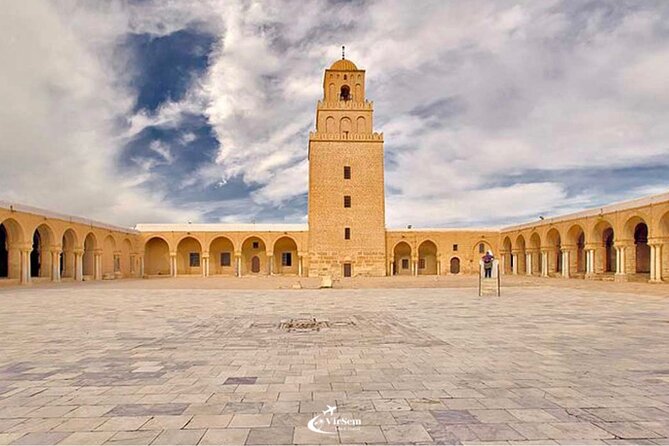
Day three shifts south to Kairouan, one of Tunisia’s major religious and cultural centers. The stops include the Aghlabid Basins, the Sidi Saheb Mausoleum, and the Great Mosque. Together, they give you more than a quick photo stop.
The Aghlabid Basins show the engineering behind an important medieval city. The Sidi Saheb Mausoleum adds ornate religious architecture, while the Great Mosque is the major visit of the morning. Kairouan is a UNESCO World Heritage city, and this is one of the tour’s strongest history-focused sections.
After lunch, you continue to Tozeur and visit its medina. Tozeur is your base for the desert and oasis portion of the trip, so arriving here gives the route a useful change of pace. The medina visit is also a good chance to see the distinctive brickwork associated with the town.
This day is listed as roughly ten hours, split between Kairouan and Tozeur. You will not get an unhurried full day in either place. Still, the arrangement makes practical sense if your goal is to reach southern Tunisia without sacrificing Kairouan.
Chebika, Tamerza, and the road to Ong Jemel
Day four is one of the most scenic and unusual days. A 4×4 takes you toward the mountain oases of Chebika and Tamerza, then on to Ong Jemel, known for its Star Wars filming location. The 4×4 is not a decorative extra here. It is the right kind of vehicle for reaching the rougher desert routes and oasis areas described in the program.
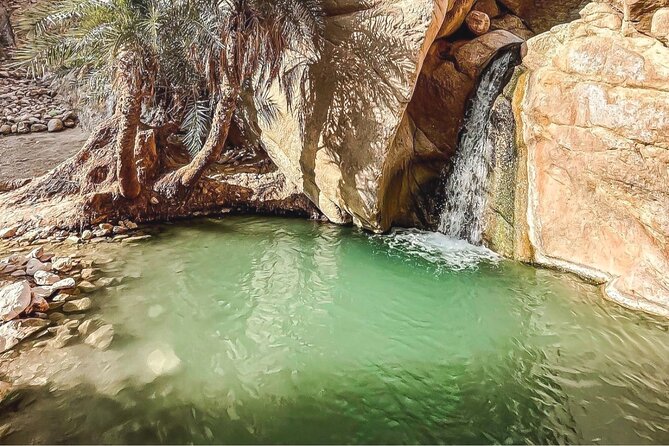
Chebika and Tamerza bring together dry mountain scenery and pockets of green around water. The contrast is part of the appeal. You are not simply looking at sand. You are seeing how springs and palms create life in an otherwise severe setting.
Ong Jemel adds a bit of film-location fun. You do not need to be a Star Wars fan to enjoy the remote setting, but fans will have an extra reason to look forward to this stop. After lunch, the day continues to Nefta and a brick factory. You may also have the chance to take a carriage ride in Tozeur’s oasis.
That last option is worth treating as a possibility rather than a guaranteed feature. The same applies to any optional activity whose exact timing is not specified. The day runs about ten hours, and the variety is excellent, but you should be ready for heat, dust, and uneven ground.
Chott el Jerid and a night in the Sahara
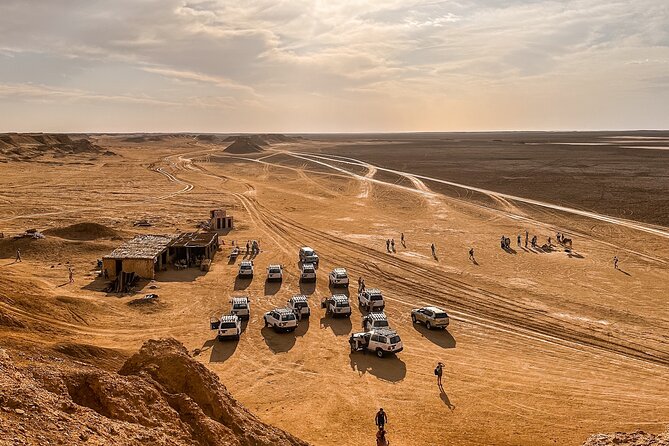
Day five brings the tour’s most memorable transition: crossing Chott el Jerid, Tunisia’s huge salt lake, before reaching Douz. The salt lake is a broad, stark setting where colors and surface patterns can change with the light. It is a scenic road crossing, not a swimming or water-based outing.
Douz is associated with the Sahara, and the schedule gives you several ways to experience it. You visit the market and the Sahara Museum, then have the option of a camel ride and quad biking on the dunes. These activities are especially useful if you want more than a drive past the desert. Ask your guide how the optional rides fit into the day, since the supplied schedule does not state whether they are included in the price.
The evening desert camp is the emotional center of the trip. Sleeping under the stars gives the southern section a clear sense of place, rather than making Douz just another overnight stop. One of the strongest comments about the experience specifically praises the magical desert night, and that makes sense: it is the kind of simple, location-based moment that a standard hotel route cannot copy.
The practical tradeoff is comfort. The tour information calls it a desert camp but does not specify the tent style or facilities. If you need a particular sleeping setup, ask before booking. Drinks are excluded, so carry enough personal water for the day and confirm how camp refreshments are handled.
A few more Tunis half-days to weigh up
- Private Excursion to Testour, Dougga and Bulla Regia from Tunis.
★ 5.0 · 100 reviews - Guided Bike Tour of Carthage Archeological Site in Tunisia
★ 5.0 · 88 reviews - Guided tour in the UNESCO world heritage Medina of Tunis
★ 5.0 · 68 reviews - Group Guided Bike Tour of Carthage Archeological Site in Tunisia
★ 5.0 · 57 reviews
Matmata’s underground homes and El Jem’s amphitheater
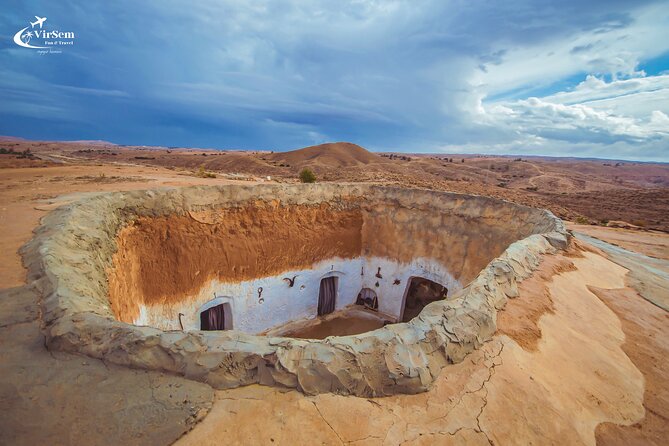
Day six starts in Matmata, where you visit an underground house in a Berber village. This is one of the tour’s most personal stops because it connects architecture with daily life. The homes are built around sunken courtyards, a design suited to the region’s harsh conditions. You are not just looking at an old building from the outside. You are seeing how people adapted their homes to the setting.
The visit lasts about five hours within the morning section, though that timing likely includes the drive and other movement. The itinerary does not specify the name of the house or whether a resident gives the explanation, so ask your guide what to expect on the day.
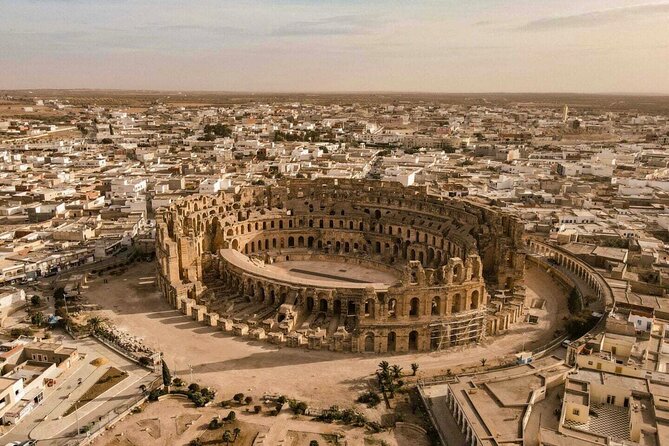
After lunch, the route turns north toward El Jem and its vast amphitheater. This UNESCO World Heritage Site is among Tunisia’s most impressive ancient monuments. Its scale is the point: the structure makes Roman public entertainment feel physical and immediate, with towering stone seating and a strong sense of how large the city once was.
The day ends in Hammamet at a four-star hotel. This is another long day, listed at around fifteen hours across the three stops, so do not expect a leisurely afternoon by the sea. Hammamet serves as a practical overnight base after the south, not as a full resort stay.
Bardo, La Goulette, Carthage, and Sidi Bou Said
Day seven returns to the Tunis area and packs several of the country’s best-known cultural stops into one day. You visit the Bardo Museum and the Medina of Tunis before lunch in La Goulette. The Bardo is particularly important for its archaeological collections, including the Roman-era art for which Tunisia is known.
The Medina of Tunis gives you a different experience from a museum. You move through an old urban quarter rather than a single attraction, with streets, shops, religious buildings, and everyday city life. The exact route and free time are not stated, so private touring should help if you want to pause for photos or browsing.
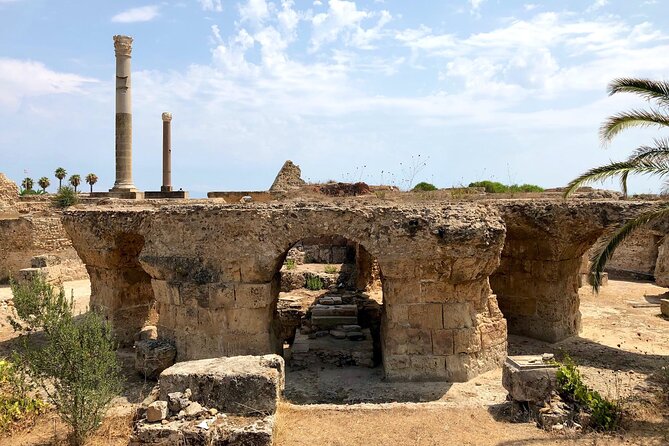
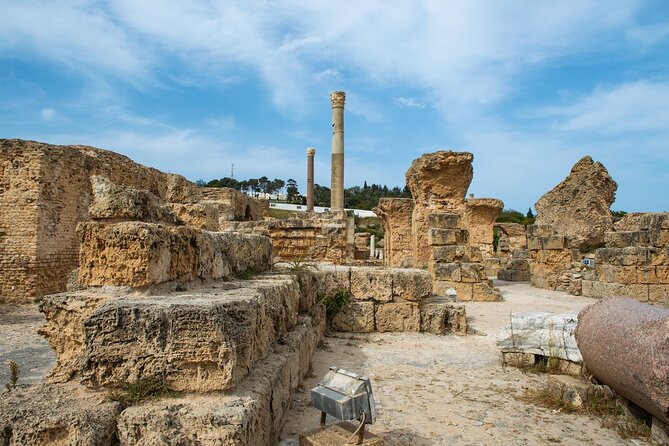
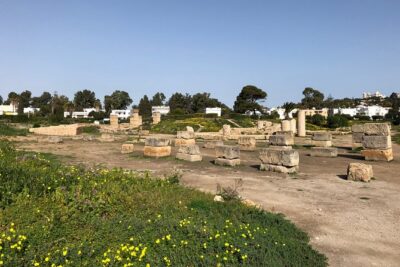
Lunch in La Goulette breaks up the sightseeing before the afternoon visits. Then comes Carthage, another UNESCO World Heritage Site. Carthage is spread across several archaeological areas, so a guided visit is useful for connecting the remains to the city’s larger story. You should not expect one compact ruin with everything in one place.
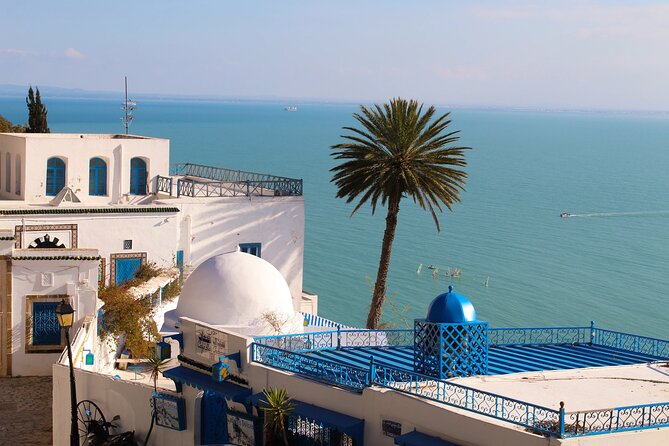
The final stop is Sidi Bou Said, famous for its white buildings and blue details. It is a pleasant way to finish the touring portion, with a lighter atmosphere after the museum and ancient sites. The schedule gives Carthage three hours and Sidi Bou Said two, but the whole day still moves quickly.
What the private format changes
A private tour does not remove the distance between Tunisia’s regions, but it makes the distance easier to manage. Your group has private transportation, and only your party takes part. That gives you room to ask questions, adjust small pauses, and discuss practical choices such as camel rides, carriage rides, and quad biking.
The supplied experience names Mourad as a guide who made a particularly strong impression, with praise for his ability to share the trip with warmth and emotion. Because guide assignments can vary, I would ask whether Mourad will lead your departure. If not, request the guide’s name and language before you pay.
Private touring is also useful for this itinerary because the days are full. A fixed large group can make a ten-hour day feel even longer. With your own group, you can at least keep the social side comfortable and make your preferences clear.
The limitation is price. At $2,787.98 per person, this is not a budget route. Its value comes from the amount bundled into one trip: private transport, airport transfers, parking fees, departure taxes, hotels, six lunches, six dinners, and five breakfasts. International flights and drinks are extra, and the details of some desert activities are not clear, so ask for a precise inclusion list before booking.
If you were to arrange a similar route independently, you would need to coordinate several hotels, long-distance transport, site visits, a 4×4 excursion, desert camping, and meals. The tour fee is therefore easiest to justify if you value convenience and a private guide more than finding the lowest possible price. Group discounts may improve the per-person value for a larger party.
Who will enjoy this eight-day route
I would choose this trip if you want to see Tunisia as a whole country rather than base yourself in one resort. It suits you if Roman archaeology, Islamic architecture, Berber culture, desert scenery, and local food all sound appealing in the same holiday.
You should also be comfortable with long days in a vehicle. Dougga, Tozeur, Douz, Matmata, El Jem, and Tunis are not close neighbors, and the route covers a large distance in only eight days. The private setup helps, but it cannot change the geography.
The tour is also a good match for first-time visitors who want meals and transport organized. Full board removes a common source of daily decisions, though you still need to budget for drinks. Most people can take part, and service animals are allowed. The tour is near public transportation, but its private vehicle is the main way you move between regions.
Booking details worth checking first
Confirmation is provided at booking, and pickup is offered. The listed start time of 12:00 am is unusual, so confirm the actual airport meeting time rather than relying on that field alone.
Cancellation is free up to 24 hours before the experience start time. A cancellation inside that window is not refunded, and changes made inside 24 hours are not accepted. The local time in Tunisia controls the cutoff.
The hotel in Tunis is Hotel Lookout Fourati, four-star, or similar. Hammamet also includes a four-star hotel, while the other overnight arrangements are not fully described in the supplied details. Ask for the names of all hotels and the desert camp standard if sleeping comfort matters to you.
Should you book the Grand Tour?
Book it if you want a single private journey through Tunisia’s major regions, with UNESCO sites, desert activities, Berber culture, and full-board arrangements handled in one package. The route is unusually broad for eight days, and the combination of Dougga, Kairouan, El Jem, Carthage, and the Sahara gives you a strong first look at the country.
Think twice if you want long mornings, free afternoons, or a resort-style holiday. The schedule is ambitious, some days are very long, drinks and international flights cost extra, and optional desert rides need clarification.
For an active first visit, I find the value strongest in the private transport, guide support, and desert overnight. Confirm your guide, hotel list, camp facilities, and optional activity prices before booking, then this can be a memorable way to see Tunisia from Roman hills to Saharan dunes.
FAQ
How long is the Grand Tour in Tunisia?
The tour lasts approximately eight days, beginning with airport pickup in Tunis and ending with an airport transfer on day eight.
Is this a private tour?
Yes. Only your group participates, and private transportation is included.
What meals are included?
The tour includes six dinners, six lunches, and five breakfasts. Drinks are not included.
Are international flights included?
No. International flights are not included in the stated price.
Which UNESCO World Heritage sites are visited?
The route includes Dougga, Kairouan, El Jem Amphitheatre, and Carthage. The Bardo Museum and the Medina of Tunis are also included in the cultural touring schedule.
Is airport pickup included?
Yes. The trip begins with a meeting at the airport and transfer to your hotel in Tunis. An airport transfer is also provided at the end of the tour.
Can I cancel for a full refund?
You can cancel for a full refund up to 24 hours before the experience start time. Cancellations or changes made less than 24 hours before the start time are not refunded or accepted.
Just added around Tunis
- Private Group Day Tour Tunis Medina Carthage Sidi Bou Said★ 4.5 · 3 reviews
- Private Tour Bardo Museum, Carthage, Sidi Bou Said and Medina★ 4.5 · 3 reviews
- 3-Day South of Tunisia Guided Tour from Tunis★ 4.0 · 3 reviews
- Bardo Museum , Oudhna and the roman aqueduct★ 5.0 · 4 reviews
- From Tunis: Star Wars 5 day tour★ 5.0 · 4 reviews
- DAY TRIP TO Dougga & Bulla Regia , DEPARTURE FROM Tunis★ 5.0 · 4 reviews
- Private Tour to El Jem, Sousse, and Monastir From Tunis_Hammamet★ 5.0 · 4 reviews
- Private Walking Tour of Carthage Archaeological Site in Tunisia★ 4.5 · 4 reviews
Tunis Tours, compared.
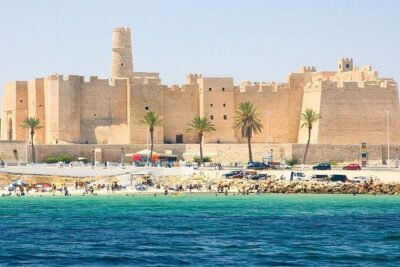
Private Tour to Kairouan, El Jem & Monastir from Tunis Hammamet
Read our review →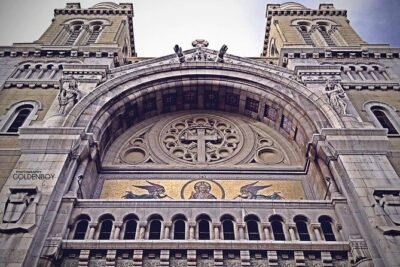
Private tour: Medina,Carthage ,Sidi Bou Said, Bardo Museum+lunch
Read our review →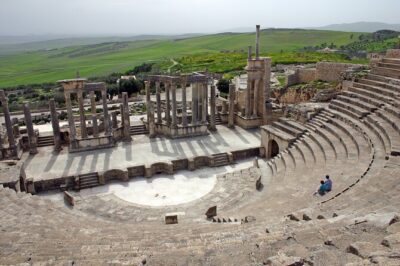
Private Excursion to Testour, Dougga and Bulla Regia from Tunis.
Read our review →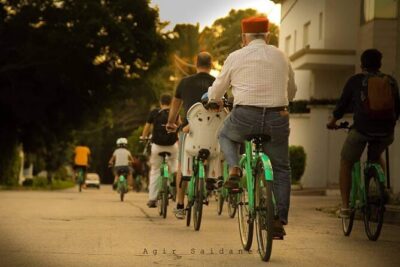
Guided Bike Tour of Carthage Archeological Site in Tunisia
Read our review →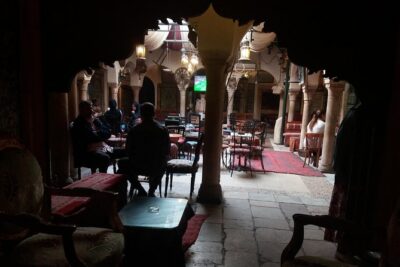
Guided tour in the UNESCO world heritage Medina of Tunis
Read our review →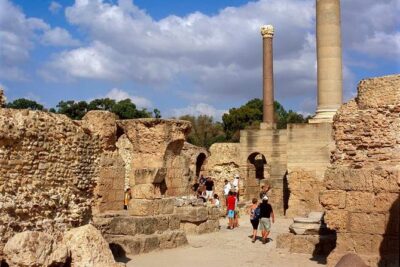
Archaelogical Site Of Carthage + Picturesque Village Of Sidi Bou Said
Read our review →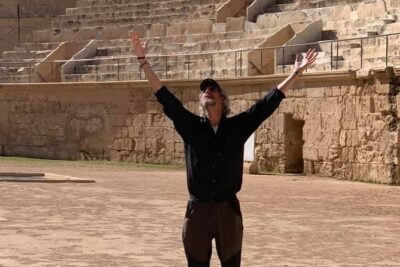
Browse the lists this tour appears in