
Reviewed · THE BARDO
Tunis: Carthage, Bardo Museum, Sidi Bou Said & Medina Group Tour
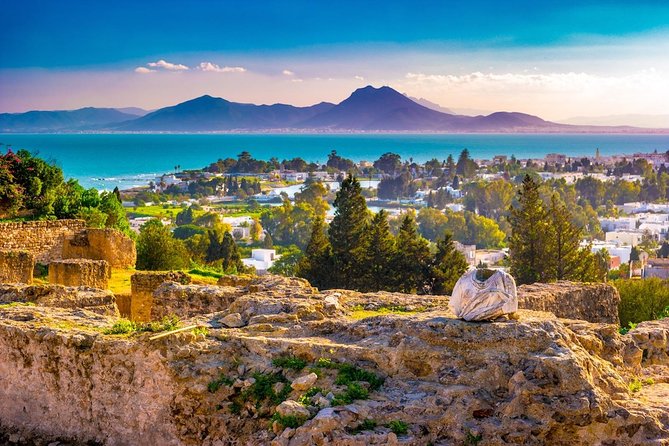
Carthage is the star here: a sprawling ancient city where Phoenician, Roman, and later civilizations left their mark. This tour makes sense because the ruins are spread across several locations, and a guide can connect the Baths of Antoninus, Byrsa Hill, the Punic ports, and the aqueduct into one clear story. I especially like that transport and entry fees are included, and that the day adds two very different Tunisian settings: the blue-and-white lanes of Sidi Bou Said and the old souks of the Medina.
I also like the human touch reported from guides such as Boutheina Derouiche, Bouhdid, Mohamed, Younis, and Boubou, who have been praised for storytelling and attention to individual needs. The tradeoff is simple: this is a packed day, often involving uphill streets, uneven ground, heat, wind, and as much as five miles of walking for some people.
Key points to know before booking
- Carthage is spread out: You visit major archaeological areas by vehicle instead of trying to connect them on foot.
- The Baths of Antoninus anchor the ancient portion: Expect massive Roman remains, mosaics, courtyards, and clues to the old heating system.
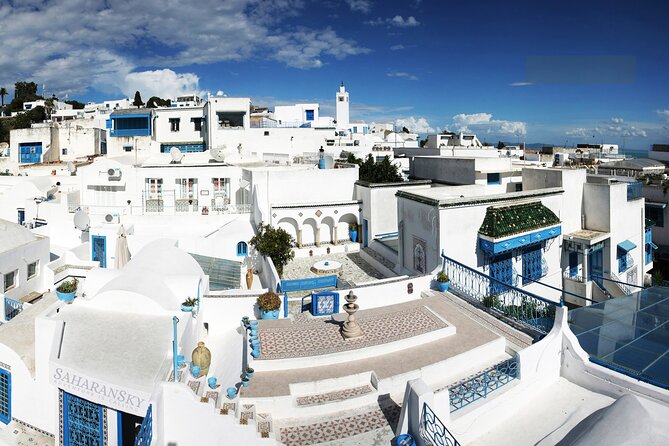
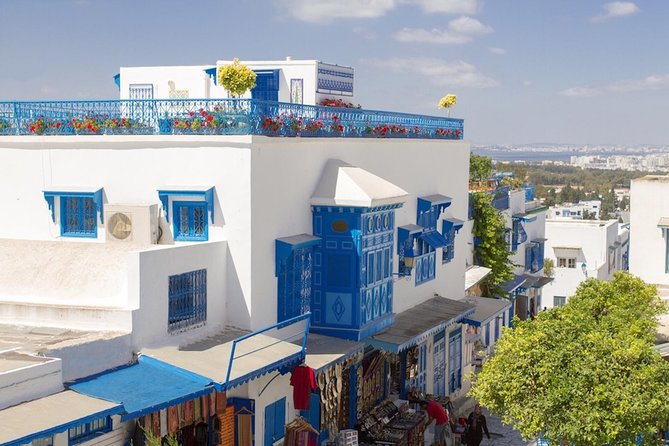
- Sidi Bou Said brings a change of pace: Its white buildings, blue doors, narrow lanes, and sea views make it the most scenic stop.
- The Bardo Museum adds indoor history: Its collections are especially useful after seeing Roman sites, though closure can affect the day.
- The Medina is a real walking experience: Narrow lanes, souks, mosques, and craft shops replace the open Roman ruins.
- At $45, the package is strong value: Pickup, lunch, admissions, a guide, and transportation are included, but do not expect a luxury meal or a private tour.
Why this makes a good first day in Tunis
The clever part of this experience is its range. In seven to eight hours, you move from the remains of an ancient empire to a seaside art village, then into the older core of modern Tunis. I would choose it early in a Tunis visit because it gives you a useful framework for the city and its past.
Carthage is not one tidy ruin with a single entrance. Important remains are scattered over a large area. Without help, you can easily spend time looking at stones without understanding what they once did. A guide explains how the city worked, why the location mattered, and how Phoenician Carthage gave way to Roman Carthage after its destruction in 146 BC.
The group can include up to 19 people. That is small enough to be manageable, though a larger van group may feel less personal than a private outing. The vehicle matters because it links separated sites and gives your feet a break between stops.
Pickup is offered from Tunis hotels, and the tour begins at 8:00 am. Pickup details matter if you are staying outside central Tunis or arriving by cruise ship. One cruise passenger had to walk from the port area to the Lido Hotel in La Goulette for pickup, while the return was closer to the port. Confirm your pickup point before the day begins.
More Museum Tours in Tunis
- Private tour: Medina,Carthage ,Sidi Bou Said, Bardo Museum+lunch
★ 5.0 · 230 reviews - Carthage, Bardo Museum, Sidi Bou Said and Medina Private Day Tour
★ 4.5 · 153 reviews - Private Day Tour Tunis Medina Carthage Sidi Bou Said Bardo Museum
★ 5.0 · 30 reviews
Carthage: understanding a scattered ancient city
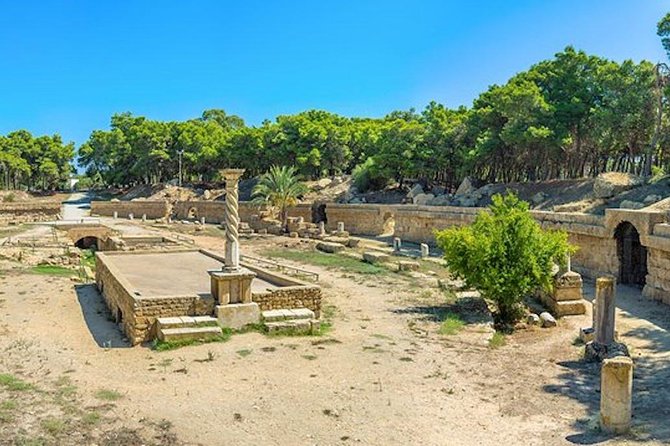
The main Carthage visit lasts about two hours, with admission included. The focus can include Byrsa Hill, the Punic ports, and the broader archaeological area, along with the Baths of Antoninus and the aqueduct.
Carthage began as a Phoenician settlement and grew into the center of a powerful western Mediterranean empire. Its conflict with Rome shaped ancient history, and the final destruction of the city in 146 BC is one of the key moments your guide will explain. Later, the Romans rebuilt Carthage, which is why the site presents layers from more than one age.
I like the guided approach here because the ruins need context. A good explanation turns a wide field of remains into a city plan, helping you picture streets, public buildings, ports, homes, and religious spaces. Guides such as Mohamed have been praised for bringing the Roman ruins to life through storytelling rather than simply reciting dates.
Byrsa Hill offers an important sense of place and elevation. The Punic ports point to Carthage’s power at sea, while the Roman remains show how thoroughly the city was rebuilt. You should not expect every major corner of Carthage to receive equal time. One person felt the tour did not reach all the main Carthaginian sights, a fair concern on a day that also includes Sidi Bou Said, the museum, lunch, and the Medina.
The Baths of Antoninus and Roman engineering
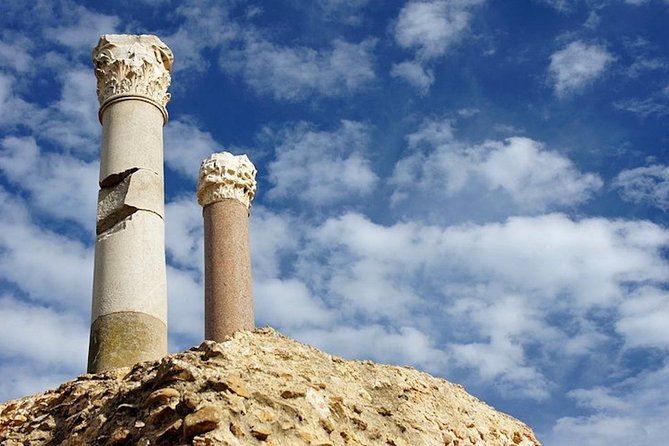
The Baths of Antoninus receive about 20 minutes, with admission included. They were built in the second century AD and rank among the largest Roman bath complexes in North Africa.
The scale is the point. Massive arches, large communal areas, courtyards, mosaics, and traces of heating systems reveal that Roman baths were not merely places to wash. They were social and civic centers, designed with impressive control of water, heat, movement, and space.
Twenty minutes is enough for an introduction and photographs, but not a slow archaeological study. I would pay close attention to the guide’s explanation, then use the remaining time to look at the surviving structure from different angles. The open setting can be exposed in strong sun, wind, or rain, so practical clothing matters.
The baths are also a good reason to keep the Bardo Museum in the day. At Carthage, you see architecture in place. At the museum, you can connect that architecture with mosaics and objects preserved indoors.
The Carthage Aqueduct: a short stop with a big idea
The aqueduct stop lasts around 20 minutes. The Roman system carried water more than 130 kilometers to Carthage, a reminder that a major city depended on engineering far beyond its walls.
You will see surviving sections and structures rather than a complete walk along the entire route. The stop works best when your guide explains the scale of the project and how water management supported baths, homes, fountains, and public life.
This is a brief photo and explanation stop, not a long exploration. Its value lies in showing that Carthage was supported by a carefully planned infrastructure network, not just grand monuments.
More Carthage and Sidi Bou Said days:
- Guided Bike Tour of Carthage Archeological Site in Tunisia
★ 5.0 · 88 reviews - Group Guided Bike Tour of Carthage Archeological Site in Tunisia
★ 5.0 · 57 reviews - Archaelogical Site Of Carthage + Picturesque Village Of Sidi Bou Said
★ 5.0 · 56 reviews - Historical Tour of Ancient Carthage
★ 5.0 · 51 reviews
Sidi Bou Said: the day’s prettiest hour
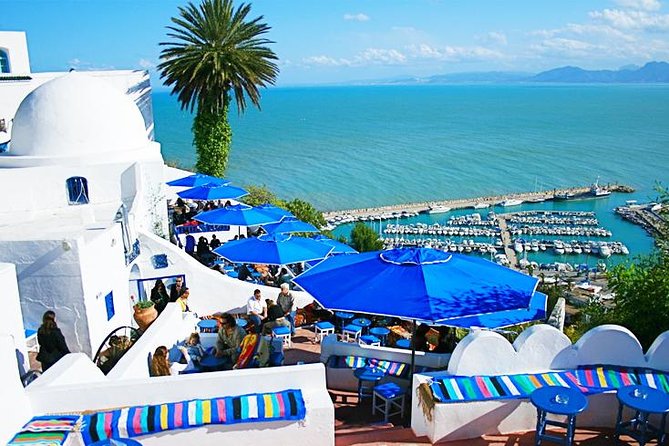
Sidi Bou Said gets about an hour, followed by roughly 25 minutes passing by or stopping near Café des Délices. This is where the day shifts from archaeology to atmosphere.
The village is known for white buildings, blue doors, narrow streets, and views toward the Mediterranean. I would slow down here. The pleasure is not in checking off a monument, but in walking a few lanes, looking at the painted details, and enjoying the strong contrast between the village and the ancient ruins.
Café des Délices is presented as a place where you can stop for tea or another drink. A purchase is not listed as included, so carry some spending money if you want to sit down. The café stop is also useful for photographs and a short rest.
There is one important qualification. Sidi Bou Said is not flat. Uphill walking and uneven streets can make this part tiring, especially after the open-air Carthage sites. One person found it the best part of the day but warned about the climbs. I would wear shoes with a firm sole and avoid treating this as a polished, effortless stroll.
Some tours may include an art gallery or museum-like stop in the village. If your priority is the broadest possible sea view, ask your guide how much free walking time you will have. The village is attractive, but the exact balance between views, galleries, cafés, and shopping can vary.
The Bardo Museum: the indoor counterpoint
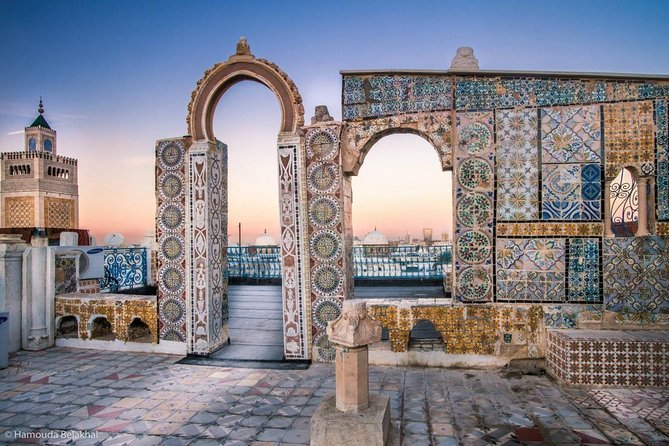
The Bardo Museum is part of the advertised Tunis program, with entry fees included. The supplied schedule gives the central Tunis portion about two hours, although the stop description also refers to the Medina, so you should confirm the day’s exact order with your guide.
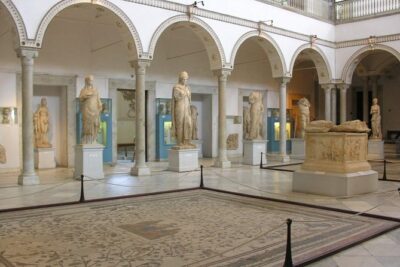
The Bardo is particularly important for its ancient art and mosaics. After seeing Roman buildings at Carthage, museum displays can help you notice the detail that disappears outdoors: patterns, faces, mythological scenes, borders, and the everyday skill behind large floor mosaics.
The museum is also a valuable shelter if the weather turns bad. The day can be exposed, and one outing continued with a full program even when storms affected the experience. Another person found the museum closed but still considered the day worthwhile. Still, closure is a real possibility, so check opening arrangements close to your date and do not assume a substitute visit will be identical.
A guide adds value here by pointing out what deserves your attention. In a large museum, it is easy to spend too long on the first room and rush the rest. A focused explanation can help you see the strongest pieces without turning the visit into a lecture.
Entering the Medina through Bab Bhar
The Medina of Tunis is the final major setting, with about an hour listed for the Medina itself. You may also pass Bab Bhar, the historic gate marking the transition between the modern city and the old quarter.
Bab Bhar dates from the 16th century and carries Ottoman architectural features. It is a useful visual threshold: one side feels more open and modern, while the other leads into narrow lanes, markets, mosques, and older buildings.
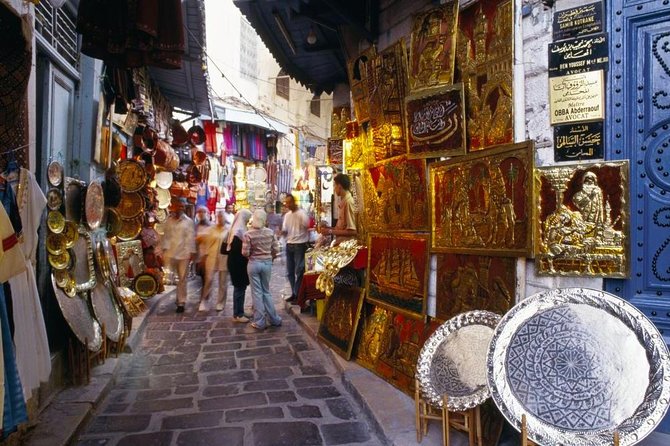
Inside the Medina, expect a compact maze rather than a single sightseeing route. You can look for local handicrafts, traditional markets, old architecture, and the exterior of Zitouna Mosque. Non-Muslims cannot enter the mosque, while Muslims may view the interior, so the outside is the main stop for most participants.
The Medina is more rewarding when you allow your senses to catch up. Listen for shopkeepers, watch the movement through the lanes, and notice how little the street pattern resembles a modern grid. The experience is less about one dramatic view and more about seeing how an old city still functions.
Sunday timing deserves attention. The Medina may be quiet or have many shops closed on Sunday, which can reduce the shopping portion. If browsing souks is central to your plans, ask about the operating day before booking. The historic streets and architecture remain, but the commercial energy may be limited.
Lunch and the value of a $45 day
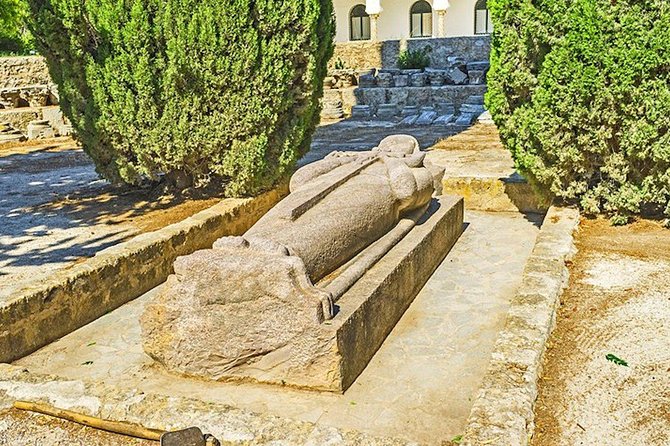
At $45 per person, this is a strong package for a full day. The price includes hotel pickup and drop-off, transportation, a guide, lunch, and admission fees. Paying separately for several archaeological entries and transport can quickly make a self-guided day less convenient, even before you account for the value of local explanation.
The meal is best viewed as a practical included lunch, not a fine-dining event. One person enjoyed a fish lunch, while another found the meal slow and disorganized and wanted reserved seating. Another described the restaurant as local and low-ranking. Those details point to a sensible expectation: lunch may be filling and local, but service and setting may not be polished.
A vegetarian option is available if you request it when booking. If you have strict dietary needs, state them clearly in advance. The tour provider also notes that a luxury restaurant is not realistic at this price point.
The group size can reach 19, so lunch logistics may take time. A small group of 12 fit comfortably in one van, but the larger the group, the more you should allow for loading, ordering, and regrouping.
Guides, drivers, and the pace of the day
The strongest part of this experience is the guide. Boutheina Derouiche is repeatedly singled out for energy, history, patience, and care with different needs. Bouhdid, Mohamed, Luce, Younis, and Boubou are also named positively for clear explanations and a friendly approach.
You cannot assume one particular guide will lead your departure, and requesting a name does not guarantee that person. Still, the consistent pattern suggests that the company has several guides who can make the historical portions lively and personal.
Drivers also matter on a day with several stops. Adnane is praised for careful and kind driving, and one driver helped a husband using a walker. That does not mean the entire route is fully accessible. Carthage includes open archaeological ground, Sidi Bou Said has uphill walking, and the Medina has narrow, uneven lanes.
If the vehicle has no microphone, it may be hard to hear the guide while driving. One person specifically raised that issue. Sit near the guide when possible, and ask for key points to be repeated if road noise gets in the way.
What to bring and how to prepare
Bring comfortable walking shoes. A full day can add up to several miles, especially if you walk to the pickup point or spend extra time in the Medina.
Dress for changing outdoor conditions. Wind, rain, dust, and intense sun have all affected past outings. A light layer, sun protection, and water are sensible choices, though the supplied details do not specify what refreshments are provided.
Keep small spending money for a drink at Café des Délices or personal purchases in the Medina. Admission fees are included, but optional drinks and shopping are not listed as part of the package.
The tour is mobile-ticketed, and confirmation is sent at booking. A booking for one adult needs confirmation 12 hours before the tour date. Bookings for two or more adults are automatically confirmed and guarantee departure, subject to the stated minimum number of participants.
Who should book this Tunis tour?
I would recommend it to a first-time visitor who wants the main sights covered without arranging several taxis. It suits people who like history, appreciate a guide’s explanation, and prefer a planned day with transport already handled.
It is also a good fit for cruise passengers who can confirm a practical pickup point and return arrangement. Families may appreciate the variety, especially if children respond better to changing scenery than to one long museum visit. A guide can also make Carthage easier for younger visitors by explaining what the ruins once meant.
I would be cautious if you dislike long days, uphill walking, or group meals. The schedule is full, and weather can make the open-air portions harder. If you want to study every corner of Carthage or spend half a day shopping in the Medina, a private or more narrowly focused tour may suit you better.
The experience is non-refundable and cannot be changed after booking. That makes it especially important to confirm your date, pickup point, dietary needs, and expected walking level first.
Should you book it?
Book this tour if you want a broad, efficient introduction to Tunis at a modest price. The combination of Carthage, Sidi Bou Said, the Bardo Museum, and the Medina is hard to match in one day, especially with transport and admissions included.
Skip it if you want a slow pace, a guaranteed museum opening, a luxury lunch, or detailed time at every Carthage site. For most first visits, though, the mix is sensible: ancient ruins in the morning, sea views and blue streets later, and the old heart of Tunis before returning to your hotel.
FAQ
How long does the tour last?
The experience lasts approximately seven to eight hours.
What time does the tour start?
The stated start time is 8:00 am.
Is hotel pickup available?
Yes. Hotel pickup and drop-off in Tunis are included.
What is included in the price?
The $45 price includes transportation, a guide, lunch, entry fees, and hotel pickup and drop-off.
How many people can join the tour?
The maximum group size is 19 people.
Are admission tickets included for Carthage?
Yes. Admission for the Carthage archaeological visit, including the listed archaeological stops, is included.
Is admission to the Bardo Museum included?
Yes. The tour information states that entry fees are included, though the museum can occasionally be closed.
Can I request a vegetarian lunch?
Yes. A vegetarian option is available, but you must request it when booking.
Are guides available in languages other than English?
Yes. Guides in other languages are available for bookings of two or more adults.
Can non-Muslims enter Zitouna Mosque?
No. Non-Muslims may view the mosque from the outside. Muslims may enter to see the interior.
Is the tour suitable for someone with limited mobility?
Most people can participate, but the day includes considerable walking, archaeological ground, uphill streets in Sidi Bou Said, and narrow Medina lanes. One driver assisted a person using a walker, but full accessibility is not stated.
What happens if I book for one adult?
A booking for one adult requires confirmation 12 hours before the tour date.
Are Sunday visits to the Medina ideal for shopping?
Not always. The Medina may have many shops closed on Sunday, although the streets and historic sights can still be visited.
Can I cancel for a refund?
No. The experience is non-refundable and cannot be changed for any reason. If the provider cancels because the minimum number of participants is not reached, you will be offered another date or experience, or a full refund.
More Museums in Tunis
- Bardo Museum , Oudhna and the roman aqueduct
★ 5.0 · 4 reviews - Bardo Museum- The ruins of Carthage- Village of Sidi Bou Said
★ 5.0 · 4 reviews - Private Tour Bardo Museum, Carthage, Sidi Bou Said and Medina
★ 4.5 · 3 reviews - Private tour: Medina,Carthage ,Sidi Bou Said, Bardo Museum+lunch
★ 5.0 · 194 reviews
More Bardo Museum Visits
- Daytrip Carthage Sidi Bousaid Bardo and Tunis Medina
★ 5.0 · 20 reviews - Private Tour Sidi bou Said Medina Carthage & bardo Museum
★ 4.5 · 13 reviews - Tunis Group Tour: Carthage, Sidi Bou Said, Bardo museum & Medina
★ 5.0 · 5 reviews - Bardo Museum with Medina, Carthage and Sidi Bou Private Tour
★ 5.0 · 5 reviews
Just added around Tunis
- Private Group Day Tour Tunis Medina Carthage Sidi Bou Said★ 4.5 · 3 reviews
- Private Tour Bardo Museum, Carthage, Sidi Bou Said and Medina★ 4.5 · 3 reviews
- Explore Tunisia in Depth:The Private Grand Tour in 8 Days★ 5.0 · 3 reviews
- 3-Day South of Tunisia Guided Tour from Tunis★ 4.0 · 3 reviews
- Bardo Museum , Oudhna and the roman aqueduct★ 5.0 · 4 reviews
- From Tunis: Star Wars 5 day tour★ 5.0 · 4 reviews
- DAY TRIP TO Dougga & Bulla Regia , DEPARTURE FROM Tunis★ 5.0 · 4 reviews
- Private Walking Tour of Carthage Archaeological Site in Tunisia★ 4.5 · 4 reviews
Bardo Museum Tours, compared.
VIP Tour: Tunis Medina/Bardo, Sidi Bou Said, Carthage
Read our review →
Private tour: Medina,Carthage ,Sidi Bou Said, Bardo Museum+lunch
Read our review →
From Hammamet or Tunis: Carthage, Bardo, Sidi Bou said and Medina
Read our review →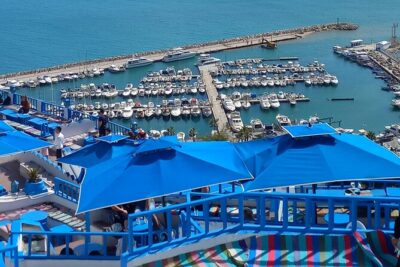
Daytrip Carthage Sidi Bousaid Bardo and Tunis Medina
Read our review →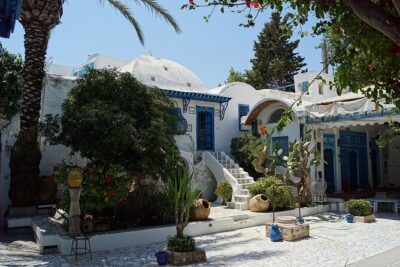
Bardo Museum- The ruins of Carthage- Village of Sidi Bou Said
Read our review →Browse the lists this tour appears in