
Reviewed · TUNIS
Roman Archeology Guided Tour Thuburbo Majus & Uthina
Uthina’s recently excavated Roman amphitheater is the big surprise here. It could hold as many as 20,000 spectators, yet the site is far less familiar than Tunisia’s headline ruins. Add the massive Zaghouan aqueduct and the broad remains of Thuburbo Majus, and you get a full day of Roman North Africa without spending it in a crowded city museum.
I like the private format, since your group can set the start and end times with the guide. I also like the depth of the history. Guide Fathi, a retired professor, brings real academic knowledge and a gift for teaching. The main drawback is that seven hours is tight for three substantial sites, and the aqueduct stop may be brief unless you ask for more time.
Key points to know before booking
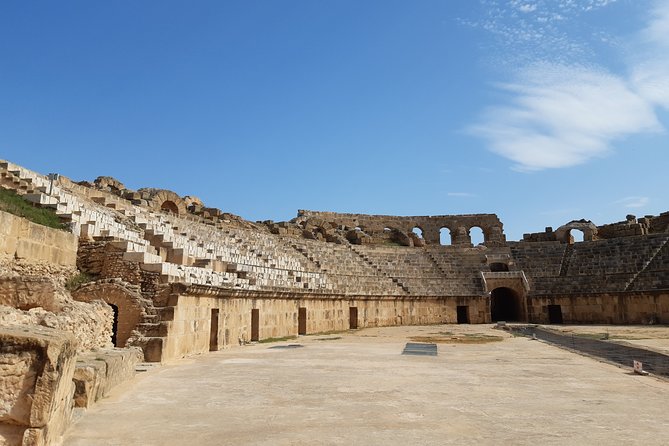
- Uthina’s amphitheater held up to 20,000 people, making it one of the tour’s most striking sights.
- The Zaghouan aqueduct ran 132 kilometers to carry water to Carthage.
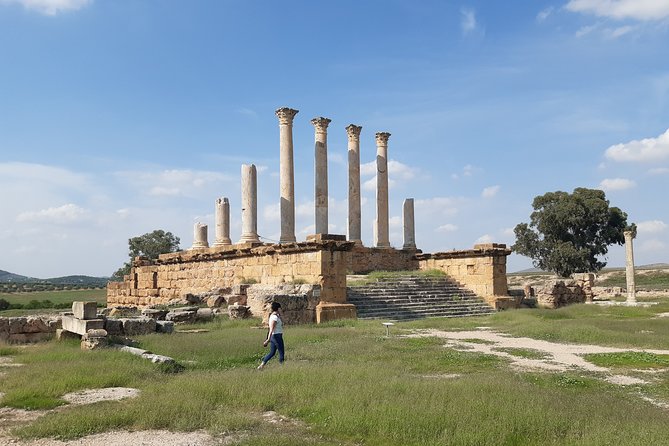
- Thuburbo Majus has a well-preserved Capitol, with four surviving Corinthian columns above the Forum.
- The Laberii villa covers 2,300 square meters and contains 30 rooms filled with mosaics.
- Private transport, admission fees, air conditioning, and onboard WiFi are included.
- Ask to stop at the aqueduct, since one booking included only a drive past it.
Why this Roman ruins tour is worth your day
Tunisia has famous Roman sites, but the pleasure of this outing comes from seeing how wide and varied Roman life was outside the main tourist circuit. You move from a strategic city and public arena to an enormous water system, then to a provincial town with temples, baths, villas, and civic spaces.
That sequence gives the day a useful rhythm. Uthina shows you power and spectacle. The aqueduct explains how cities survived and grew. Thuburbo Majus brings you into ordinary urban life, where residents worshipped, bathed, traded, and displayed wealth through mosaic floors.
The tour costs $140.96 per person. That is not a bargain-priced excursion, but the comparison changes if you are traveling with others. This is a private activity, so only your group participates. The fee includes private transport, an air-conditioned vehicle, WiFi, taxes, and entry fees. For a small group that wants a guide and does not want to arrange several rural visits independently, the price can make sense.
You should still weigh the pace. The listed duration is about seven hours, and the three main stops are spread across the countryside south and west of Tunis. You will see a lot, but you should not expect a slow archaeological study day at every site.
More Guided Tours in Tunis
- Guided Bike Tour of Carthage Archeological Site in Tunisia
★ 5.0 · 88 reviews - Guided tour in the UNESCO world heritage Medina of Tunis
★ 5.0 · 68 reviews - Group Guided Bike Tour of Carthage Archeological Site in Tunisia
★ 5.0 · 57 reviews
Uthina: a Punic city reshaped by Rome
Uthina, also called Oudhna, sits about 30 kilometers south of Tunis. Its position on a hill gave it control over important routes leading toward Carthage from the south and west. The city appears to have roots in the Berber period, and it later passed through Punic and Roman phases before its final decline after the Arab conquest in the seventh century.
That long sequence matters. You are not looking at a city built from scratch by Rome. Uthina was an older settlement that Rome punished, reorganized, and romanized. The site then passed through short Vandal and Byzantine periods before losing its importance.
The archaeological area covers more than 100 hectares. That scale is impressive, but it also means you need to pay attention to the guide’s route and explanations. Ruins spread over a large area can blur together without a clear story. A strong guide helps you see where the civic center ends, where public entertainment began, and how the city fitted into the wider Roman system.
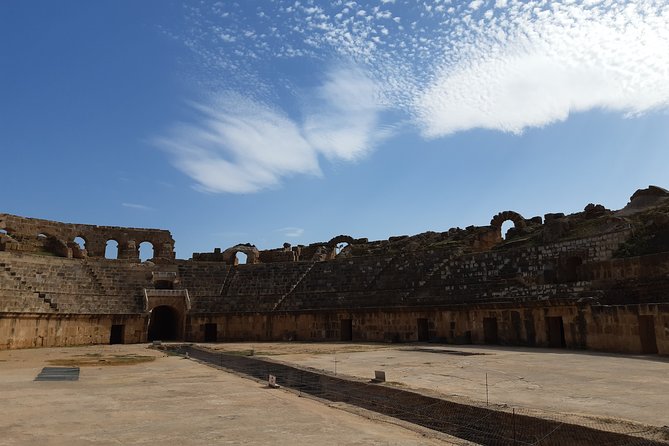
The amphitheater is the clear highlight. It could accommodate roughly 20,000 spectators, a size that tells you Uthina was not a minor outpost. Public games were political theater as much as entertainment. A venue of this scale required money, labor, roads, and a large audience.
The arena is also described as only recently fully excavated. That gives the visit a sense of active archaeology rather than a finished monument polished for easy sightseeing. You may find broad, open ruins and unfinished edges instead of a perfectly restored attraction. For me, that is part of the appeal, though visitors wanting a compact site with every feature labeled may need to rely heavily on the guide.
Uthina receives about one hour and 30 minutes on the planned schedule. That is enough to grasp the main buildings and spend real time at the amphitheater. It may not be enough for every corner of a 100-hectare site, so tell the guide if the arena is your priority.
The Zaghouan aqueduct and Rome’s water problem
The Zaghouan aqueduct supplied Carthage with water over a route measuring 132 kilometers. It formed part of the Zaghouan-Carthage hydraulic complex, described as the largest of its type ever built.
The system began in the early second century AD. Its engineers had to move water across rough country, sometimes keeping the channel at ground level, sometimes taking it underground, and sometimes raising it on arcades. On two sections, those arcades reached more than 20 meters high.
The estimated flow was about 30 million liters per day. That number is hard to picture until you connect it to daily city life. Water supported public fountains, households, industry, and the great Baths of Antonine at Carthage. Much of it was held in huge vaulted reservoirs at Maalga before moving into the city.
The planned stop lasts only 20 minutes, and the aqueduct admission is free. Here is the practical point: the timing may mean a quick look or even a drive past the most visible section. One visitor found that the group passed the aqueduct without stopping, though a stop could have been made if requested.
So ask early. If the aqueduct is one of the reasons you booked this tour, say so before the vehicle reaches the site. The private format gives you more room to make that request than a fixed group excursion would.
This stop is less about wandering through a large ruin and more about understanding engineering. You are seeing the infrastructure that allowed Carthage to function as a major Roman city. I would give the aqueduct more than 20 minutes if possible, but I would not expect the tour to turn into a full engineering visit.
Thuburbo Majus, a Roman town with an ambitious civic center
Thuburbo Majus is the final major stop and receives about one hour. It was founded on a hill beside a fertile valley long before North Africa became part of the Roman Empire. Its surviving Roman buildings make it one of Tunisia’s most rewarding archaeological sites.
The city suffered a decline in the middle of the third century, then enjoyed a strong revival in the fourth century. During that later period, it proudly called itself Respublica Felix Thuburbo Majus, or the fortunate republic of Thuburbo Majus. That change gives the ruins a human story. Cities did not simply rise under Rome and then vanish. They struggled, adapted, and sometimes recovered.
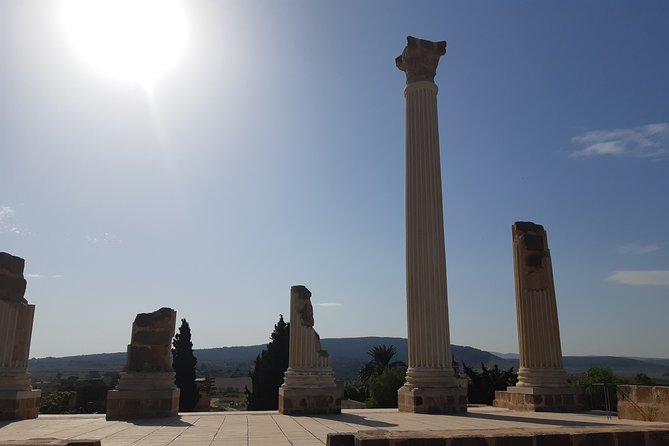
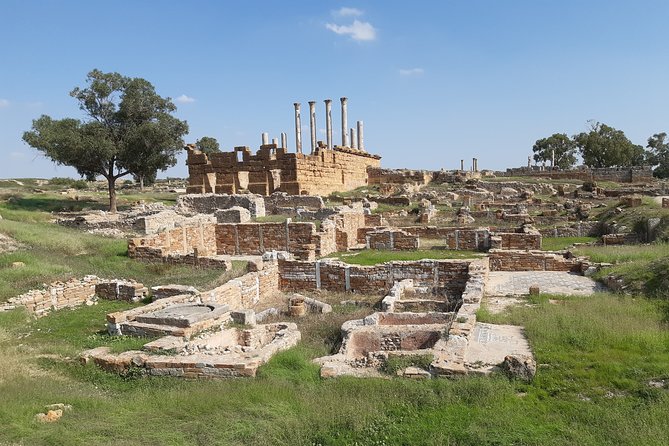
The Capitol is the architectural centerpiece. In Roman cities, the Capitol was the main temple complex, and Thuburbo Majus preserves one of the best examples in Tunisia. Six Corinthian columns once formed the facade. Four remain, rising above a broad staircase that looks toward the Forum.
The surviving columns are more than a photogenic backdrop. They help you read the public center as a place of ceremony and authority. The Forum below was the civic heart, while the Capitol gave the town a formal religious focus. With a guide beside you, the scattered stones become a plan rather than a collection of fragments.
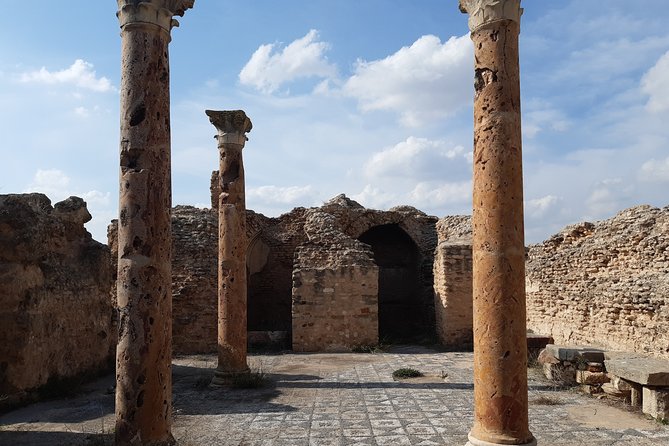
Thuburbo Majus had two bathing establishments, one intended for winter and one for summer. That detail is easy to overlook, but it says much about Roman urban habits. Baths were not just places to wash. They were social centers, and maintaining separate facilities for different seasons suggests a town with enough wealth and organization to support a demanding public life.
The site also includes the Laberii villa, a large home measuring about 2,300 square meters with 30 rooms. Its mosaics deserve close attention. A villa of this size shows how private wealth could sit beside public monuments, temples, and baths.
The one-hour schedule is the limitation. Thuburbo Majus is larger than you might expect, and a quick visit can leave you wishing for more time. If the Capitol, baths, and Laberii villa are your priorities, tell the guide. You may need to choose between a broad overview and a closer look at the mosaics.
A few more Tunis half-days to weigh up
- Private Tour to Kairouan, El Jem & Monastir from Tunis_hammamet
★ 5.0 · 301 reviews - Private tour: Medina,Carthage ,Sidi Bou Said, Bardo Museum+lunch
★ 5.0 · 230 reviews - Carthage, Bardo Museum, Sidi Bou Said and Medina Private Day Tour
★ 4.5 · 153 reviews - Private Excursion to Testour, Dougga and Bulla Regia from Tunis.
★ 5.0 · 100 reviews
A guide can make or break the archaeology
This tour is most valuable when the guide gives shape to what you are seeing. Fathi is a retired professor with a strong command of Tunisia’s Roman sites and a clear interest in teaching. That background suits a visitor who wants more than dates and building names.
I would use the drive between sites well. Ask how Uthina changed from a Punic settlement into a Roman city. Ask why the aqueduct had to cross such difficult ground. Ask what the two bath complexes at Thuburbo Majus reveal about local wealth and climate.
The private setup also allows some flexibility. A previous booking included adjusted start and end times, and the guide was willing to adapt the day. That does not mean every stop can expand without limit, since the sites are far apart and the tour remains about seven hours. It does mean you have a better chance of shaping the day around your interests.
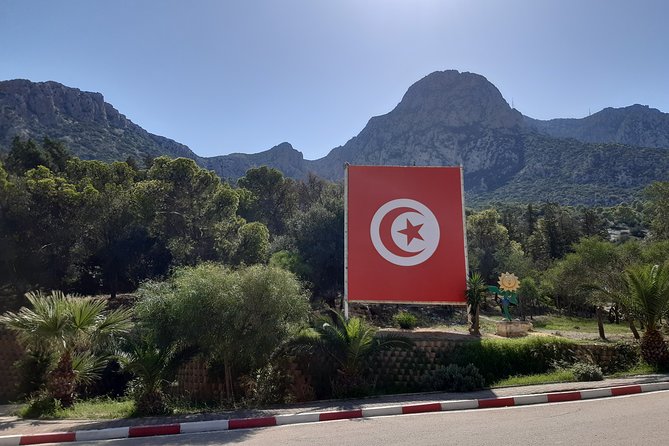
The tour description also lists a visit to the Andalusian medina of Zaghouan. The detailed stop schedule gives the aqueduct 20 minutes but does not provide a separate time allowance for the medina. If this part matters to you, confirm the plan before departure.
What the transport and schedule mean in practice
Pickup is offered, and transportation is private. You ride in an air-conditioned vehicle with WiFi onboard, which is useful on a long day linking several countryside sites.
The vehicle is not just a convenience. Uthina lies south of Tunis, while Zaghouan and Thuburbo Majus require additional driving, so arranging these visits on your own would take planning. Private transport lets you focus on the sites rather than on rural connections, directions, or parking.
The stated duration is approximately seven hours. The site times add up to two hours and 50 minutes before driving, meals, and any time at Zaghouan’s medina. That tells you the day includes substantial time on the road. Bring water and plan for a late or separate lunch, since lunch is not included.
Admission fees and taxes are covered, so you do not need to budget extra entrance payments at the three listed archaeological stops. The tour also offers group discounts, though the exact discount is not given. Since the activity is private, ask about the total group price if you are booking for several people.
The tour is generally suitable for most participants, and service animals are allowed. It is also listed near public transportation. Still, the archaeological sites cover large, uneven areas, so anyone with mobility concerns should ask the operator for current details before booking.
The best fit for history-focused visitors
I would choose this tour if you have already seen Tunis and Carthage or if Roman North Africa is a main reason for your visit. It gives you three different subjects in one day, ancient city planning, water engineering, and public and private Roman life.
It is also a good match for visitors who prefer a private guide to a large fixed group. You can ask questions, request a longer aqueduct stop, and adjust the pace within reason. Families and mixed-interest groups may appreciate the air-conditioned transport and the ability to avoid a rigid schedule.
I would hesitate if you want a leisurely day at one site. Thuburbo Majus alone could fill several hours for an enthusiast, and Uthina’s size makes it impossible to see everything in a short visit. The tour works best as a well-explained overview, not as a forensic examination of every ruin.
The booking pattern, about 36 days in advance on average, suggests that you should not leave it until the last moment if your Tunis dates are fixed. Confirmation is provided at booking. Free cancellation is available until 24 hours before the local start time. Inside that window, the payment is not refunded and changes are not accepted.
Should you book this Uthina and Thuburbo Majus tour?
Book it if you want a private, guide-led look at Tunisia’s less familiar Roman sites and value transport more than a bargain price. The amphitheater at Uthina, the 132-kilometer aqueduct, and the columns and mosaics at Thuburbo Majus create a strong day of ancient history.
Before paying, confirm two points: how much time you will actually spend at the aqueduct, and whether the Zaghouan medina is included in your planned route. If those details are clear and Fathi is available, this is a strong choice for an archaeology-minded visit from Tunis.
FAQ
How long does the tour last?
The tour lasts approximately seven hours.
What sites are included?
The listed archaeological stops are Uthina, the Zaghouan aqueduct, and Thuburbo Majus. The route also describes a visit to the Andalusian medina of Zaghouan.
Is transportation included?
Yes. The tour includes private transportation in an air-conditioned vehicle, with WiFi onboard.
Are admission fees included?
Yes. All fees and taxes are included, and admission is included at Uthina and Thuburbo Majus. The aqueduct stop has no admission fee.
Is lunch included?
No. Lunch is not included in the tour price.
Is this a private tour?
Yes. Only your group participates in the activity.
Can I cancel for a full refund?
Yes, if you cancel at least 24 hours before the experience start time. Cancellations or changes made less than 24 hours before the start time are not refunded or accepted.
Just added around Tunis
- Private Group Day Tour Tunis Medina Carthage Sidi Bou Said★ 4.5 · 3 reviews
- Private Tour Bardo Museum, Carthage, Sidi Bou Said and Medina★ 4.5 · 3 reviews
- Explore Tunisia in Depth:The Private Grand Tour in 8 Days★ 5.0 · 3 reviews
- 3-Day South of Tunisia Guided Tour from Tunis★ 4.0 · 3 reviews
- Bardo Museum , Oudhna and the roman aqueduct★ 5.0 · 4 reviews
- From Tunis: Star Wars 5 day tour★ 5.0 · 4 reviews
- DAY TRIP TO Dougga & Bulla Regia , DEPARTURE FROM Tunis★ 5.0 · 4 reviews
- Private Walking Tour of Carthage Archaeological Site in Tunisia★ 4.5 · 4 reviews
Tunis Tours, compared.
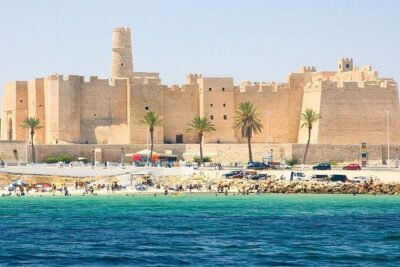
Private Tour to Kairouan, El Jem & Monastir from Tunis Hammamet
Read our review →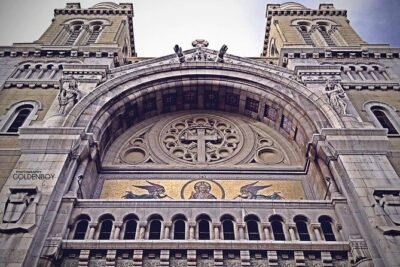
Private tour: Medina,Carthage ,Sidi Bou Said, Bardo Museum+lunch
Read our review →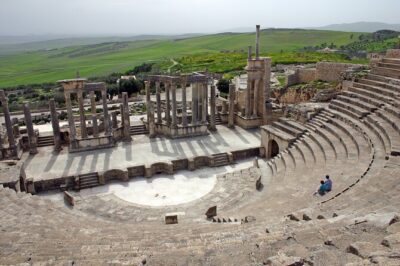
Private Excursion to Testour, Dougga and Bulla Regia from Tunis.
Read our review →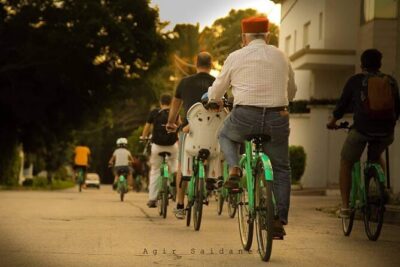
Guided Bike Tour of Carthage Archeological Site in Tunisia
Read our review →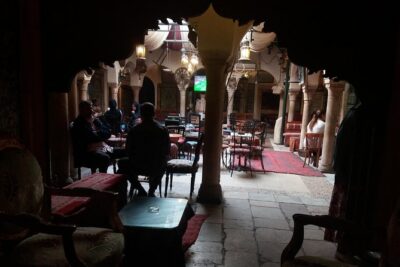
Guided tour in the UNESCO world heritage Medina of Tunis
Read our review →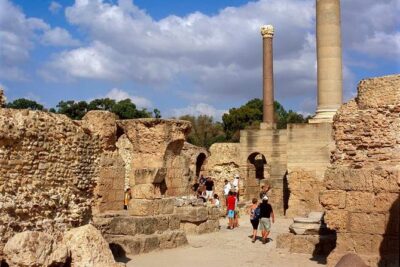
Archaelogical Site Of Carthage + Picturesque Village Of Sidi Bou Said
Read our review →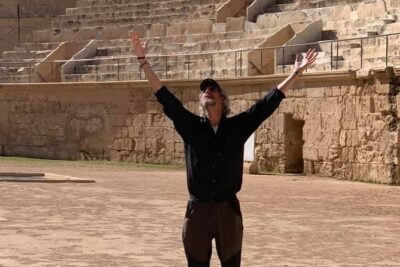
Browse the lists this tour appears in